
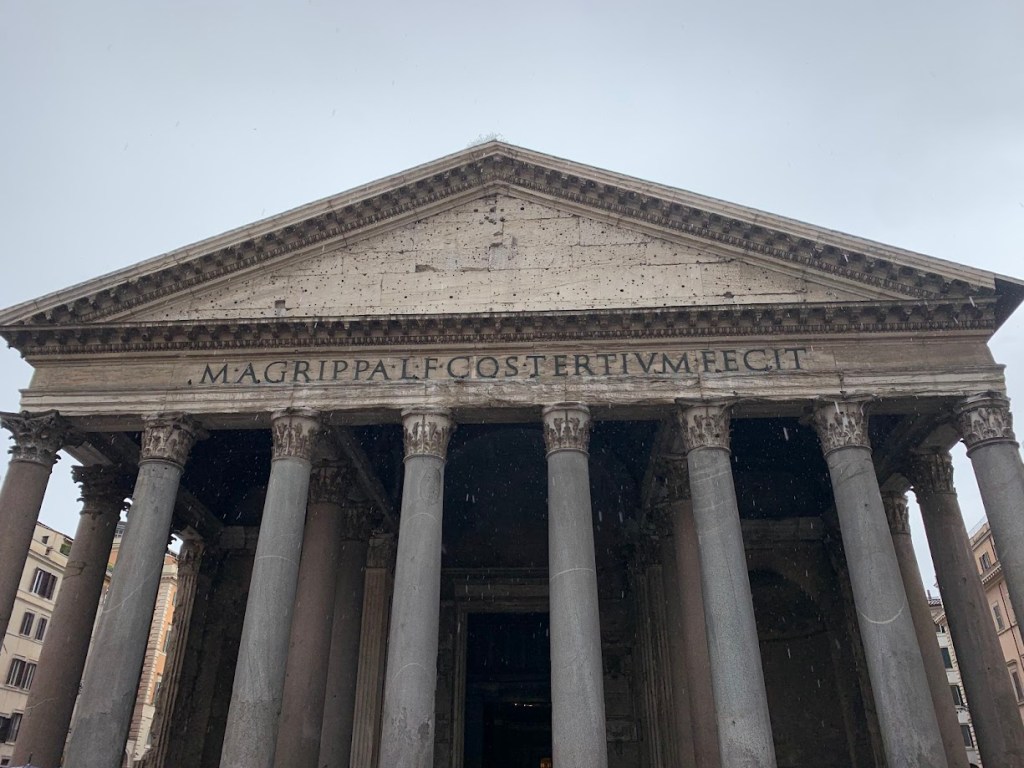
Hello, embark with me on an intriguing exploration into the field classical archaeology and discover the ancient worlds of Greece and Rome. Explore fascinating discoveries and iconic sites as we unravel the stories of civilizations from long ago.
What is Classical Archaeology?
Classical archaeology is an intricate sub-field of archaeology that immerses itself in the study of the ancient Mediterranean world. While the primary focus lies on the civilizations of Greece and Rome, the scope of the field also tends to encompass related civilizations such as Egypt and the Near East, allowing for a comprehensive understanding of the interconnectedness of the Mediterranean world. Classical archaeologists delve into the material culture, architecture, art, and written records of ancient Mediterranean cultures, analyzing diverse evidence such as settlement data, architectural remains, craft goods, art objects, and environmental materials. By doing so, they reconstruct and understand the societies, beliefs, and practices of these ancient cultures, piecing together narratives that provide profound insights into the nature and development of these civilizations and the experiences of the individuals and groups that constituted them.
Classical archaeology, a field focusing on ancient Greek and Roman civilizations, has roots tracing back to the Renaissance, when scholars began systematically studying classical texts and ruins. It gained momentum in the 18th and 19th centuries with major excavations in Italy and Greece, including sites like Pompeii and Herculaneum. During its early stages, Classical archaeology was defined by extensive excavations and an emphasis on connoisseurship, as scholars dedicated their efforts to identifying artists and assigning authorship to ancient artworks. The field was further formalized in the 19th century with the establishment of dedicated institutions and archaeological methods, facilitating large-scale excavations and contributing significantly to the accumulation of archaeological knowledge. Key figures like Heinrich Schliemann and Arthur Evans played pivotal roles in uncovering significant sites such as Troy, Mycenae, and Knossos. The 20th century marked a turning point for Classical archaeology, with advancements in dating methods and theoretical approaches reshaping the discipline. Today, Classical archaeology encompasses a diverse range of topics, from the lives of marginalized individuals to the archaeology of archaeology itself. This expansion reflects a broader shift in the field towards a more comprehensive understanding of the past, emphasizing narratives that were previously overlooked or misunderstood.
Some Famous Sites in the Classical World
The sites of classical archaeology serve as tangible remnants of ancient civilizations, offering invaluable insights into the cultures, beliefs, and practices of the past. Exploring these sites allows us to piece together narratives that illuminate the rich history and heritage of ancient Greece and Rome.
The Acropolis
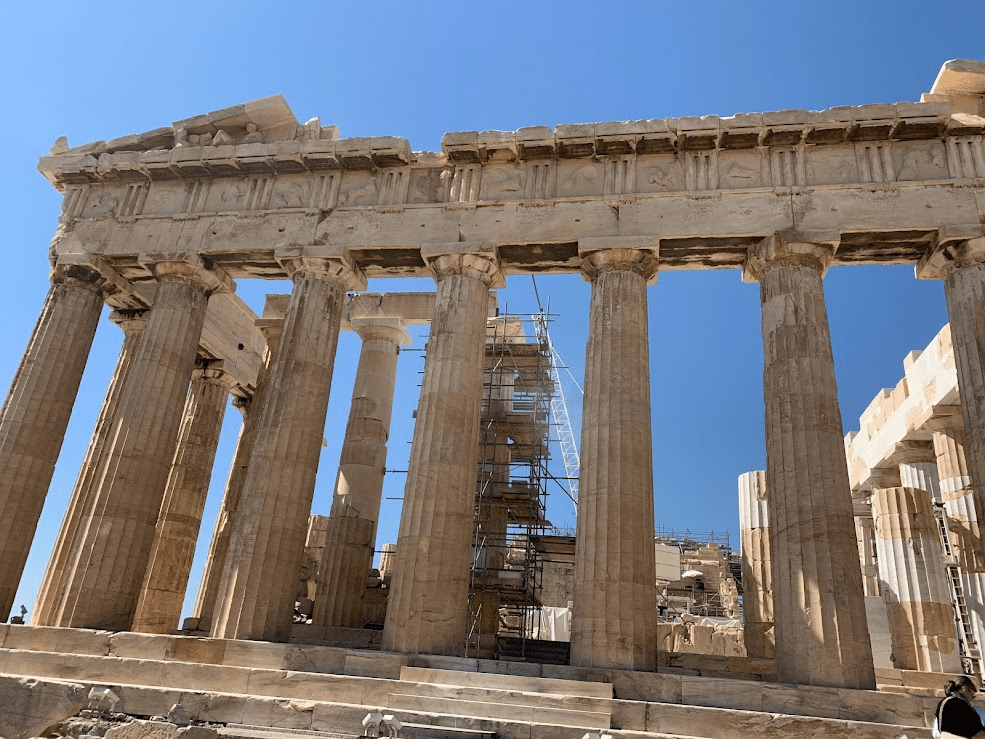
The Acropolis of Athens is a symbol of ancient Greek civilization, constructed in the 5th century BCE during the peak of the Athenian Empire. The Acropolis comes from the word akro, the edge and the word polis, city and this refers to an ancient site that was constructed above the city. There is evidence that the first inhabitants reached the hill of Acropolis by the 4th millennium BCE. However some of the ancient buildings of the Acropolis were constructed in the 5th century BCE due to the construction program of Pericles. Among these buildings is the Parthenon, a temple dedicated to the goddess Athena, the largest Doric temple in Greece. Nearby is the Erechtheion, famous for its Caryatids – six draped female figures serving as columns. These structures served religious purposes and highlighted the artistic and architectural advancements of Classical Athens.
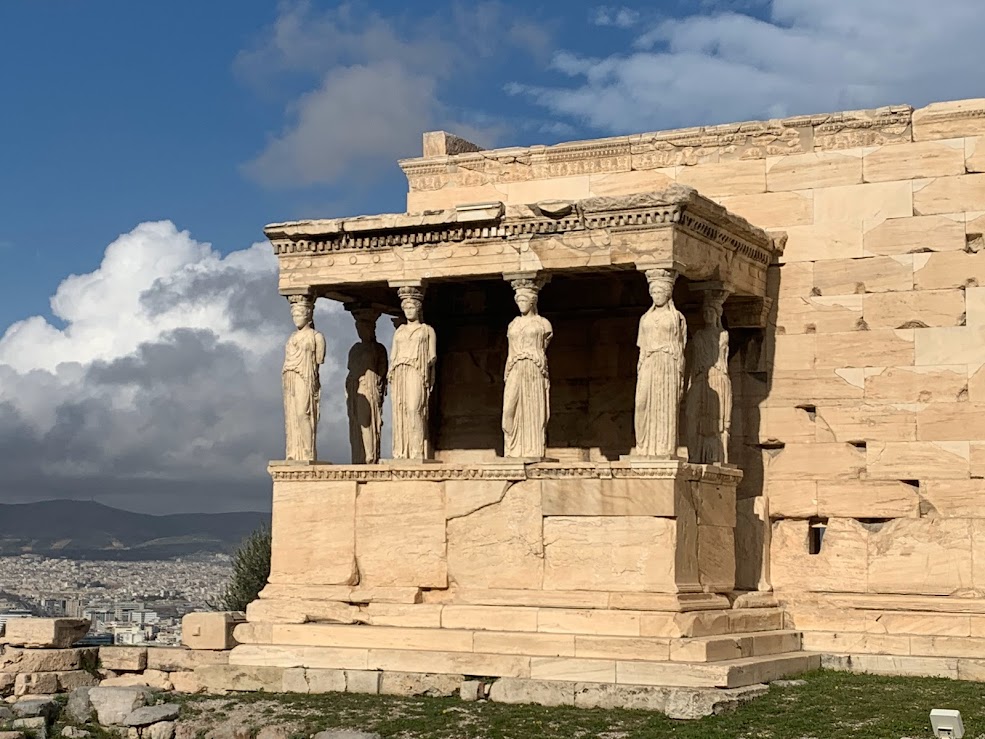
Visiting the Acropolis was an unforgettable experience. The Acropolis was visible from almost every point in the city. The exploration of the Acropolis required many walks uphill, the aches in my legs seemed to disappear as I witnessed the Theater of Dionysus, the Temple of Asclepius, the Odeon of Herodes Atticus, the Temple of Athena Nike, and so on until I reached the top. Walking among the ruins, I marveled at the Parthenon’s massive columns. It is amazing to think about the technology and human labor that went into constructing such a grand temple. Though what caught my eye was the porch of the Temple of Erechtheion, where six sculpted female figures served as columns. However the Caryatids on the Acropolis are copies, with five in the Acropolis Museum and one in the British Museum. The story of the temple is fascinating, thought to be the sight where Poseidon, in a contest with Athena over patronage of the city, created a spring of salt water. Seeing these iconic structures up close, I appreciated the advanced engineering and artistic skills of the ancient Greeks. And makes me wonder about were the thoughts of those who inhabited Athens. Were they in awe of such ingenious buildings or did they eventually get used to buildings and not really think about them? Did they feel the presence of their gods on that hill?
(Be sure to wear comfortable and sturdy shoes, you will do a lot of walking and marble is slippery. I might have slipped on my way down).
The Colosseum
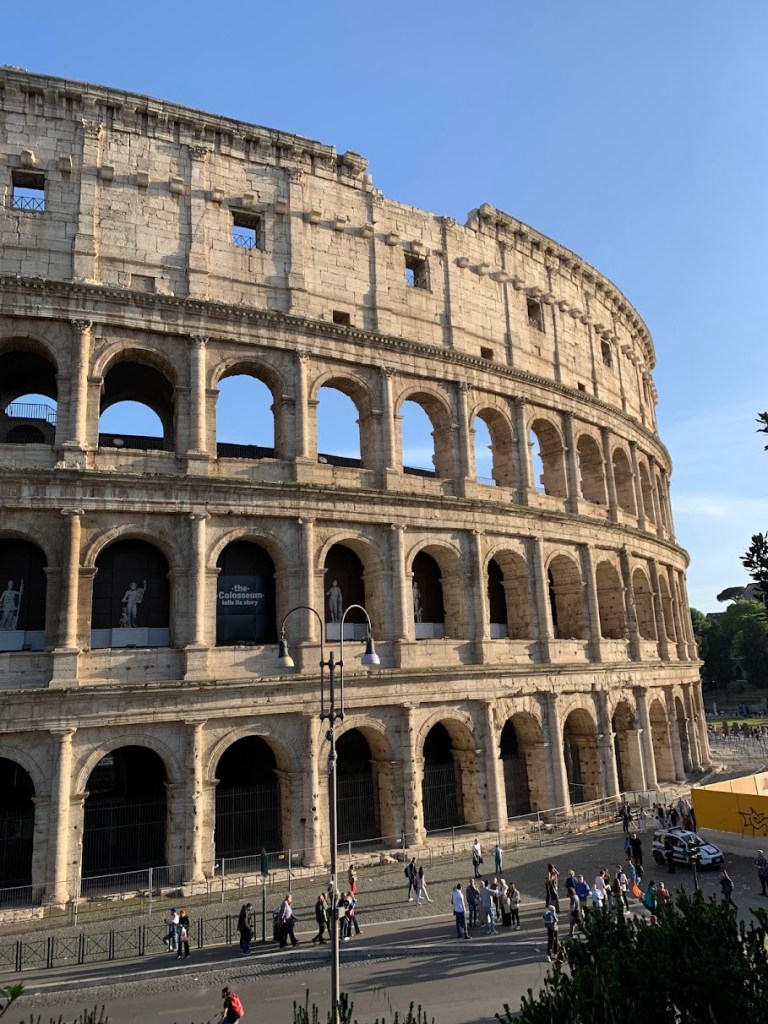
The Colosseum in Rome, also known as the Flavian Amphitheatre, is a symbol of Roman engineering and entertainment. Completed in 80 CE under Emperor Titus, it could hold up to 80,000 spectators for gladiator contests, public spectacles, and mock naval battles. Its innovative use of concrete and complex system of vaults and arches revolutionized Roman architecture.
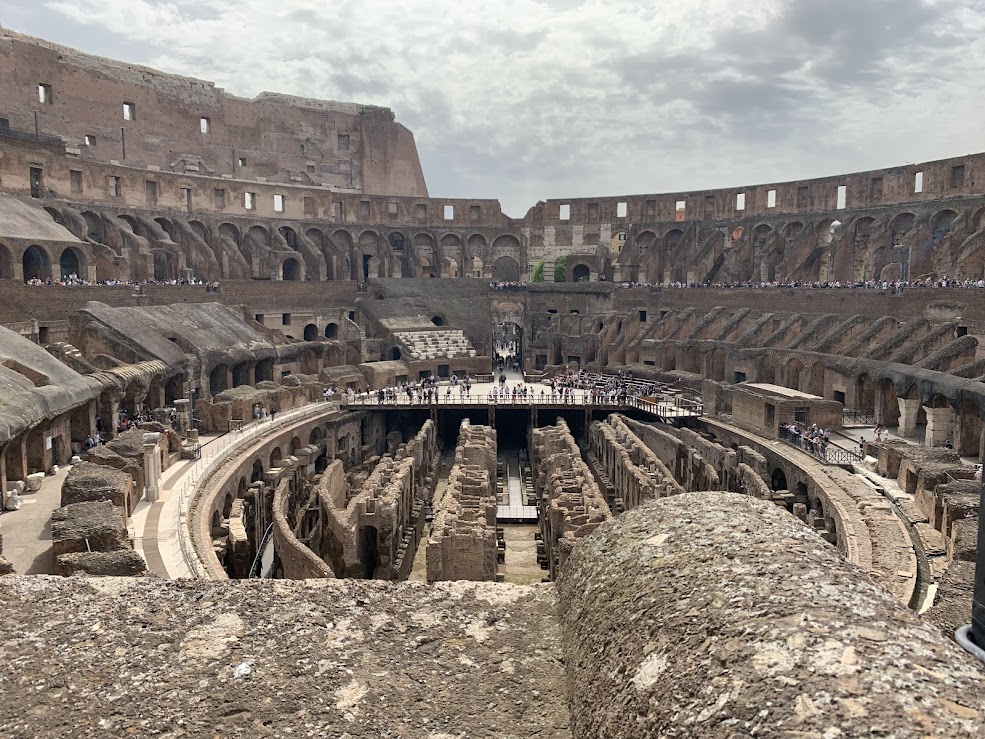
The Colosseum was a grand site, when I first set my eyes upon it. It was much larger than I imagined in person and interesting to see right next to busy intersections. It blended into the city of Rome, just a few steps into the right direction then all of the sudden did this grand structure stand out above everything else. My visit was worth the hour and half spent waiting in line. (Please buy your tickets ahead of time.) Stepping into the Colosseum, I was immediately struck by its sheer size and the ingenuity of its design. I enjoyed exploring the different levels, imagining the roar of the crowd during gladiatorial contests. Additionally, it was interesting to see the Christian imagery in the Colosseum, illustrating the complex past of the building and how the purpose of the site changed over time. The preservation of the structure allowed me to visualize its historical grandeur and significance.
The Palace of Knossos
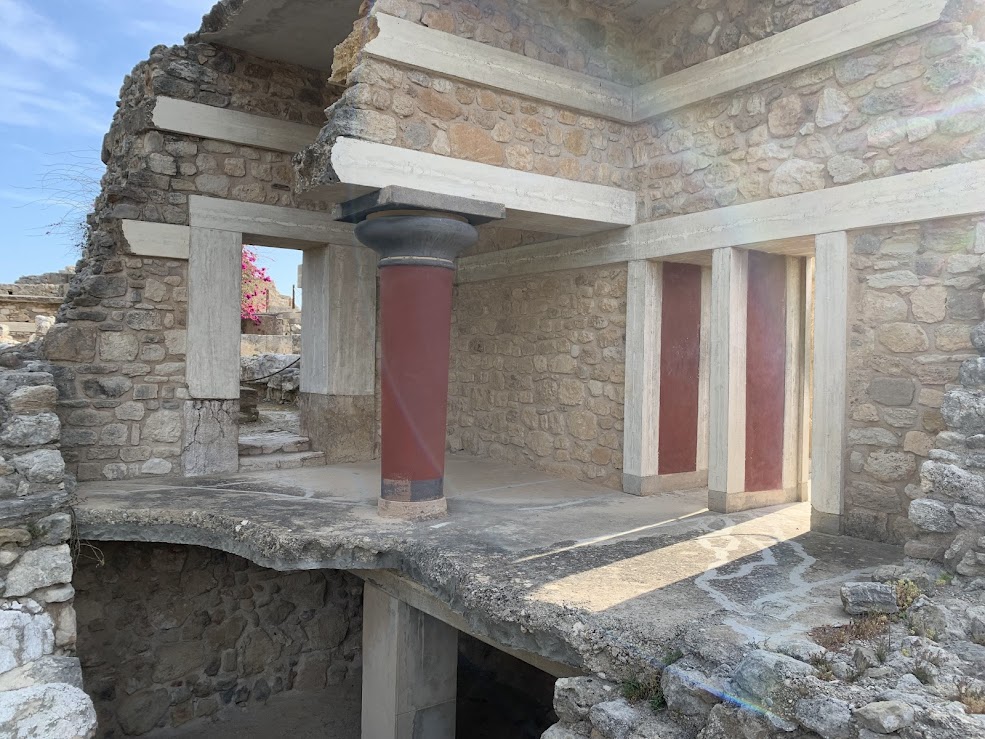
The Palace of Knossos, flourishing for about two thousand years, stood as a testament to Minoan wealth, urban advancement, and cultural intricacy. This significant center of trade and economy boasted large palace buildings, extensive workshops, and luxurious tombs, embodying a complex social structure and ties with Eastern Mediterranean cities. The palace, perched on Kephala hill, held mythical significance as the supposed seat of wise King Minos and featured prominently in legends like the Labyrinth and the Minotaur. Excavations, notably by Sir Arthur Evans, revealed its multi-story design covering 20,000 square meters, showcasing advanced Minoan technology such as light wells, drainage systems, and reinforced masonry. The site’s various wings, including administrative, religious, and residential quarters, were adorned with painted plaster, marble revetment, and intricate wall paintings, offering insights into Minoan artistry and daily life. Surrounding the palace was a thriving settlement, and today, artifacts from Knossos, including the iconic bull-leaping fresco, are housed in the Heraklion Museum, preserving the legacy of this ancient marvel.
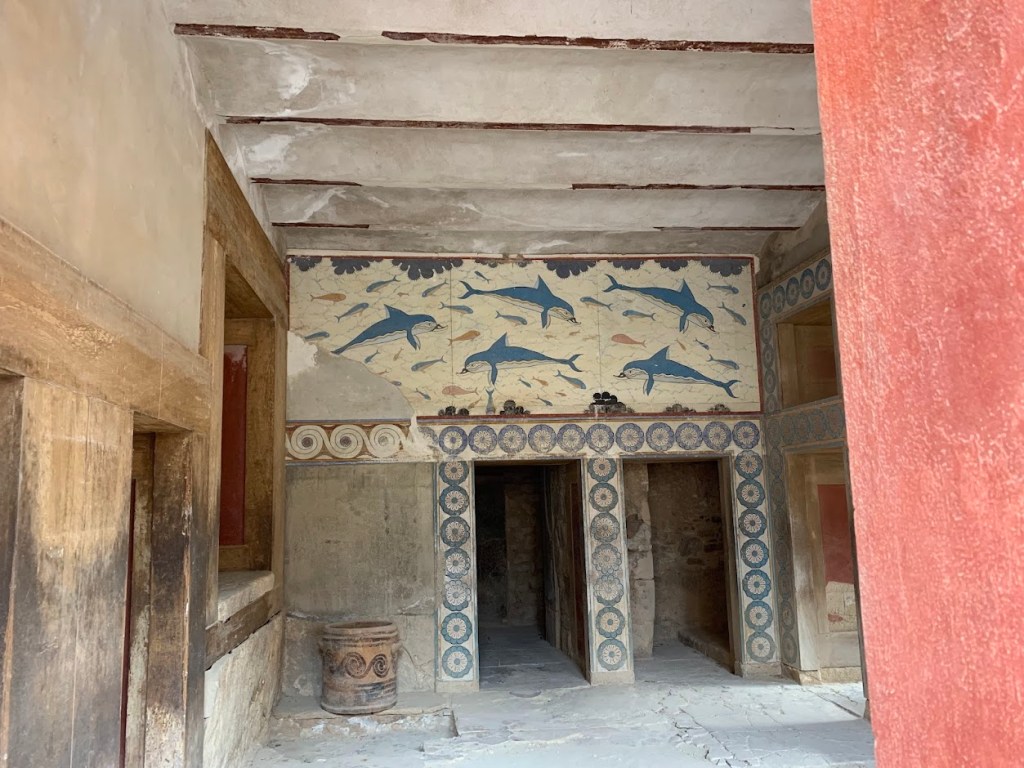
I have also always been fascinated by the Minoan civilization and I was overjoyed for the chance to be able to visit such a marvelous and epic site. During my visit to Knossos, the vibrant red columns and frescos scattered throughout the site painted a vivid picture of its ancient grandeur. The intricate frescoes depicting dolphins and other motifs offered glimpses into Minoan artistry and daily life. Exploring the throne room, with its symbolic gypsum throne and lustral basin, provided insights into Minoan ceremonial practices and governance. The impressive Central Court, adorned with painted plaster and marble revetment, stood as a testament to the advanced architectural and technological achievements of the Minoans. Throughout the site peacocks strutted gracefully in the halls, showing off their colorful plumage and adding to the colorful grandeur of the palace. Overall, my experience at Knossos deepened my fascination with Minoan culture and the preservation of these intricate details spoke volumes about the Minoans’ emphasis on art, symbolism, and ritualistic practices.
The citadel of Mycenae

The citadel of Mycenae, a major center of Greek civilization during the Bronze Age, is renowned for its impressive fortifications and royal tombs. Mycenae flourished between 1600 and 1100 BCE and played a significant role in Greek mythology, particularly in the tales of the Iliad. According to legend, Mycenae was ruled by King Agamemnon, the leader of the Greek forces in the Trojan War. The site is famous for its massive “Cyclopean” walls, the Lion Gate, and the Grave Circles, which contained royal burials with rich grave goods. The so-called “Mask of Agamemnon” was one of the notable finds, although it predates Agamemnon’s time. The archaeological discoveries confirmed that Mycenae was a powerful and influential city-state in ancient Greece, with connections to other cultures across the Mediterranean.
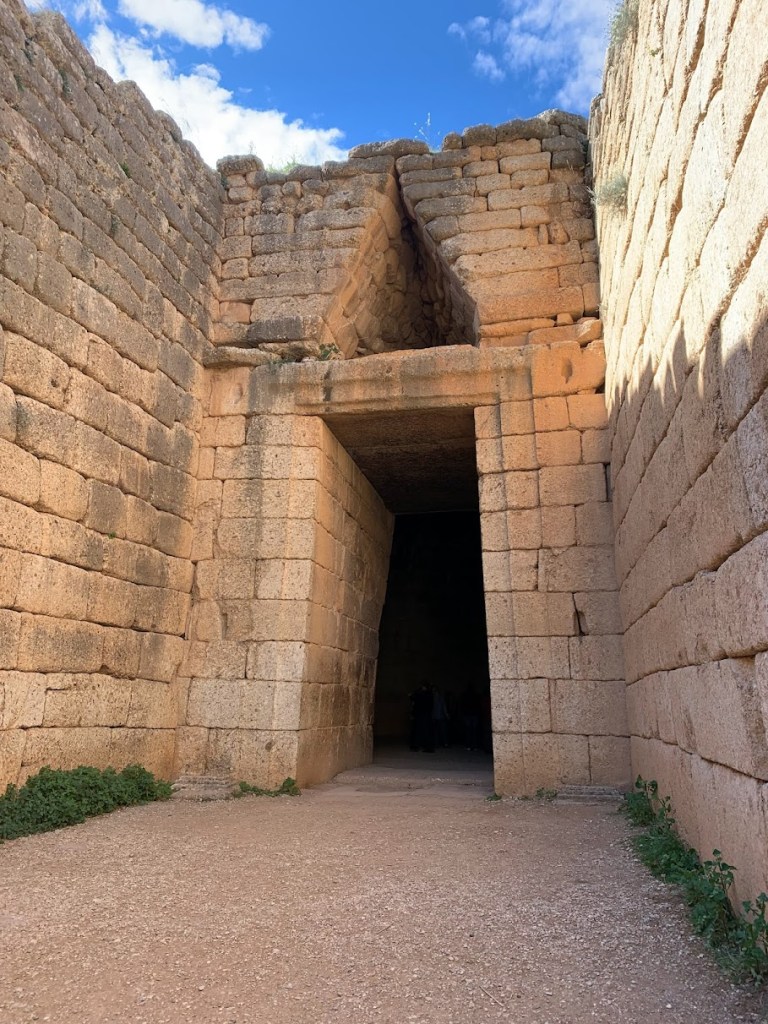
Visiting Mycenae was a journey into the heart of ancient Greece, where myth and history intertwine to create a captivating narrative. The paths I walked were once traversed by the Mycenaeans thousands of years ago. The structures standing today are a testament to their remarkable engineering, immense labor, and sophisticated architectural design. It’s easy to take these accomplishments for granted, capturing them with a quick snapshot. As a visitor, I aimed not only to admire the impressive ruins before me but also to appreciate the rich history and effort that brought them into existence. As I approached the Lion Gate, the imposing stone structure adorned with relief carvings of lions, I was struck by the grandeur and symbolism of this entrance. The sheer scale of the Cyclopean walls allowed me to understand why the ancient Greeks believed that only Cyclops could move the giant stones. I also visited the Grave Circles A and B, which are famous for the excavation of the mask of Agamemnon and the lion hunt dagger, now displayed in the National Archaeological Museum in Athens. Seeing the treasures unearthed from these graves in the National Archaeological Museum in Athens had already given me a sense of their significance, but standing there in person brought a new level of connection. The thought of the grave goods, including gold masks and finely crafted weapons, being discovered right where I stood was surreal. The Tomb of Agamemnon, also known as the Treasury of Atreus, was another highlight of my visit. Its monumental entrance and beehive-shaped structure were awe-inspiring. The precision with which the tomb was constructed, with its enormous stone walls and archway, spoke to the advanced engineering skills of the Mycenaeans.
In essence, these sites are not merely remnants of the past; they are living testimonies to the ingenuity, creativity, and resilience of ancient civilizations. Each visit deepened my appreciation for classical archaeology, igniting a passion to unravel more mysteries hidden within the folds of time and history. Indeed, the classical world extends far beyond these iconic sites, promising endless exploration and discovery for those captivated by its allure.
 Digging Through the Ages
Leave a comment