
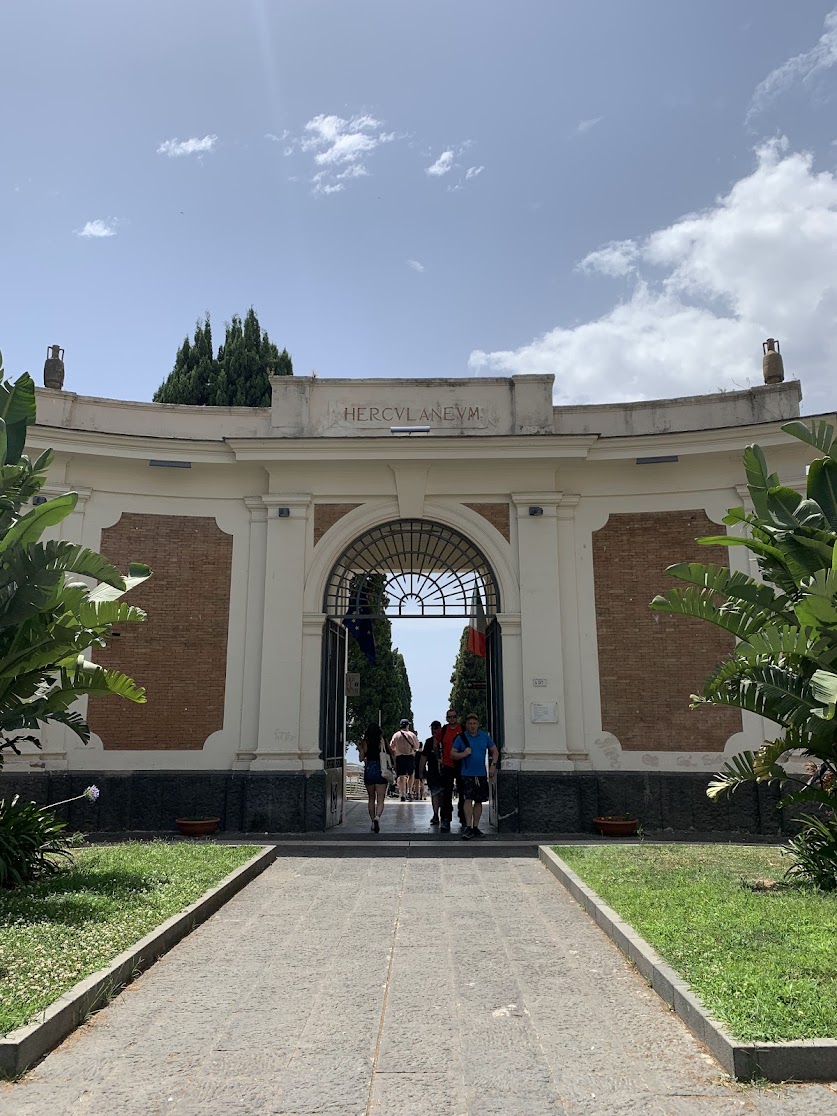
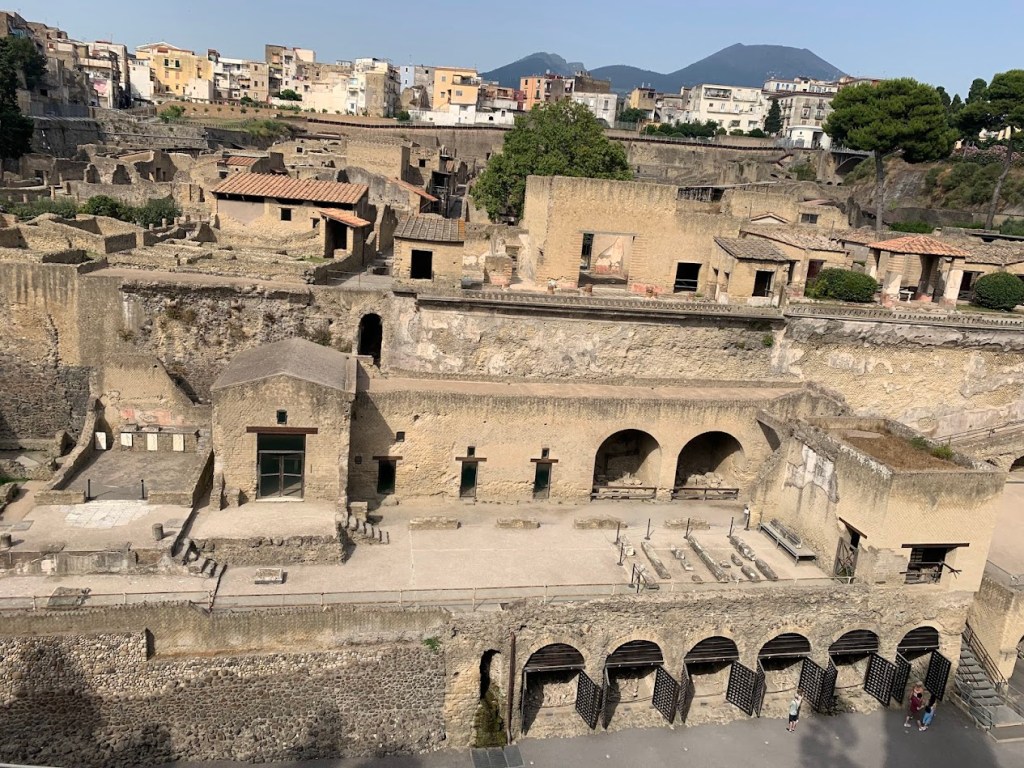
Complete with painted columns, frescoes, second floors and marble panels, Herculaneum does not disappoint any visitor. Visiting Herculaneum was a remarkable experience, similar yet different from Pompeii. Herculaneum was a smaller, wealthier town that was also buried by the eruption of Mount Vesuvius in 79 CE. The site offers a unique glimpse into Roman life, preserved under layers of volcanic material that kept the city remarkably intact. The preservation of organic materials, such as wood and food, offers an unparalleled view into the daily lives of its inhabitants.
HERCULANEUM
Herculaneum was a wealthy town, smaller and more exclusive than Pompeii. It was home to luxurious villas, grand public baths, and intricate mosaics. When Mount Vesuvius erupted, it covered Herculaneum in a pyroclastic flow, which, unlike the ash that covered Pompeii, carbonized and preserved organic materials such as wood, food, and even human remains. Major excavations in the 18th and 19th centuries unearthed these treasures, offering an unparalleled glimpse into Roman daily life.
The preservation of these materials gives Herculaneum a unique edge over Pompeii in terms of the detail it provides about the past. The site offers a wealth of information about Roman architecture, urban planning, and daily activities. The discovery of carbonized scrolls in the Villa of the Papyri, for instance, has provided valuable insights into ancient literature and philosophy. The ongoing research and conservation efforts at Herculaneum ensure that new discoveries continue to enrich our understanding of this ancient town.
The site is easily accessible by train from Naples and from Pompeii, but it’s crucial to plan ahead, especially during the busy tourist season. Comfortable walking shoes, a hat, sunscreen, and plenty of water are essential for a day of exploration. Be prepared to spend several hours exploring Herculaneum. Its compact size allows for a thorough exploration in a single visit, but taking your time to absorb the details and stories behind each artifact will enhance your experience.
Exploring Herculaneum
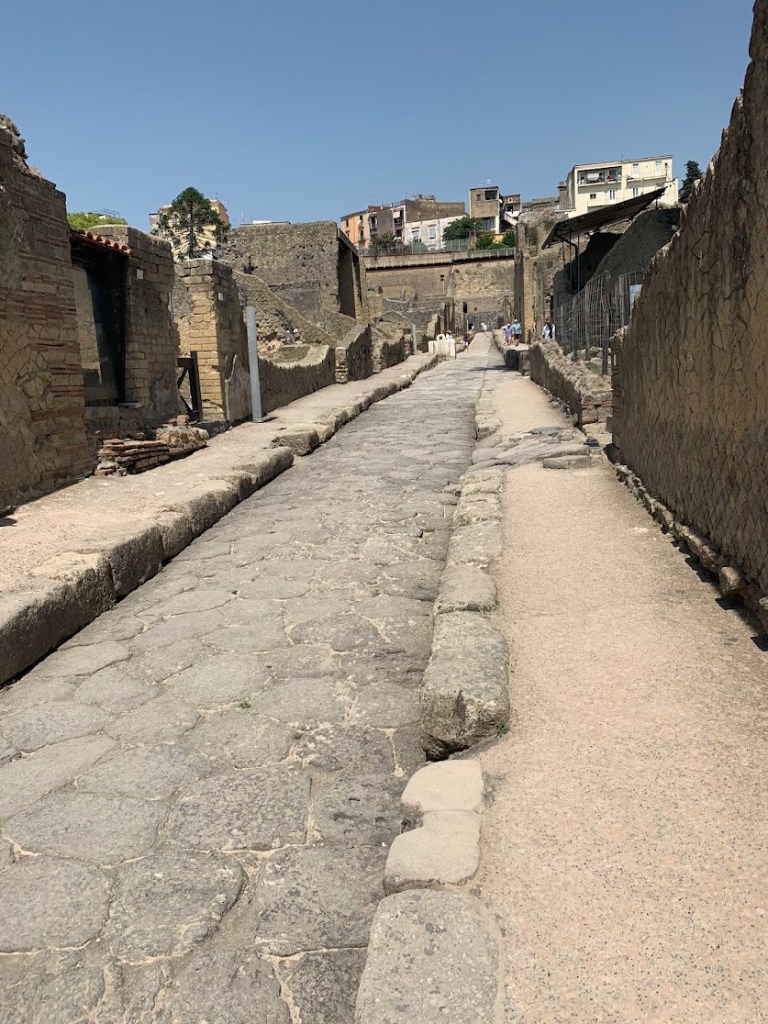
My visit to Herculaneum was both educational and profoundly moving, offering insights that went beyond the pages of textbooks. Walking into Herculaneum, I was immediately struck by the sense of intimacy and preservation. The smaller scale of the site compared to Pompeii allowed for a more focused exploration of its buildings and artifacts. The streets, still paved with ancient stones, led me through a labyrinth of well-preserved structures, each telling its own story of life in the first century CE. The layout of Herculaneum was remarkably well-organized, with clearly marked streets and well-preserved buildings. Stepping into Herculaneum felt like entering a time capsule. The first thing that struck me was the remarkable state of preservation.
The streets, houses, and public buildings were incredibly well-preserved, almost as if they were frozen in time. The contrast with Pompeii was immediate; Herculaneum felt more intimate and personal, with many of the original wooden structures still intact. It was clear that this site would offer a different, yet equally enriching experience.
The Boat Houses
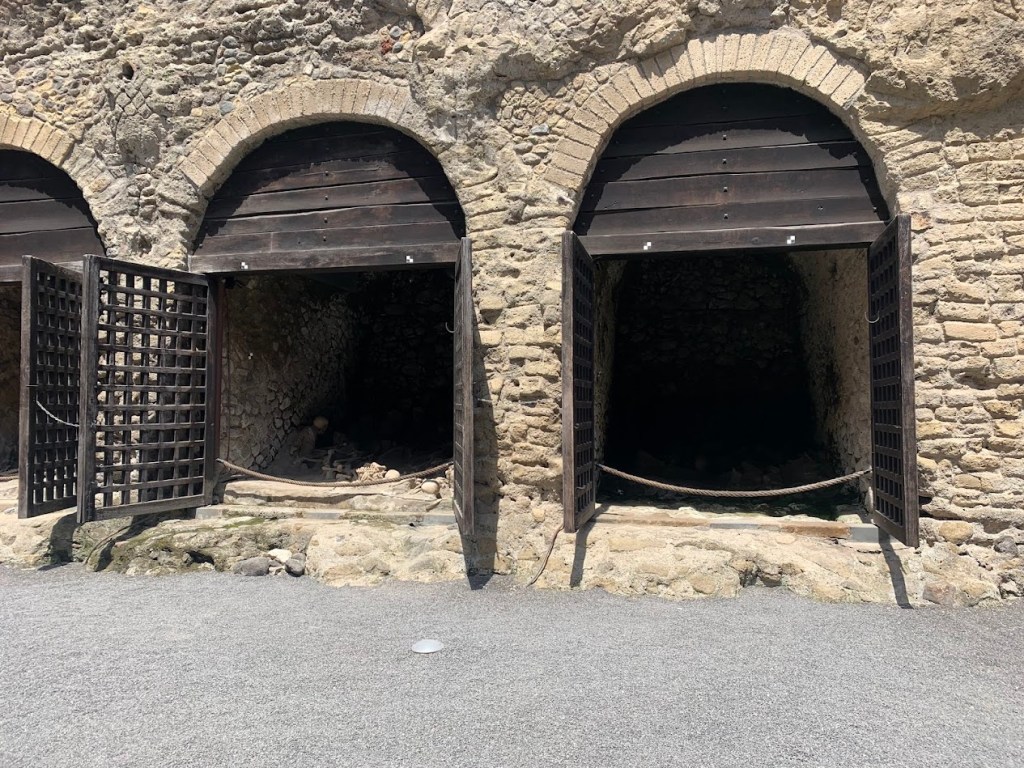
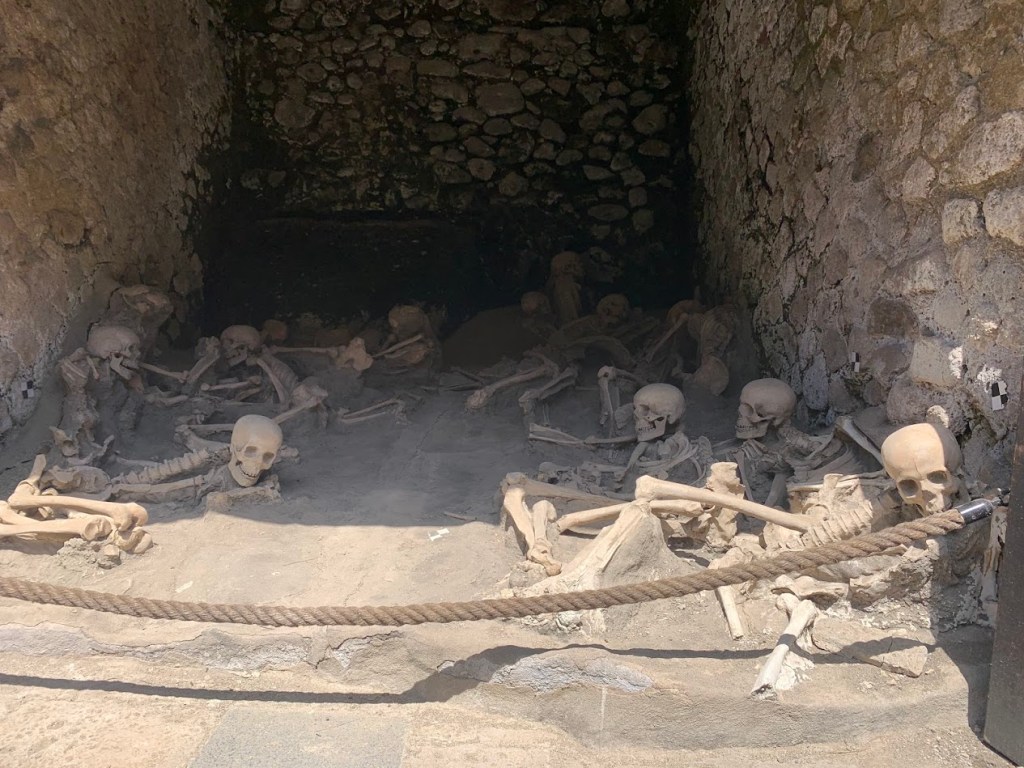
Walking into Herculaneum, one of the first areas you come across are the boat houses. The boat houses are undoubtedly the most powerfully affecting area of the site. They are filled with the skeletons of those who tried to shelter there from the volcanic eruption, and they are preserved so well that you can make out people’s positions, such as parents holding children. It’s a heart-breaking and sobering sight, and it enables you to imagine their lives in the town and the terror of the eruption like nothing else could.
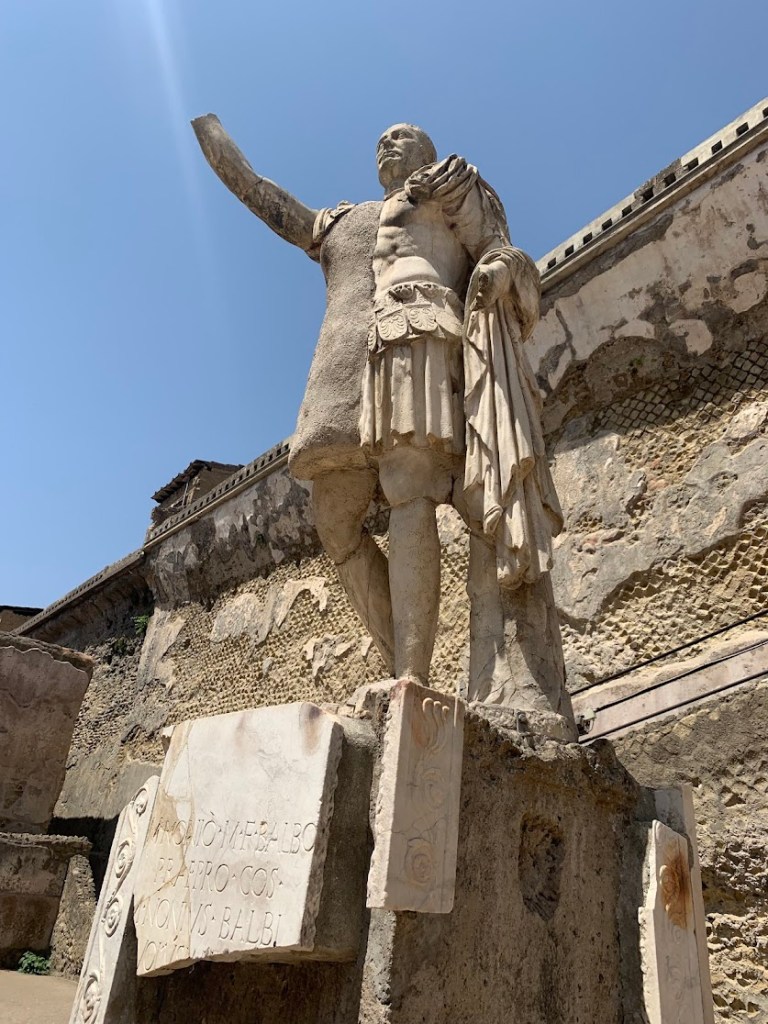
Terrace of Marcus Nonius Balbus
The Terrace of Marcus Nonius Balbus lies in the suburban district of Herculaneum, near the ancient waterfront. Dominating the terrace are a statue of Marcus Nonius Balbus, together with a memorial altar set up in his honor. Balbus was a native of Nuceria and became praetor and proconsul of the provinces of Crete and Cyrene. Currently a replica of the his statue stands on the original statue base behind his funerary altar.
Residential areas
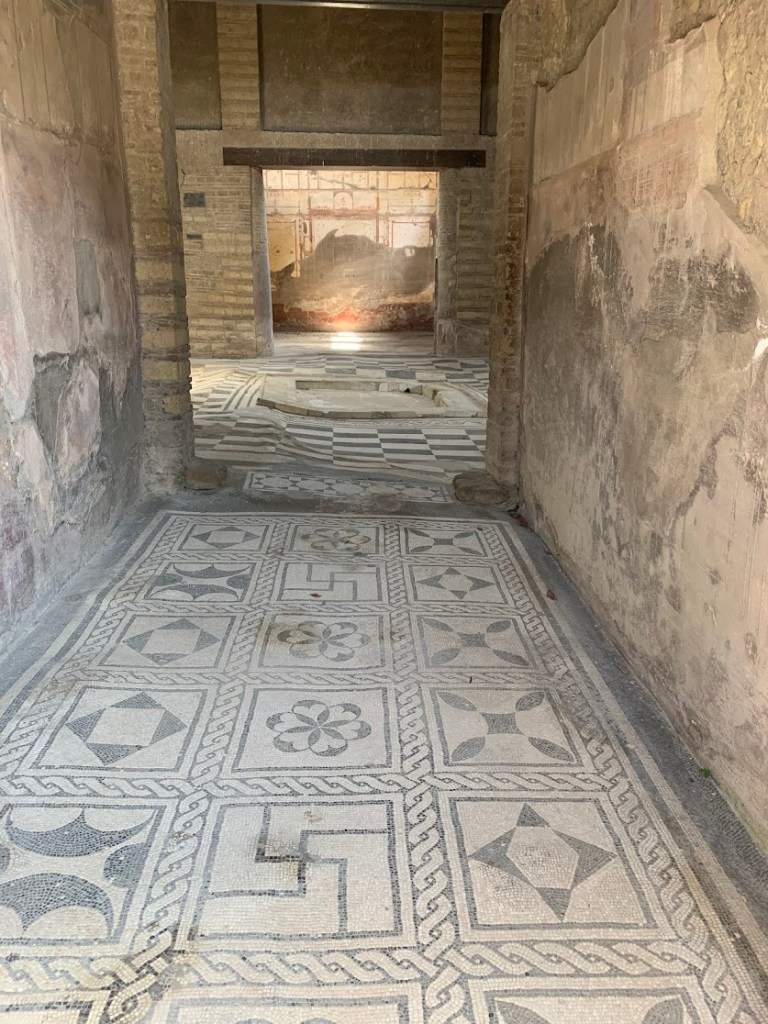
The residential areas of Herculaneum were particularly fascinating. The well-preserved houses, with their intact second stories and wooden beams, offered a rare glimpse into Roman domestic architecture. One of the incredible aspects of Herculaneum is that you are walking across the same mosaics and marble floors that occupants of those houses and shops would have walked on thousands of years ago. Despite their age and fragile state, hardly any areas of these cities are roped off to the public; instead there is an expectation that you be respectful of your surroundings.
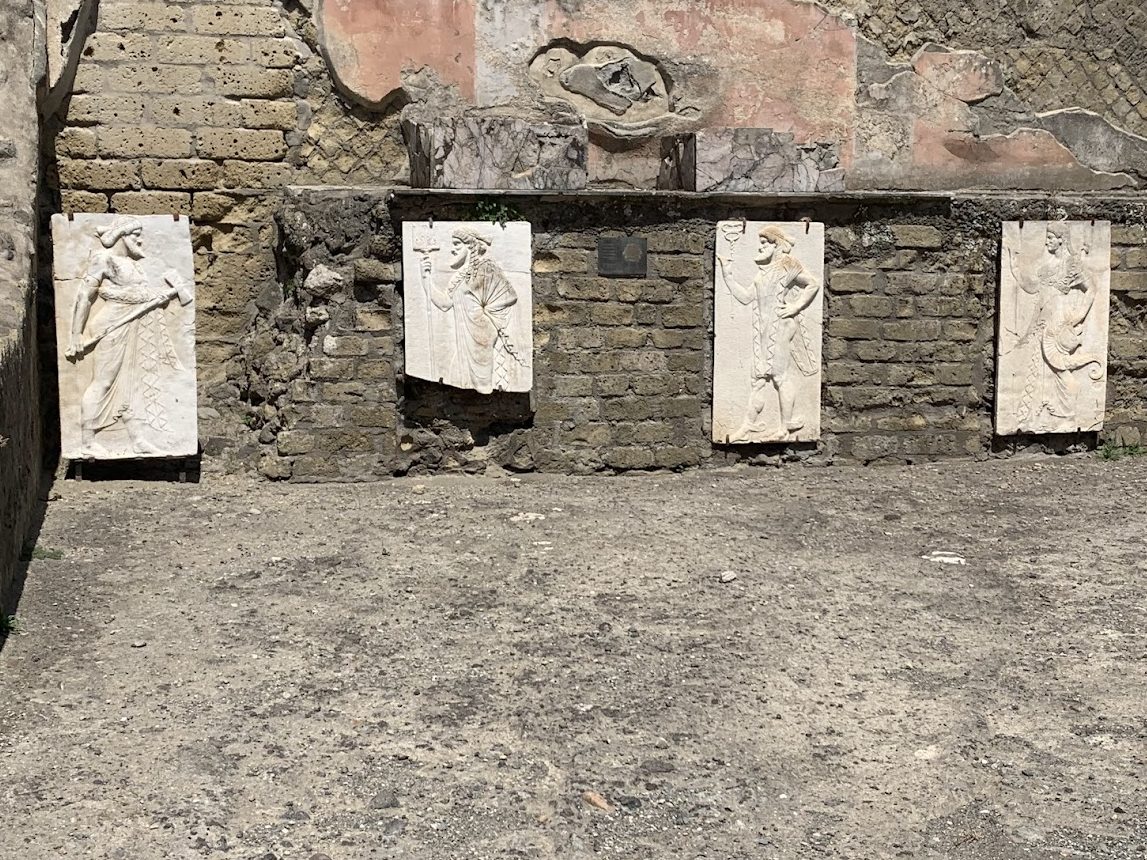
The Sacellum of Four Gods is a small shrine, dedicated to four deities, who are depicted by four stone reliefs. The gods appear to be Vulcan, Neptune, Mercury, and Minerva. The shrine is dedicated to the four gods who represent manufacturing, craft, and trade.
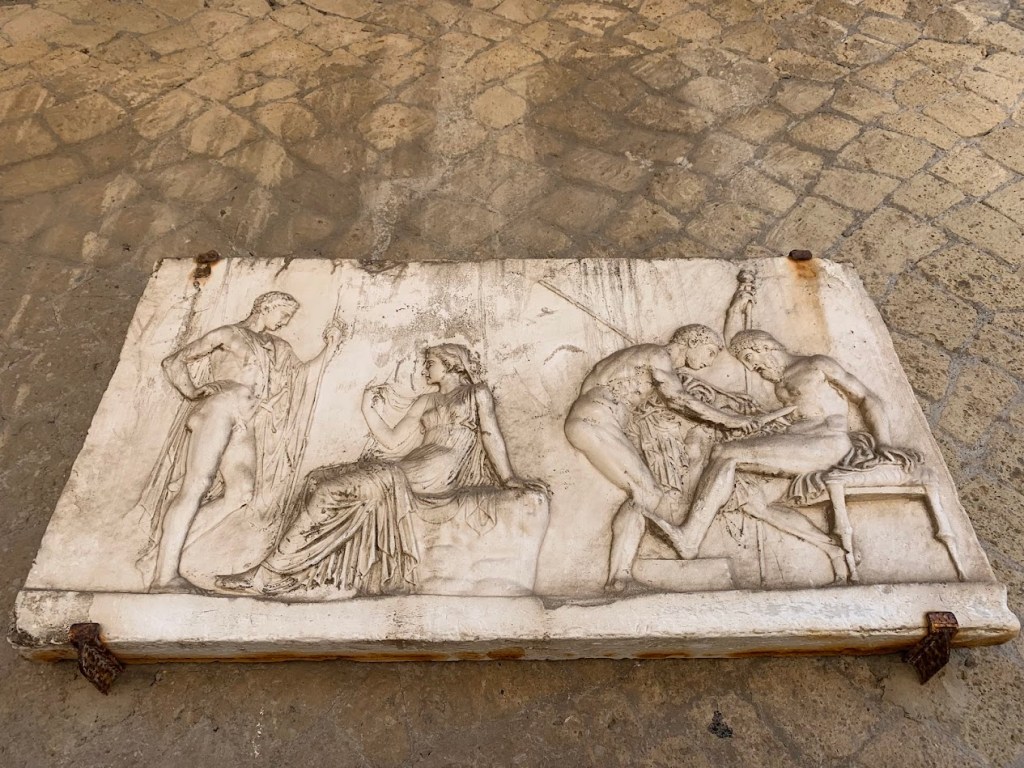
The House of the Relief of Telephus is named after a detailed relief depicting the myth of Telephus. The relief was incredibly well-preserved and provided insight into the artistic and mythological interests of the period. The marble bas-relief depicts the healing of Telephus by Achilles, who scrapes rust from his spear on the wound of the seated Telephus.
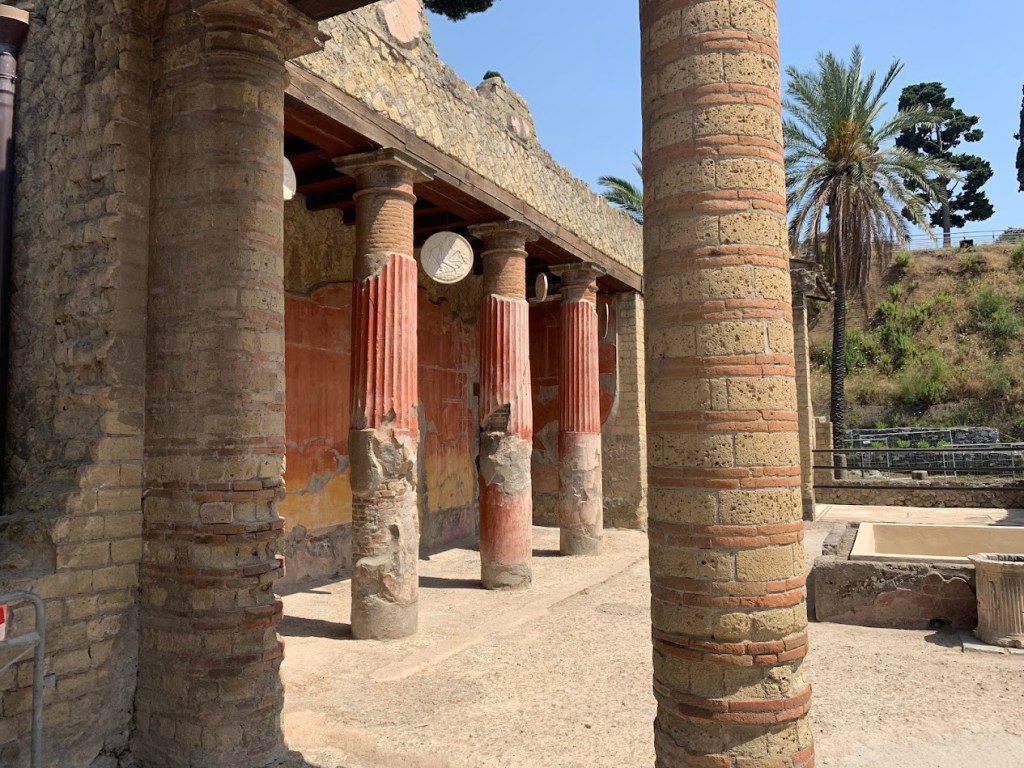
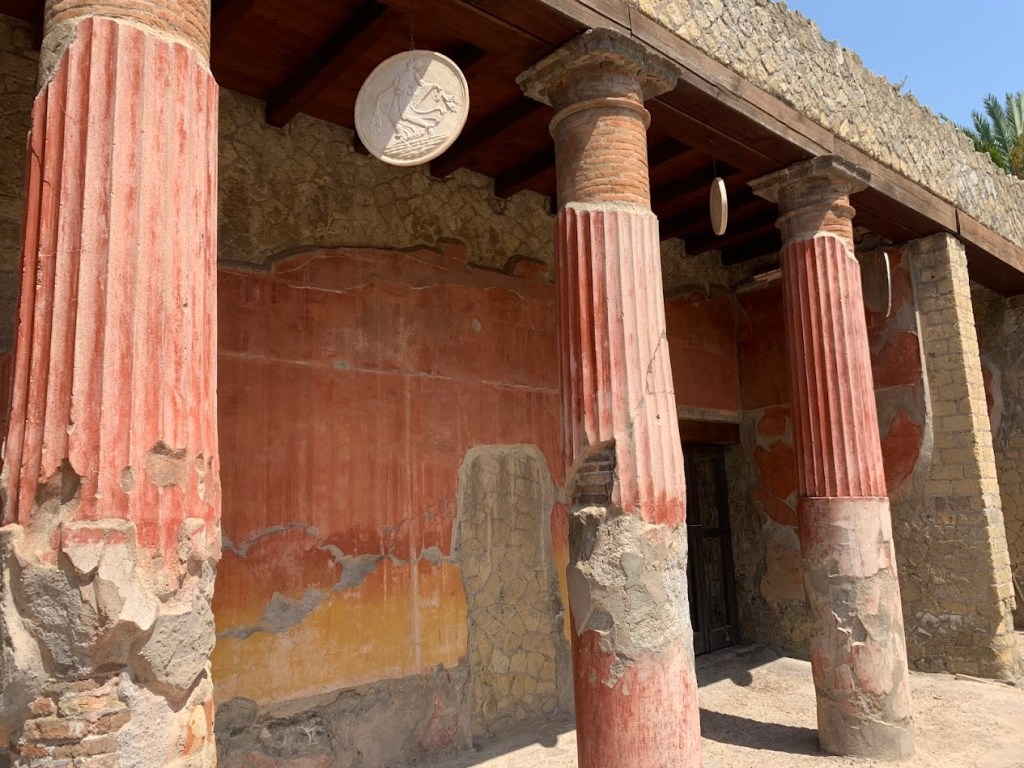
Walking through this house and viewing its very colorful walls and columns, I was able to imagine the lives of its wealthy inhabitants, appreciating the blend of art and daily life that characterized Herculaneum.
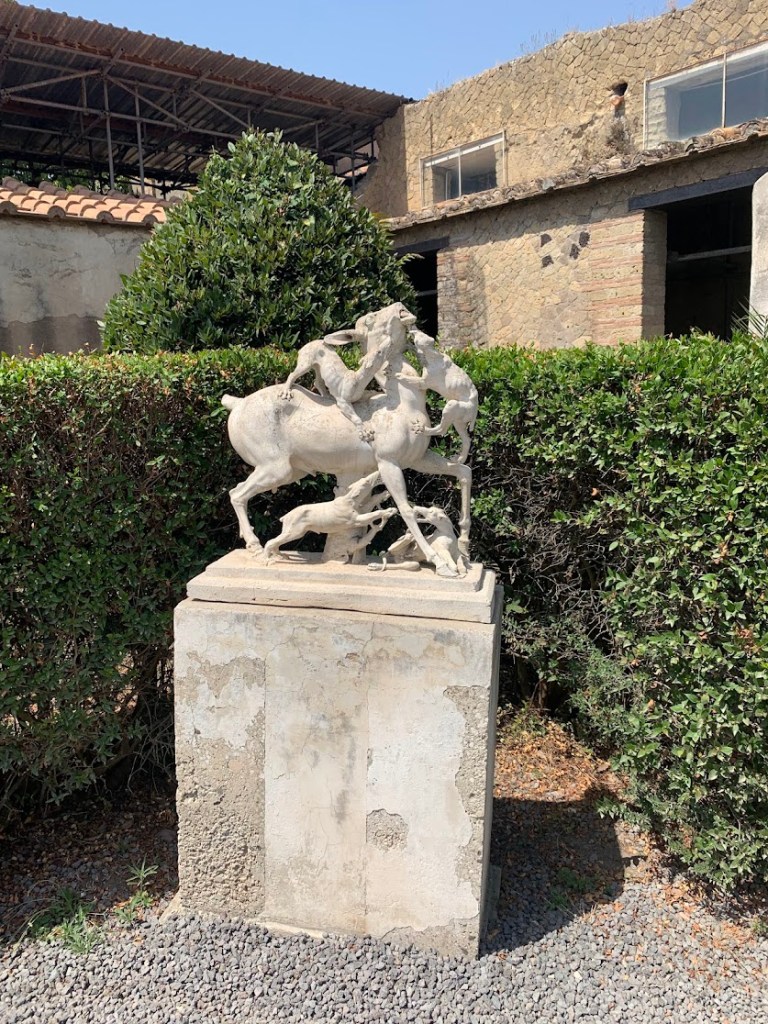
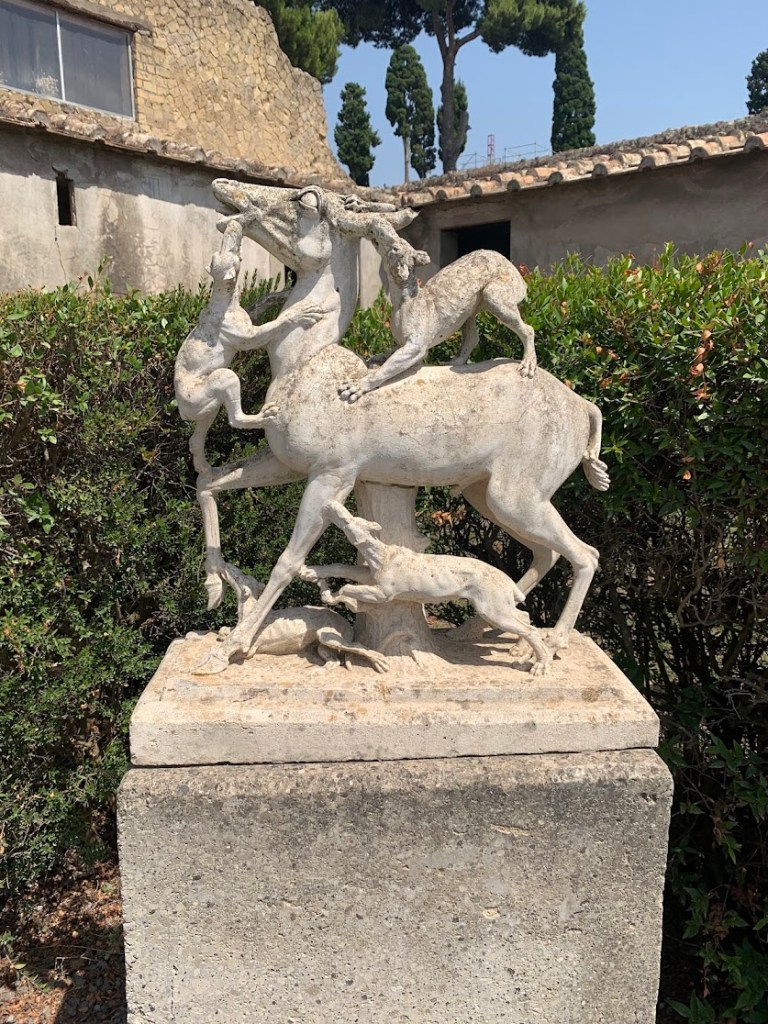
The House of the Deer, named for the statues of deer found in its garden, was luxurious, with beautifully painted walls, intricate mosaics, and even a private bath. The House of the Deer was another standout. Named for the elegant statues of deer found in its garden, this house boasted beautiful frescoes and a stunning layout. The frescoes, depicting mythological scenes and intricate patterns, were vibrant and well-preserved. This house exemplified the wealth and taste of Herculaneum’s elite.
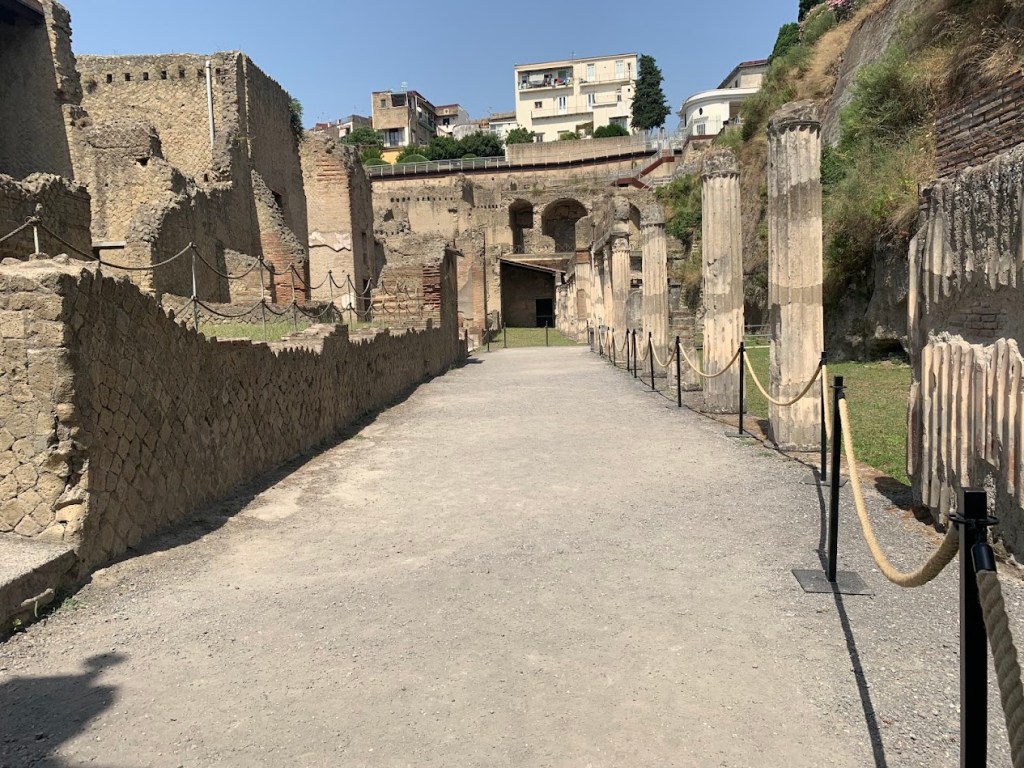
Visiting the Palaestra was a fascinating experience. This large open area was used for physical exercise and training, reflecting the Roman emphasis on physical fitness and public life. The vastness of the space, bordered by colonnades, was impressive. It was easy to envision athletes training and competing here.
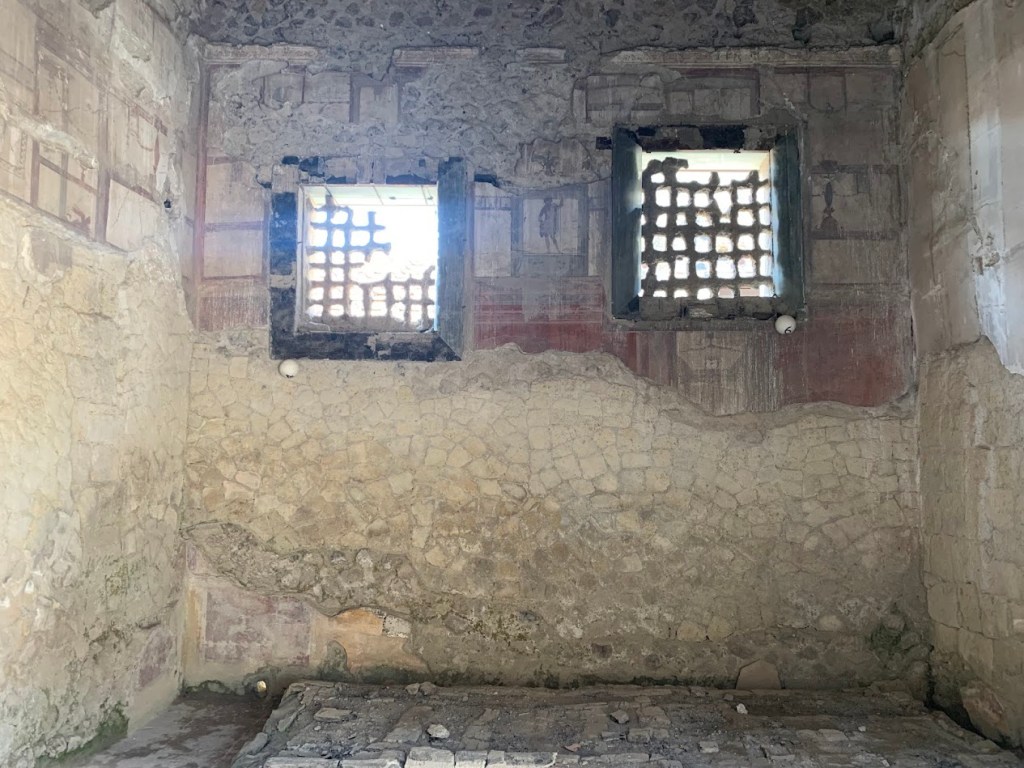
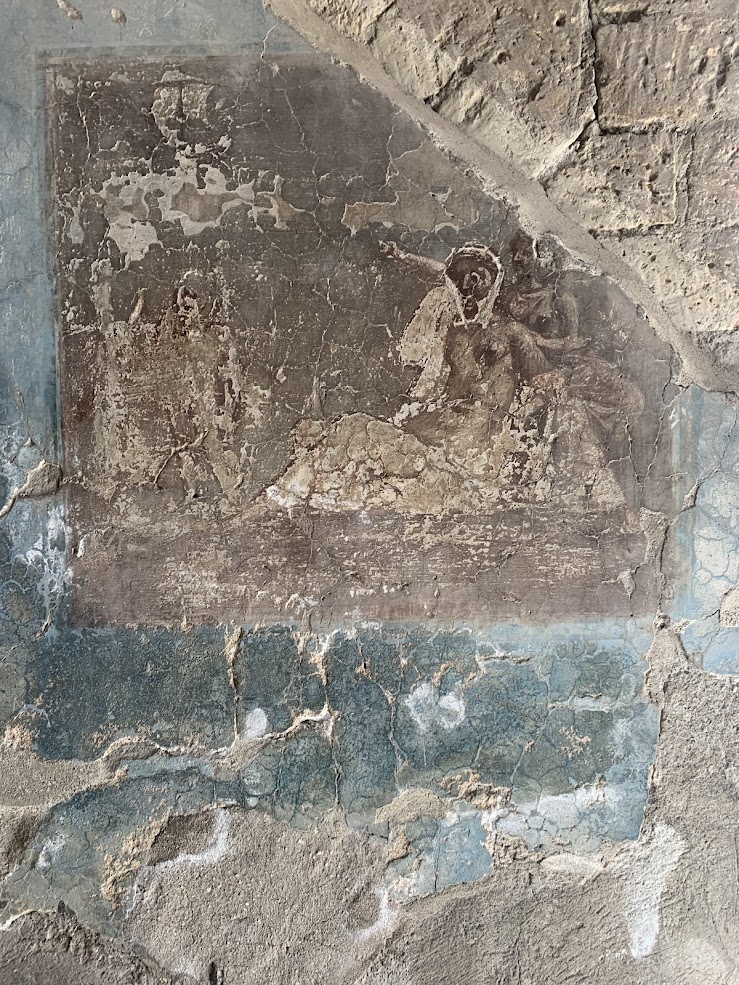
The House of the Alcove was notable for its unique architectural features. The alcove, likely used for sleeping or resting, was adorned with beautiful frescoes.
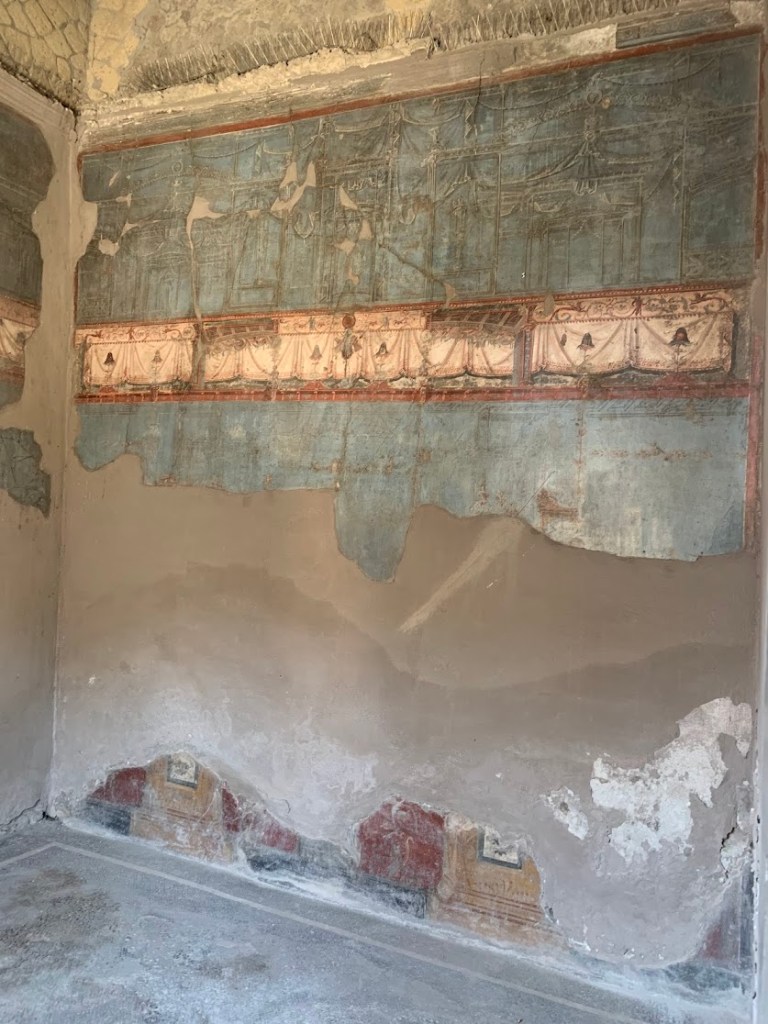
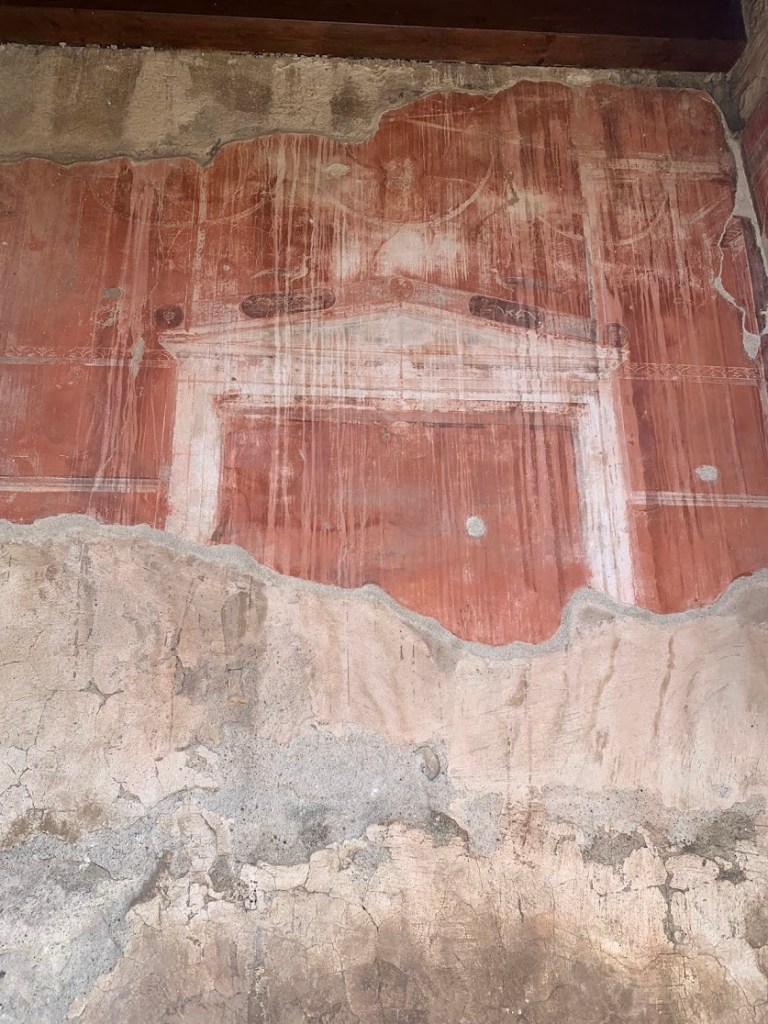
The baths of Herculaneum were another highlight of my visit. The Suburban Baths, located near the ancient shoreline, were incredibly well-preserved, with intact mosaics, frescoes, and even wooden doors. I was shocked that I was allowed to walk on the detailed mosaics in a nautical theme, made entirely out of black and white pieces.
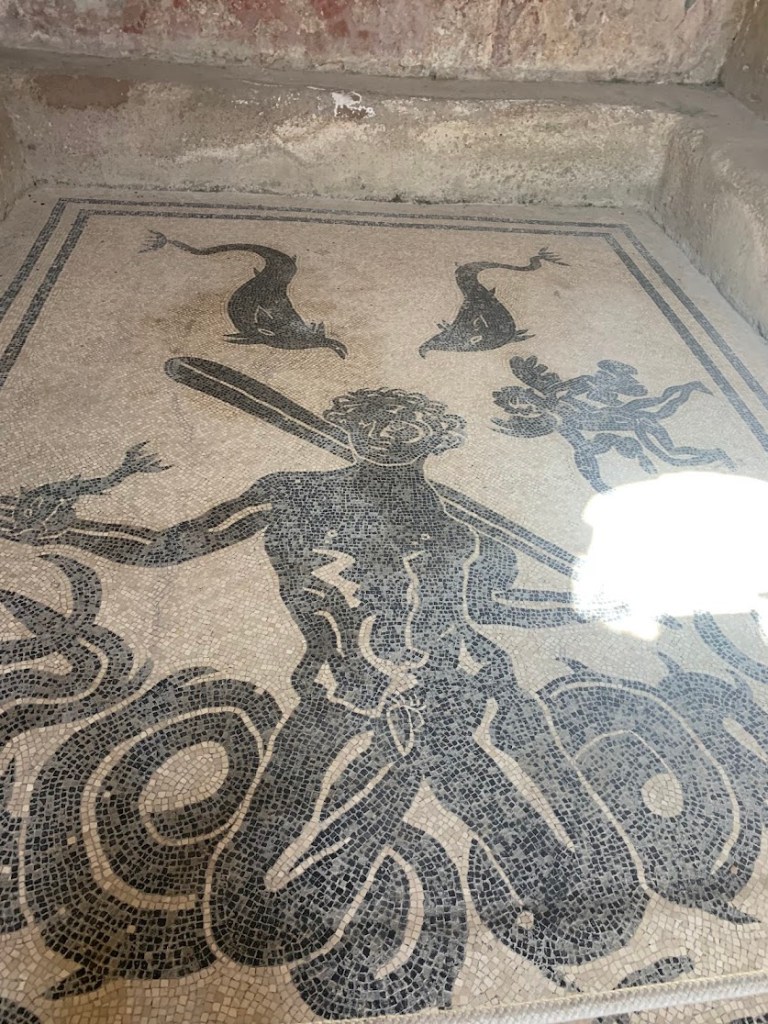
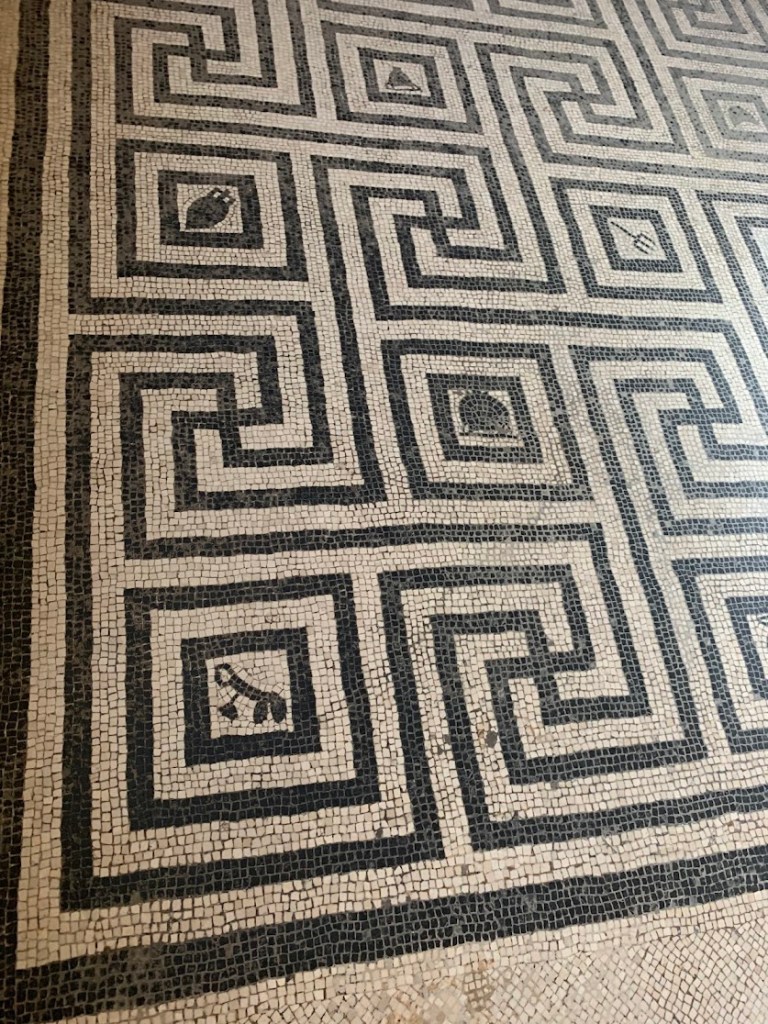
Walking across the pristine mosaics, feeling the cool shade inside, it was easy to imagine the people of Herculaneum sitting along the bench that wrapped around the room.
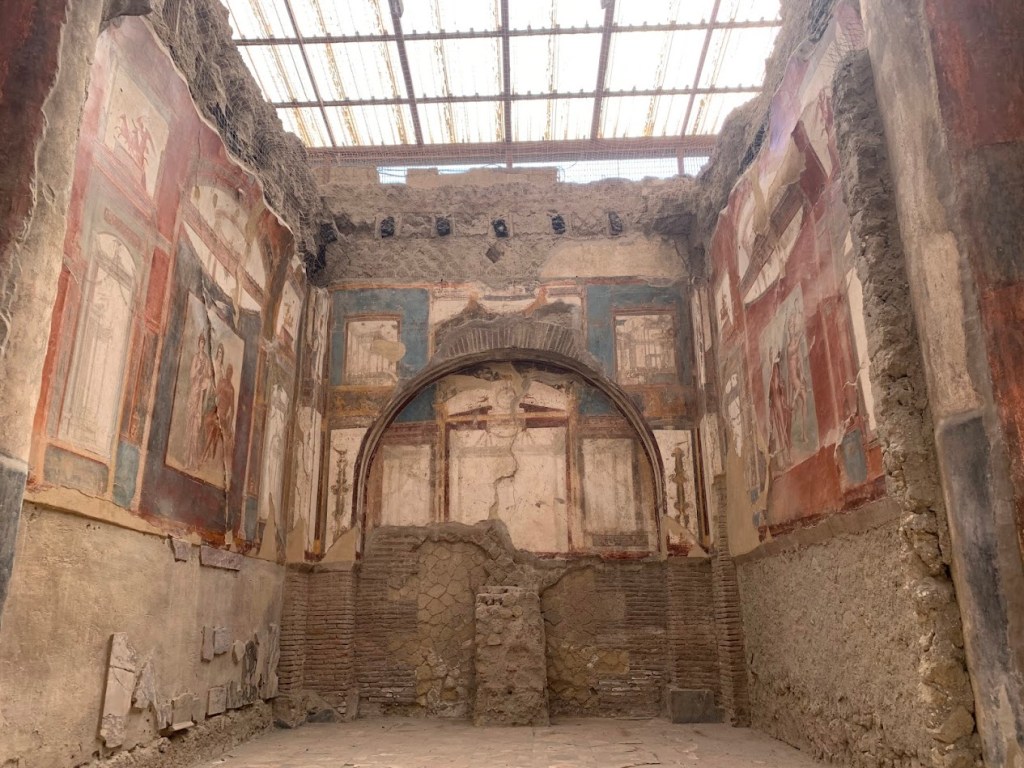
The Sacellum of the Augustales in Herculaneum was one of the most fascinating stops on my visit. Dedicated to the imperial cult of the Augustales, this small but significant temple offered a unique glimpse into the religious practices and political loyalties of the town’s inhabitants.
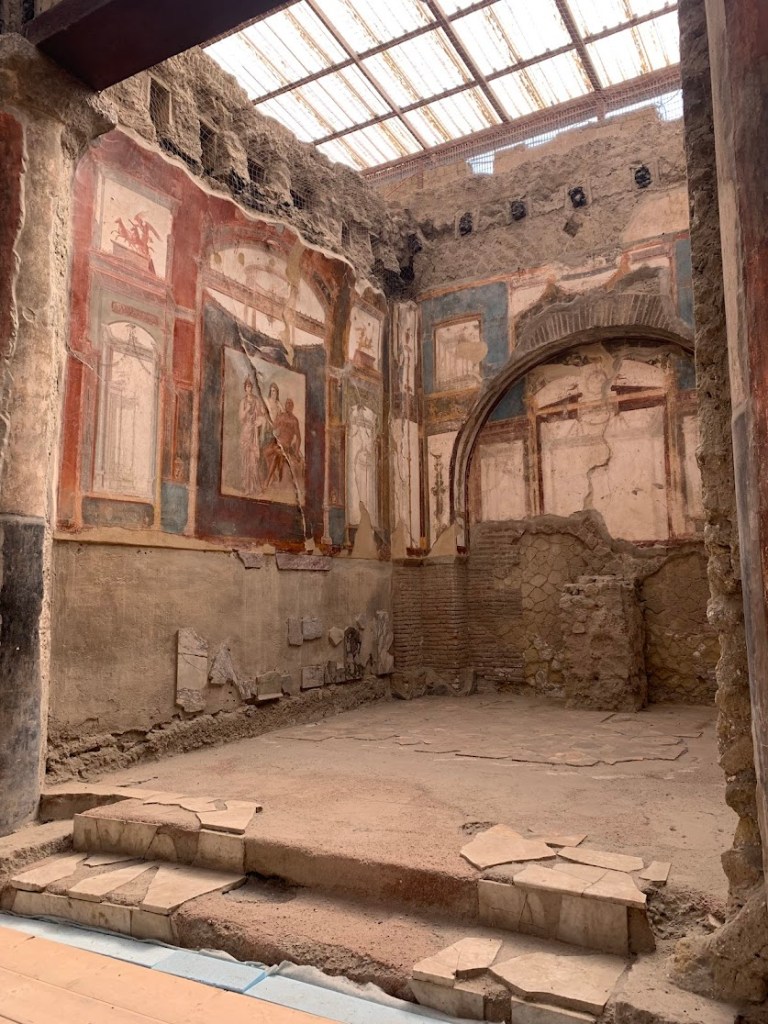
The interior of the sacellum is adorned with remarkable frescoes that vividly depict mythological scenes of Hercules and honor the emperor.
The House of Neptune and Amphitrite was a highlight of my visit to Herculaneum.
The house gets its name from a large, glass-paste mosaic of the sea god, Neptune, and his wife Amphitrite, that adorns the wall of the outdoor summer dining room, or triclinium, and which was probably the owner’s pride and joy. Walking through this house, I was struck by the careful attention to detail in the decoration and the importance placed on displaying artistic wealth.

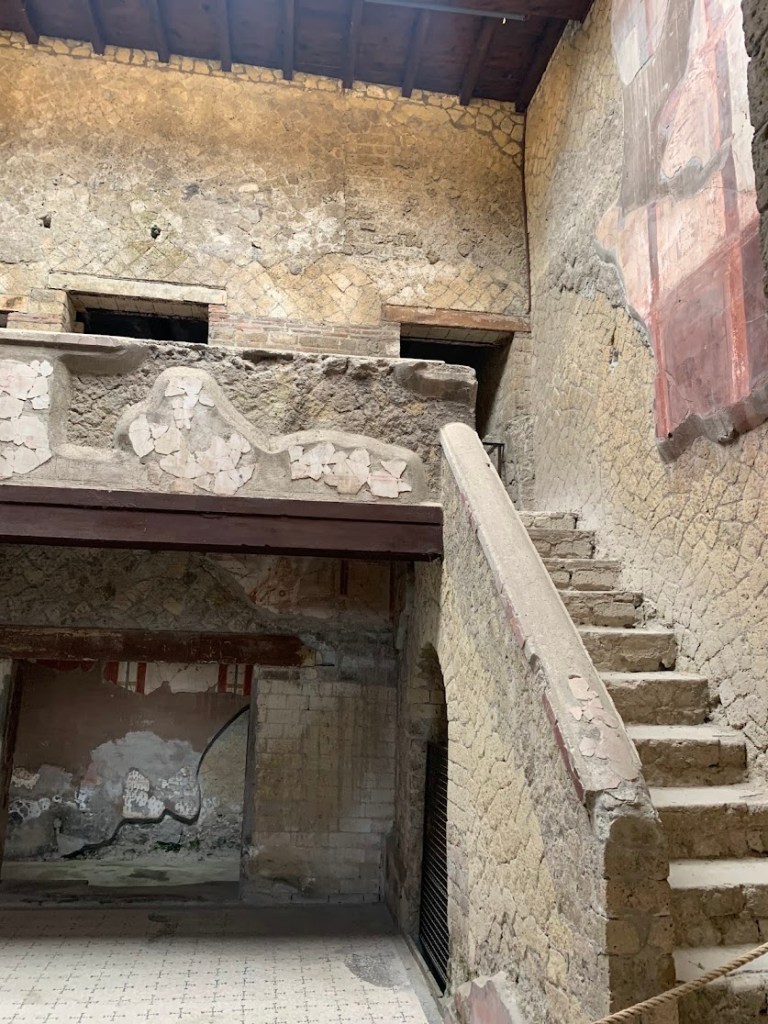
House of the Beautiful Courtyard takes its name from the discovery of a perfectly preserved courtyard inside the house. The artium contains frescos with many and pretty decoration on the walls.
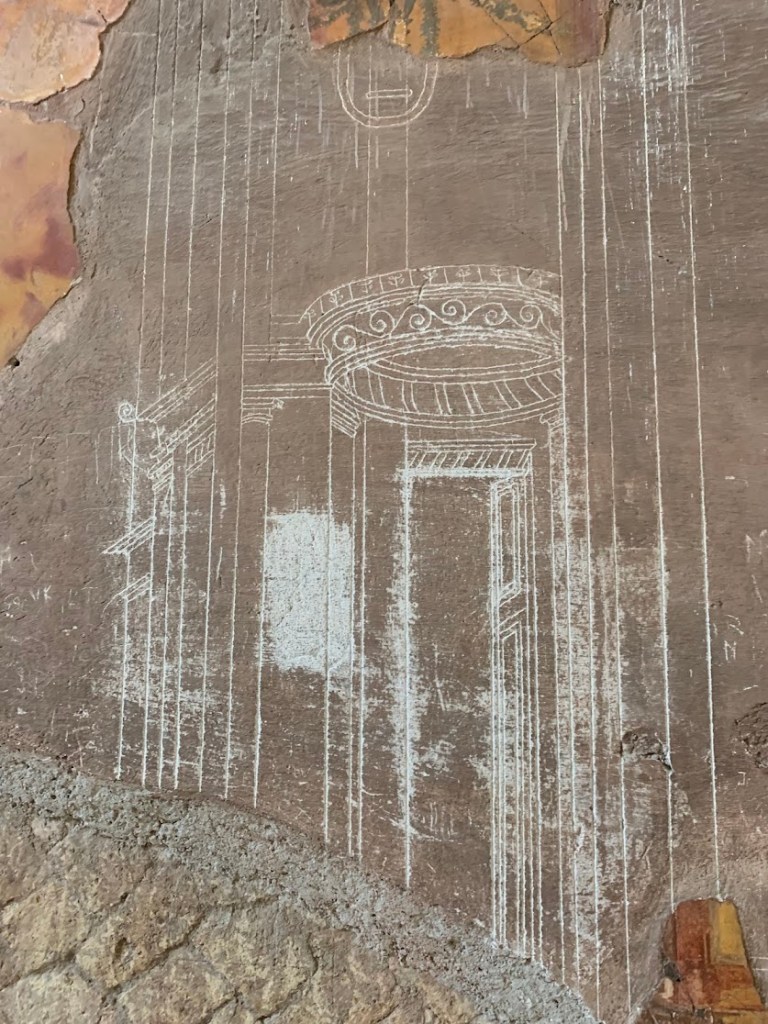
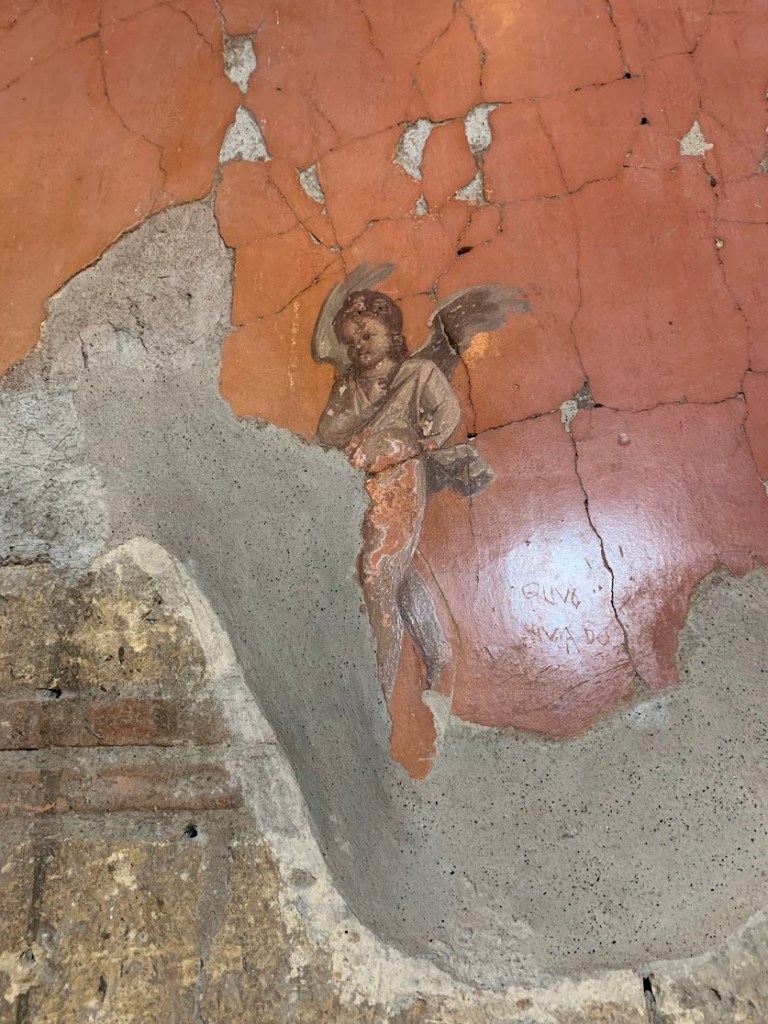
What was most striking about this house is the staircase. The staircase is perfectly intact and provides access to the still intact second floor of the House of the Beautiful courtyard.
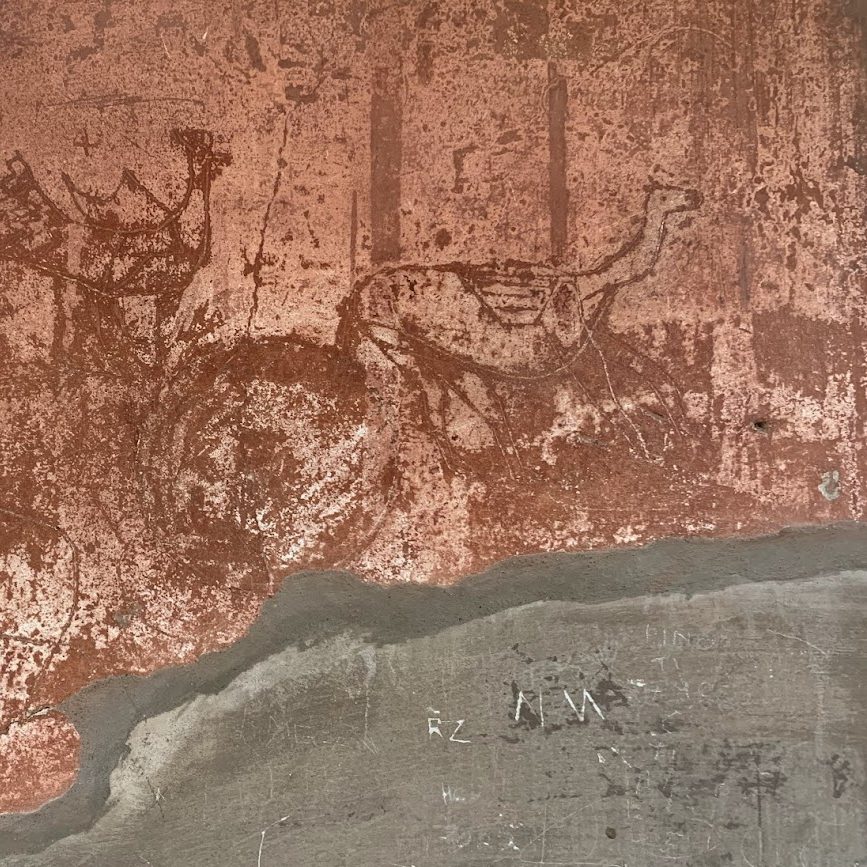
The Samnite House one of the oldest residences in Herculaneum, showcases the architectural transition from the Samnite to the Roman period. Its atrium and peristyle garden are characteristic of early Roman domestic architecture. On one of the walls, the house contains a graffito illustrating the only known drawing of a camel from ancient Italy.
My Thoughts on Herculaneum
When visiting the Herculaneum, I could feel this sense of completion from the town due to how preserved and intact the buildings and homes were. With significantly less tourists visiting Herculaneum, wandering the ancient streets felt more that of a ghost town abandoned, rather than an ancient archeological site post natural disaster. Herculaneum, different from Pompeii, also coexists with the modern city, creating a true dichotomy between present and past. Visiting Herculaneum was an emotionally profound experience. The human remains, especially those in the boat houses, profoundly impacted me, serving as poignant reminders of the real people who endured this catastrophe. The site’s smaller scale compared to Pompeii allowed for a more intimate connection, making the ancient community feel alive and relatable. The preservation of organic materials and the intimate nature of the site brought their stories to life in a way that was deeply moving. As an archaeologist, seeing these well-preserved remnants of daily life provided valuable insights and a new appreciation for the complexity of Roman society.
 Digging Through the Ages
Leave a comment