

The National Archaeological Museum of Naples (Museo Archeologico Nazionale di Napoli) is an important Italian archaeological museum, particularly for ancient Roman remains. Situated in an elegant 17th-century building, this museum serves as a vast repository of sculptures, frescoes, mosaics, and numerous relics from antiquity, with many treasures originating from the ruins of Pompeii and Herculaneum. Its exhibits span a wide range of historical periods and regions, with a significant focus on the artifacts recovered from Pompeii and Herculaneum after the catastrophic eruption of Mount Vesuvius in AD 79. These collections offer invaluable insights into the daily life, art, and culture of the ancient Roman world.
Traveling to the Museum of Naples from Pompeii was a somewhat seamless journey, filled with anticipation and nervousness. Having recently explored Pompeii, my expectations were high, eager to see the artifacts in a new context and learn more about their significance. I was a bit nervous while navigating the train and metro systems of Naples, but I still made it to the museum in the late morning.
Exploring the Museum
I truly enjoyed my visit to the museum, spending several hours in the splendid building. However if you visit during the summer, please bring a fan and a water bottle as there is no air condition in the museum. The museum is of a considerable size, so I decided to concentrate on viewing the Roman section which contains a multitude of interesting artifacts that were buried by the volcanic eruption of Mount Vesuvius in 79 AD.
The museum is organized in order to guide visitors through different periods and aspects of ancient life. Each floor offered new insights and discoveries, making the exploration both educational and deeply engaging. However, the museum’s layout was a bit tricky. Its large, sprawling halls and sometimes unclear signs made it easy to get lost. I often ended up in rooms I hadn’t planned on visiting, discovering interesting exhibits by chance. While this added a surprise element to my visit, it also made it challenging to keep track of my exploration.
Reflecting on my experience, I see that the museum’s maze-like nature mirrors the complexity of archaeology itself. Just as we piece together fragments of the past, navigating the museum felt like a process of discovery and interpretation. While clearer guidance would have helped, the sense of exploration was fitting for an archaeologist.
The Ground Floor
Campania in the Roman Period
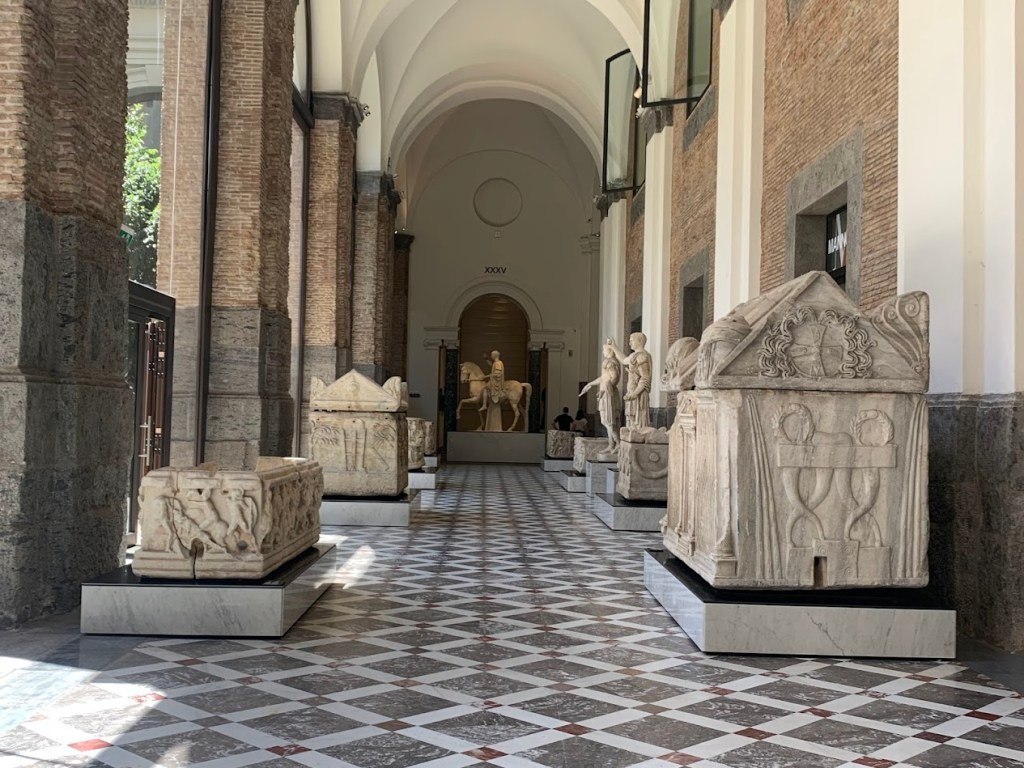
The Ground Floor of the museum focuses on Roman towns in Campania, spanning from the 2nd century BC to the 3rd century CE, featuring sculptures and paintings from public buildings. This level provides a vivid snapshot of Roman public life, with artworks that once adorned temples, forums, and other civic spaces. The sculptures capture the grandeur of Roman art, from majestic statues of gods and emperors to detailed reliefs depicting historical events and mythological scenes. The paintings, meanwhile, offer glimpses into the decorative styles and thematic preferences of the era, reflecting the cultural and artistic achievements of ancient Campania.
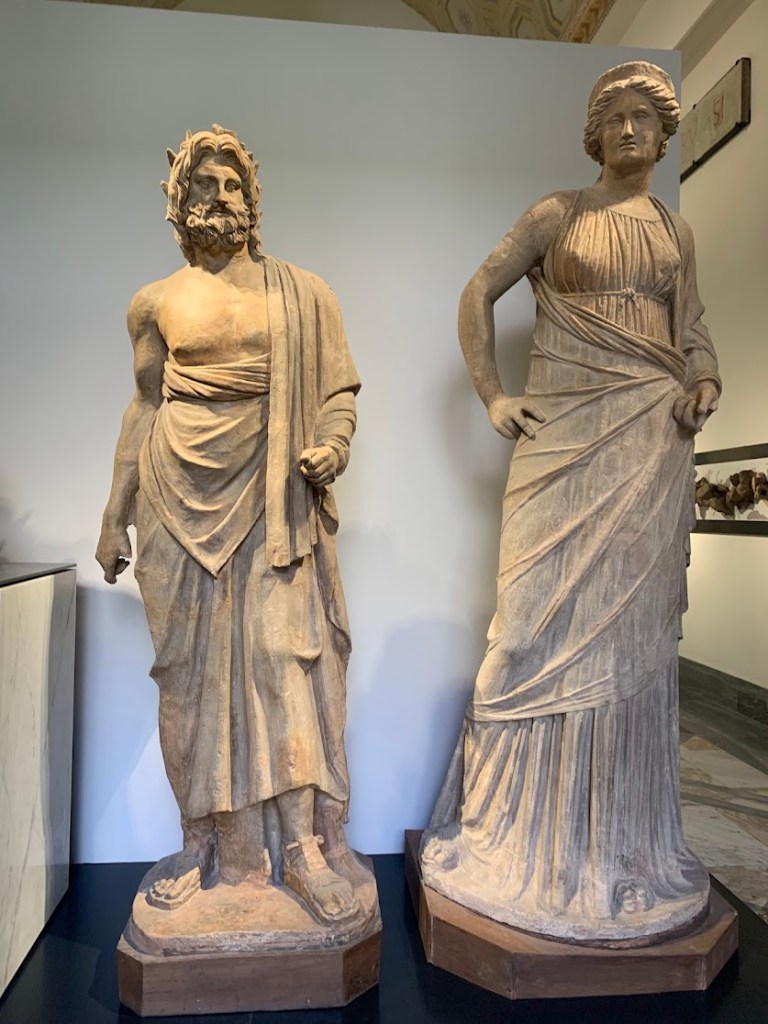
Some of the rooms present Pompeii and its buildings: the Triangular Forum and the area around the Forum such as Temple of Asclepius, Sanctuary of Apollo, Temple of Venus, The Forum of Pompeii, Eumachia Building, Macellum. These rooms also display artworks from Pompeii and in particular from the Forum, the temple of Jupiter, the Basilica, the building of Eumachia and from the other buildings dedicated to the imperial cult.
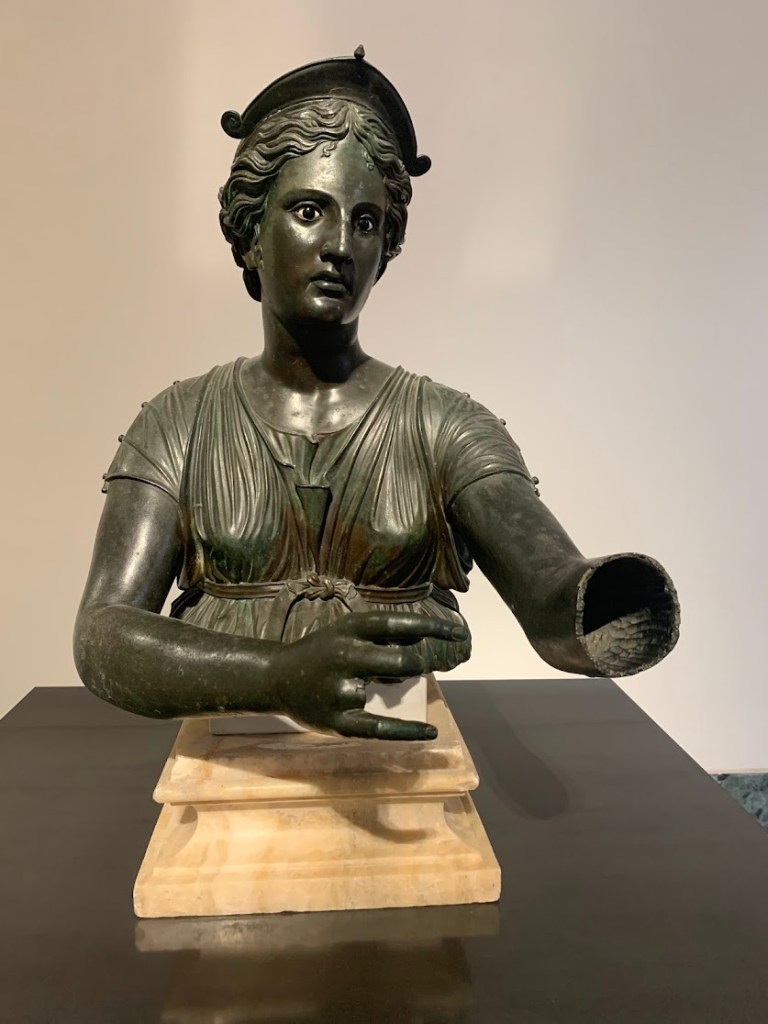
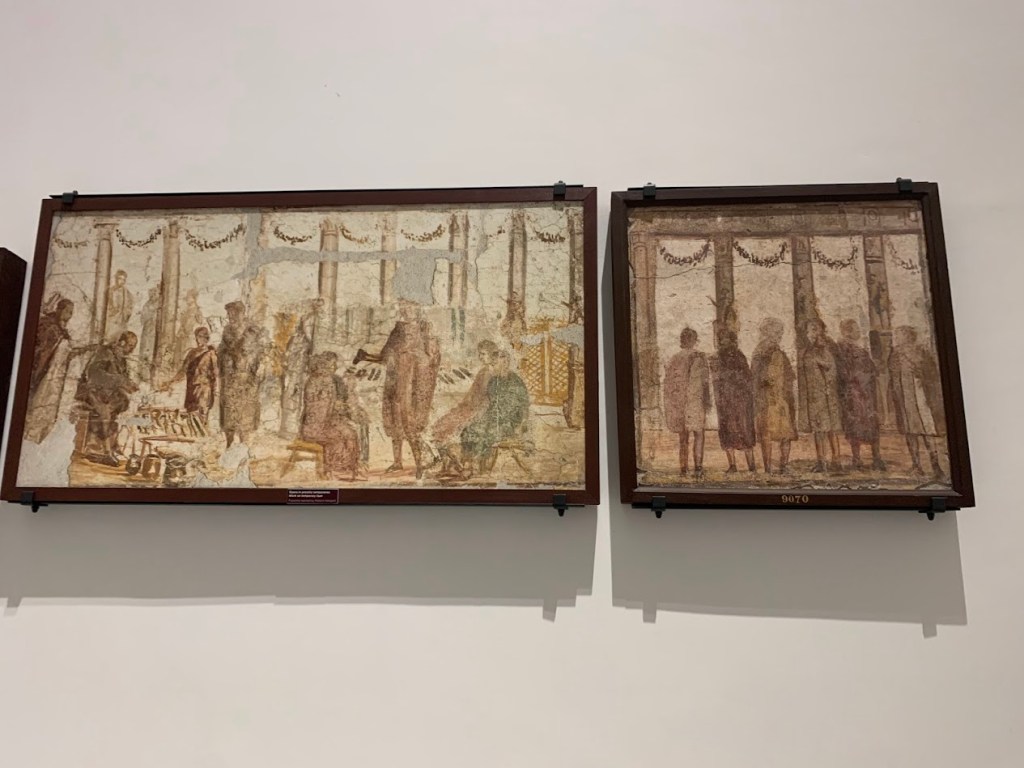
Following rooms are dedicated to Herculaneum with focus on the Forum, the famous bronze quadriga, which probably decorated the four- centered arch located in front of the Nonian Basilica, the theater and the Augusteum.
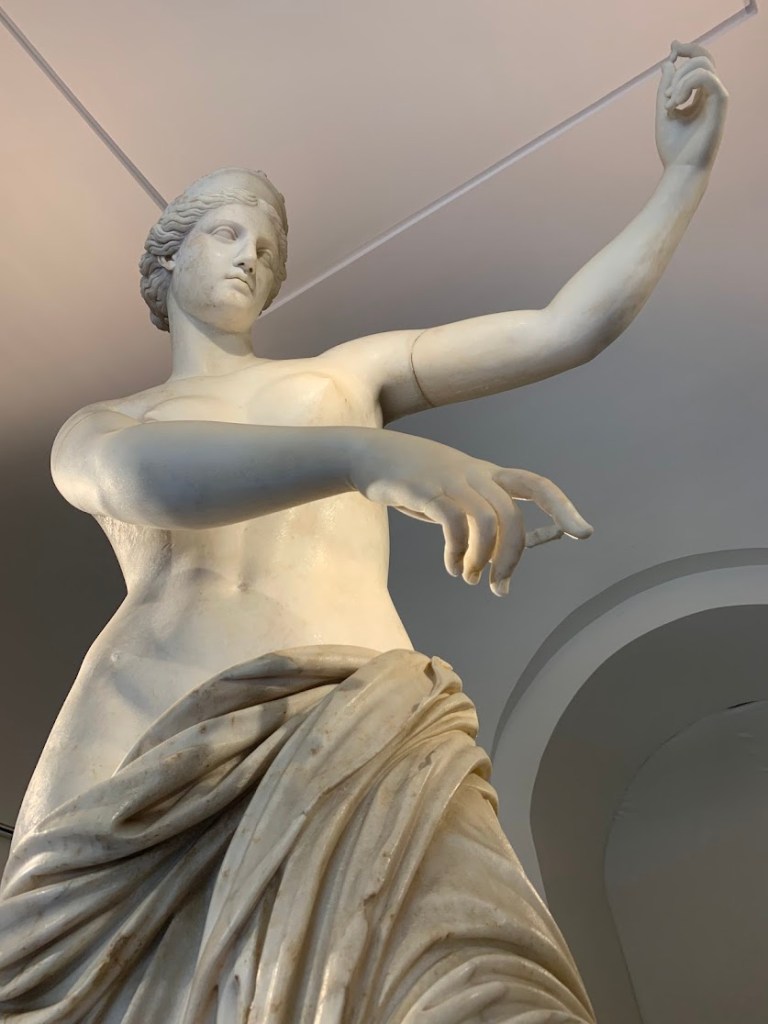
Farnese Collection
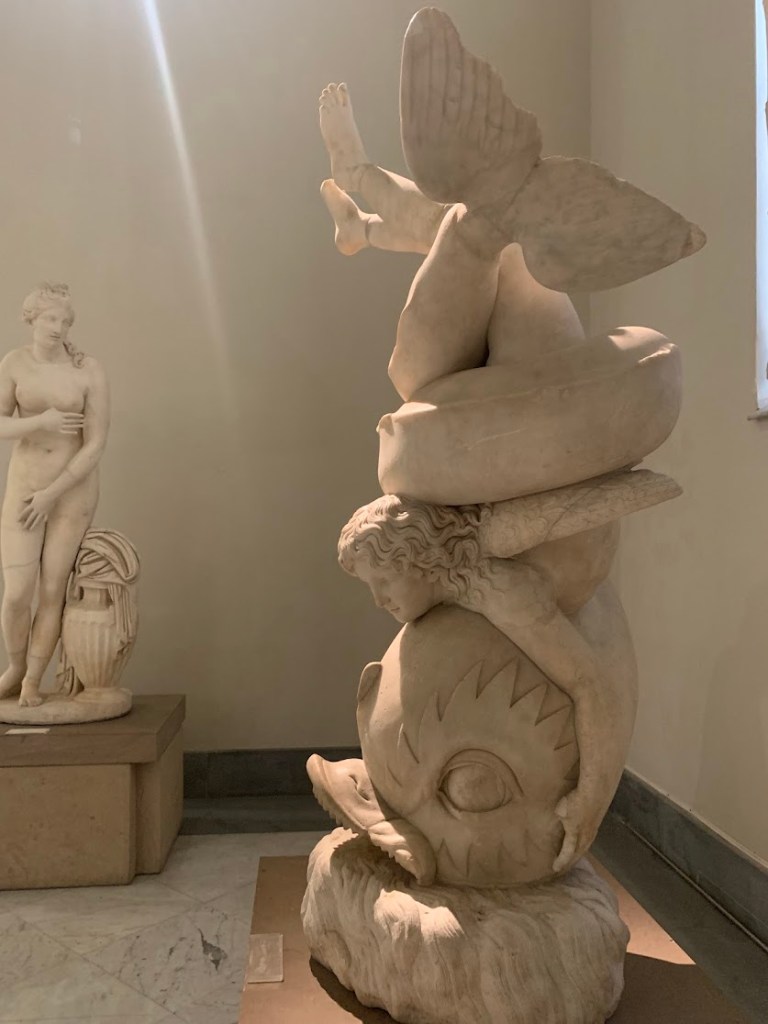
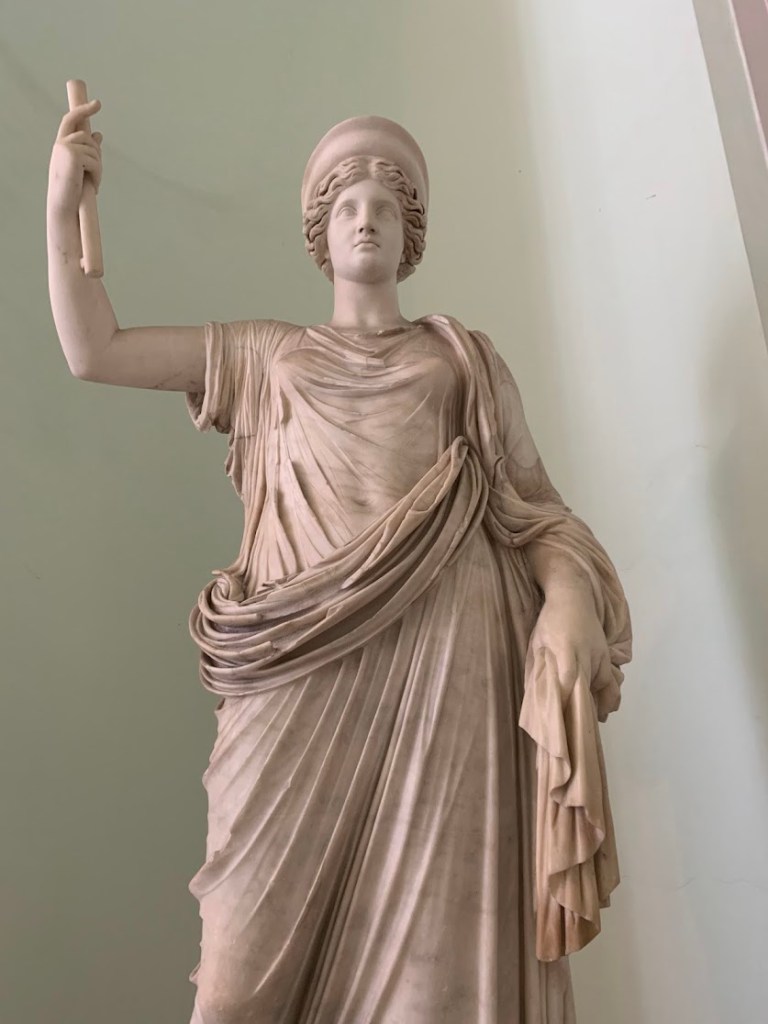
The Farnese Collection, one of the highlights, includes some of the most significant sculptures of the ancient world.
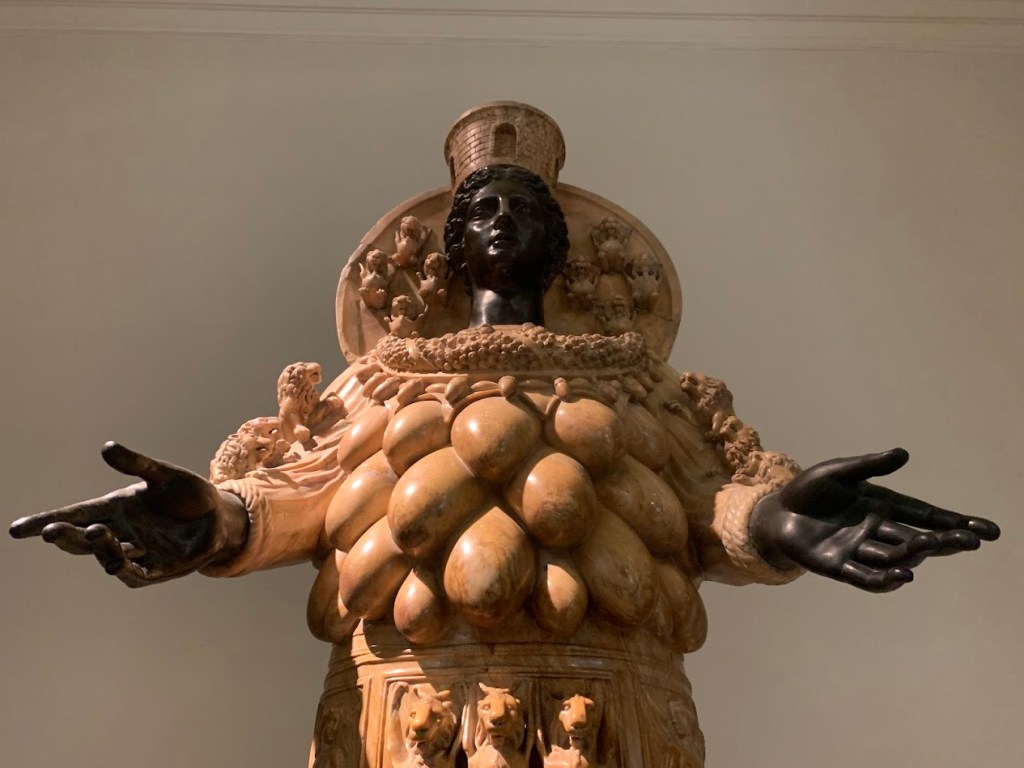
These pieces, with their intricate details and powerful presence, showcased the artistic excellence and cultural importance of Roman sculpture.
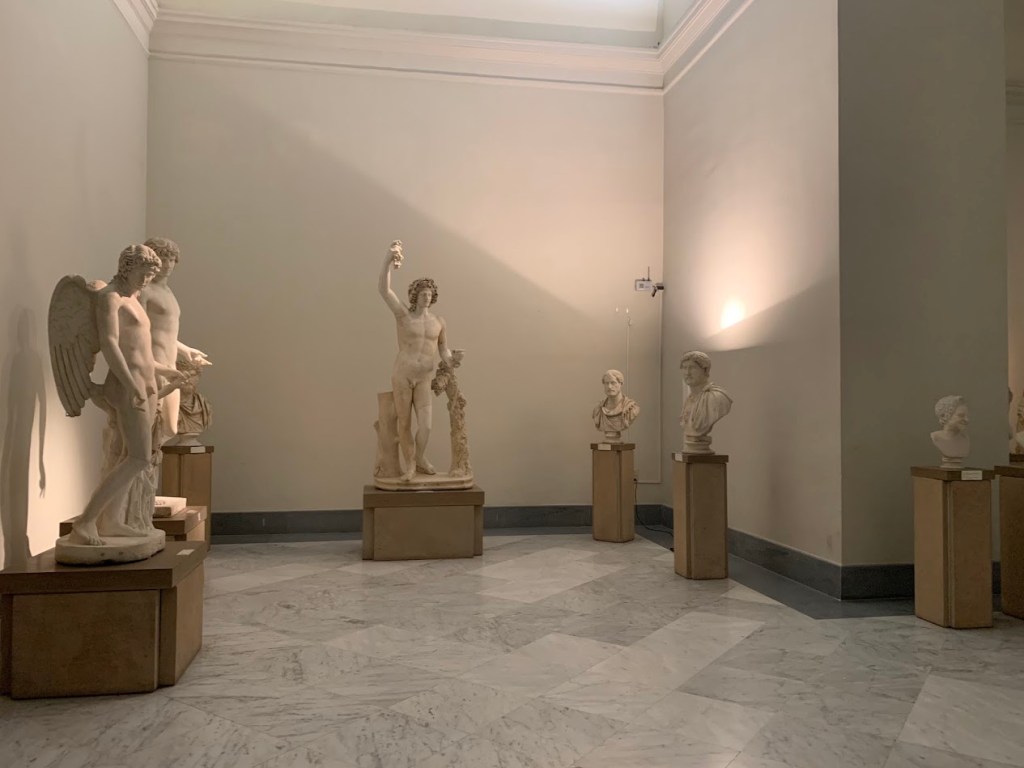
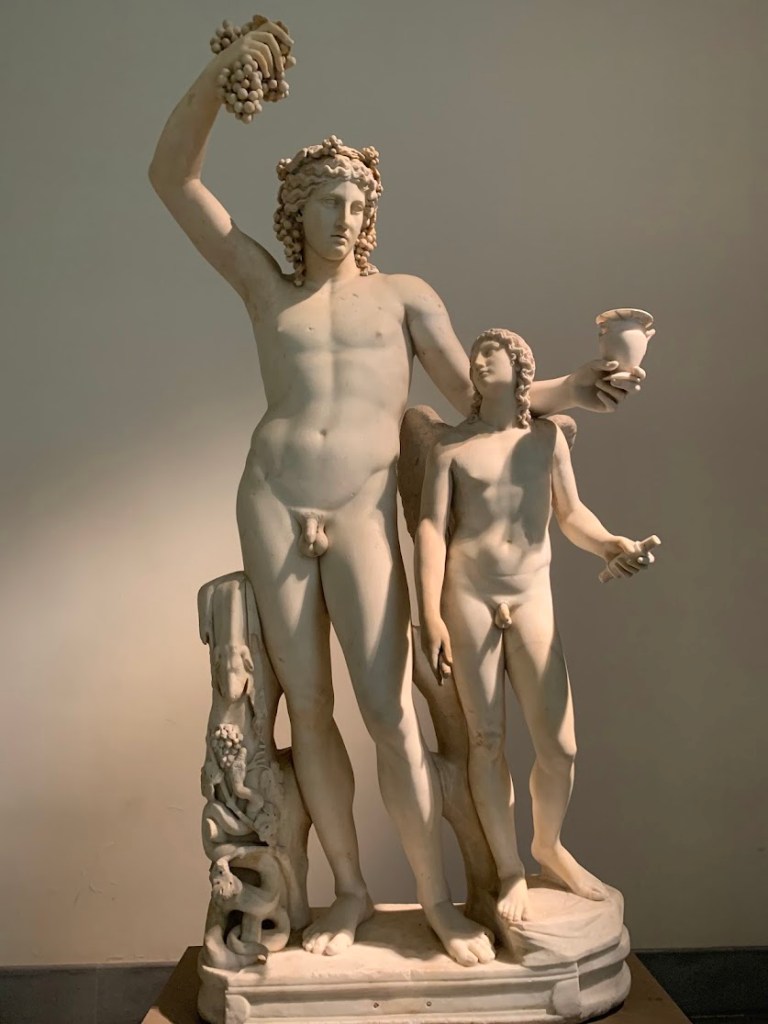
The Farnese Collection contains many wonderful marble statues of mythological characters and of Roman Emperors.
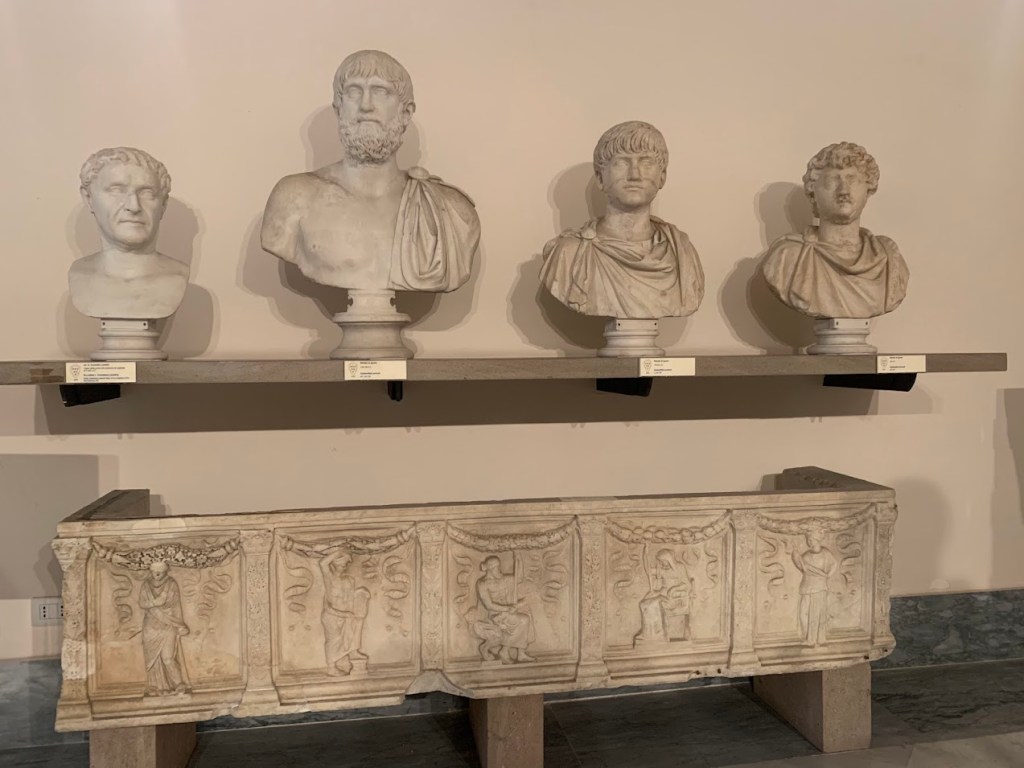
Many of these magnificent works of art are in fact Roman copies of classical Greek sculptures.
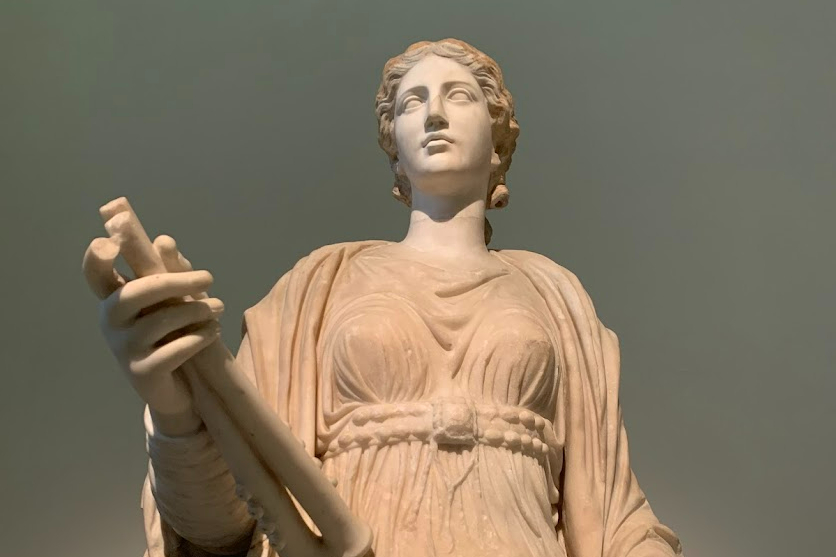
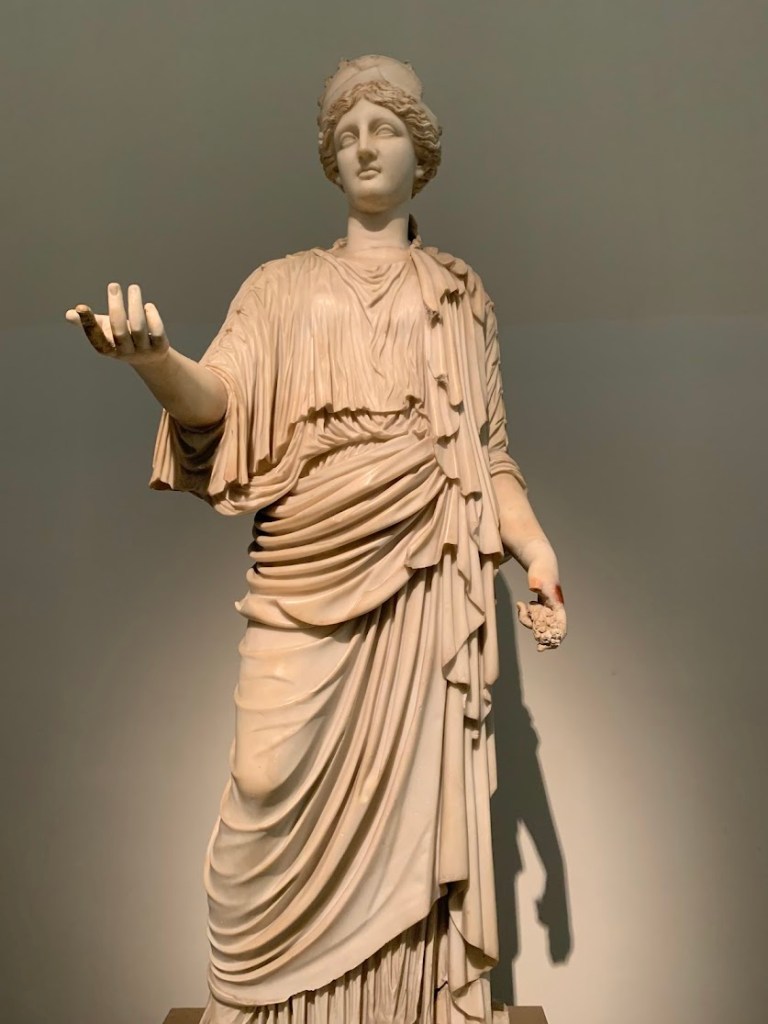
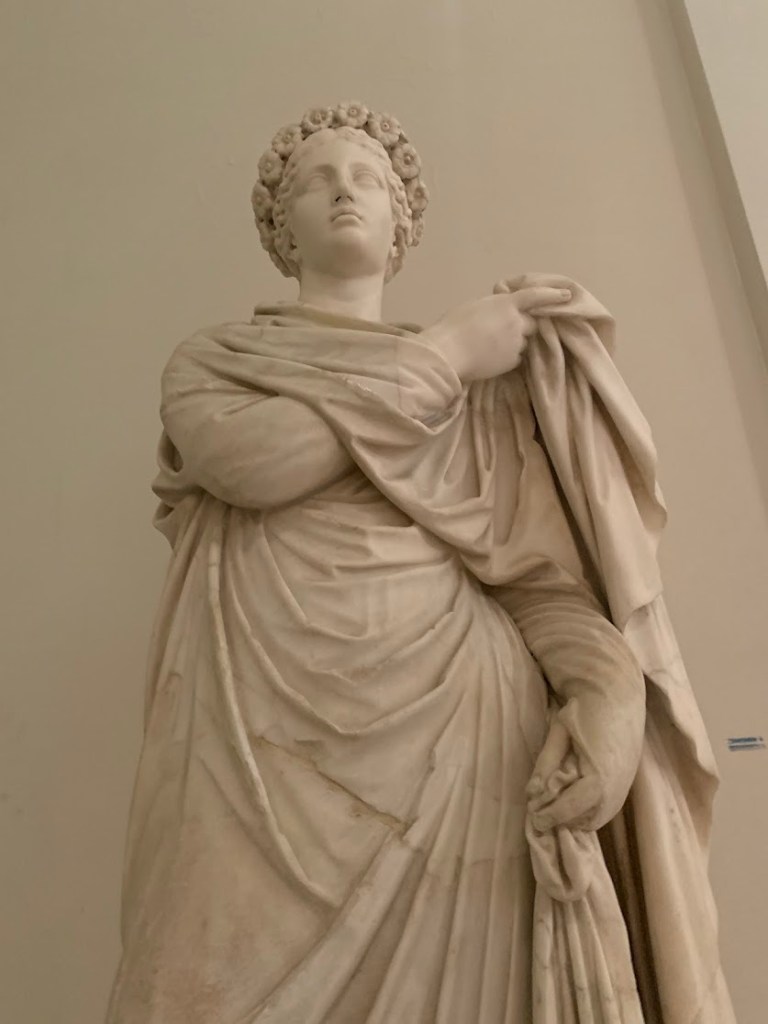
Some are colossal in size such as the Farnese Hercules and the powerful Farnese Bull which are both striking.
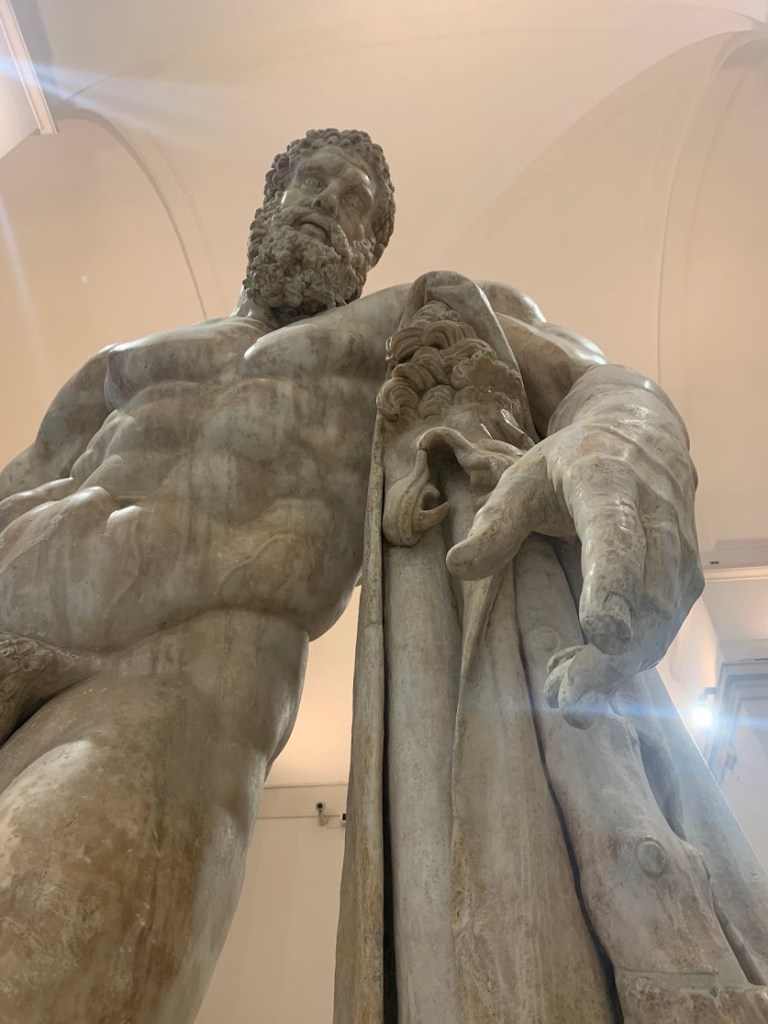
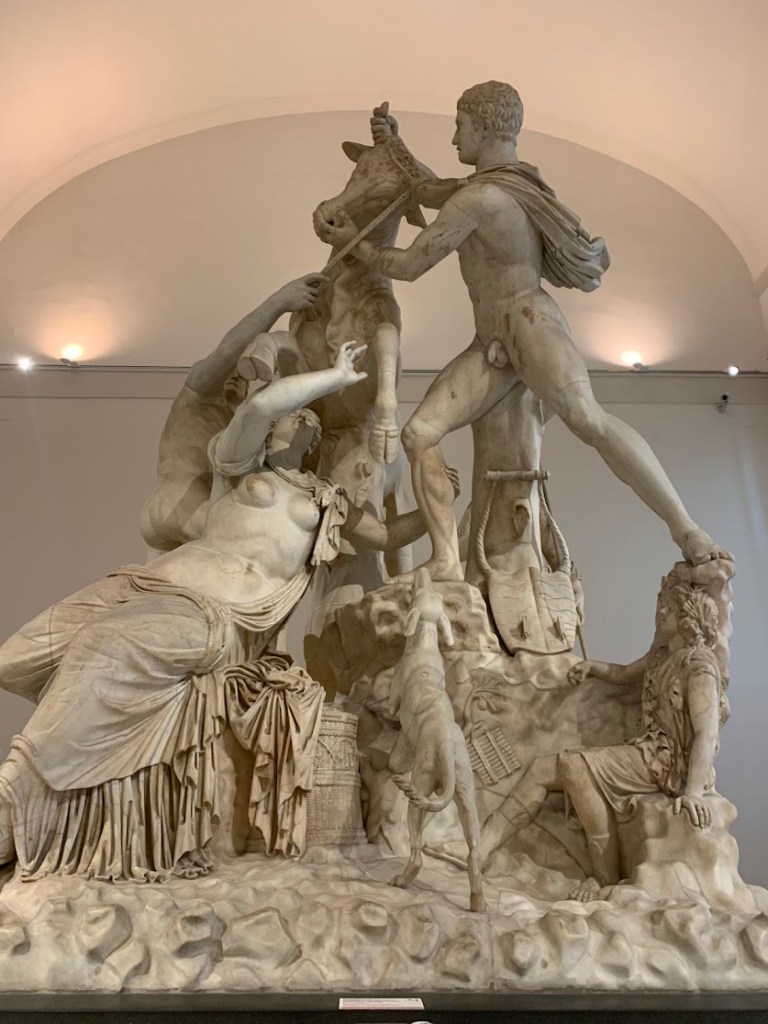
Seeing these masterpieces up close was humbling, as the intricate details highlighted the incredible skill and artistry of ancient Roman creators and their lasting influence.
The First Floor
Mosaics Collections
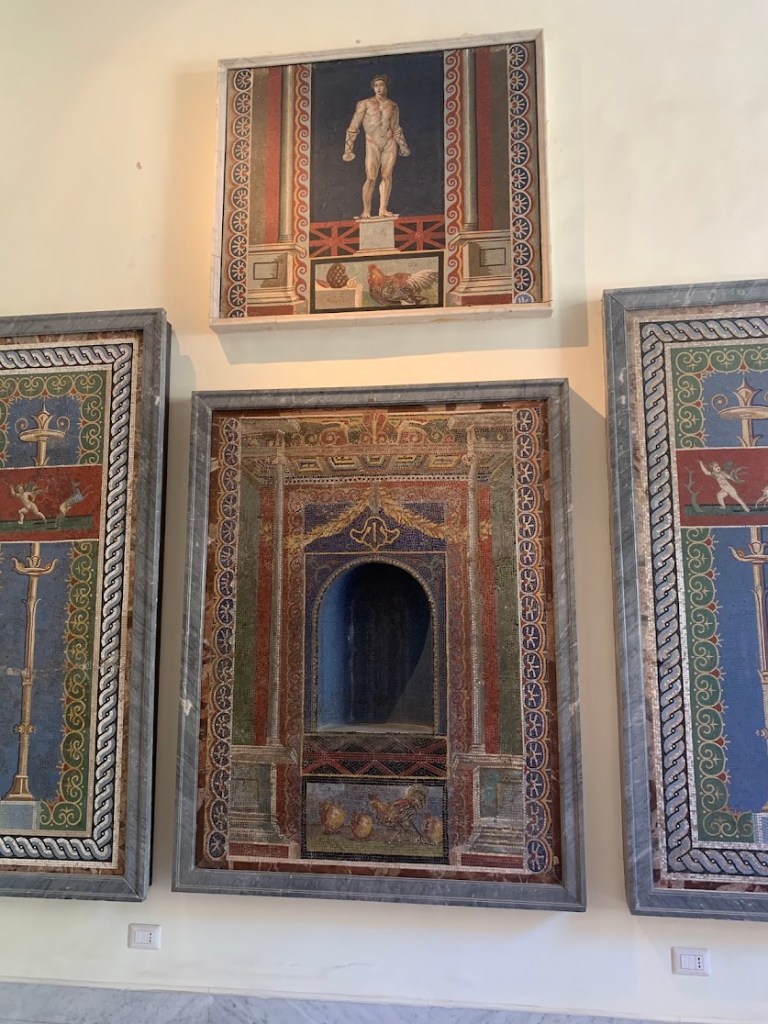
The First Floor is home to the magnificent mosaics collection. The mosaic collection includes numerous works from private houses and public buildings, illustrating the evolution of mosaic art from the 2nd century BCE to the 1st century CE. Each piece, from intricate floor designs to elaborate wall decorations, revealed the artisans’ skill and imagination.
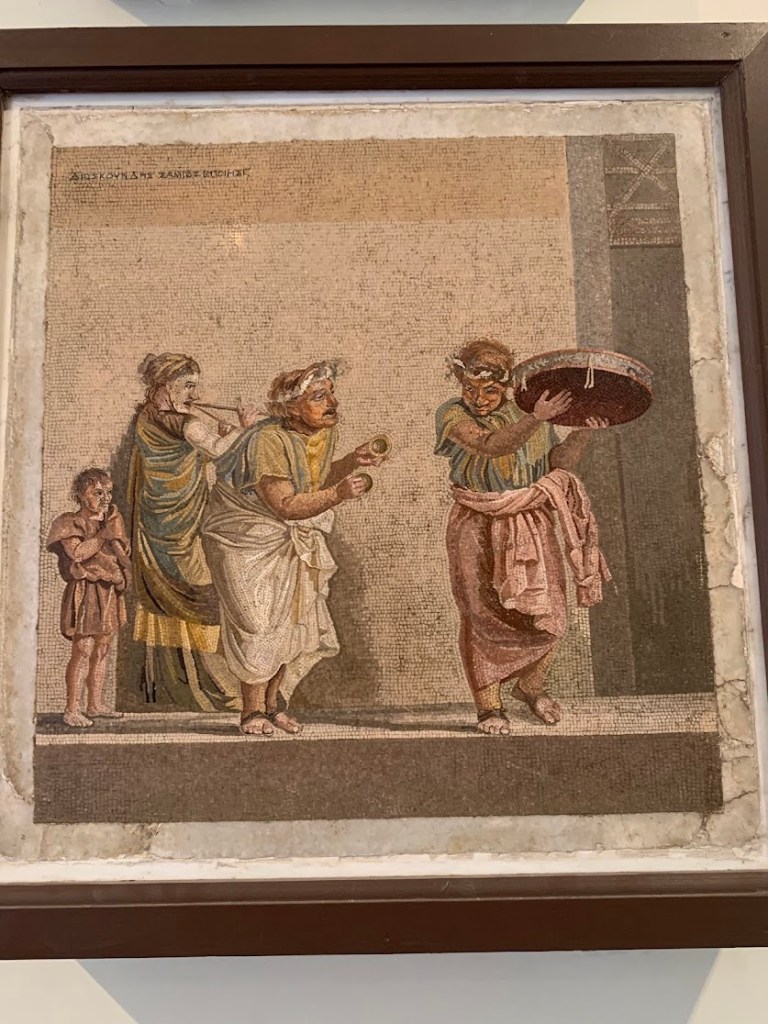
The Street Musicians
The exhibition displays some unique examples, which characterized the various spaces, from the entrance threshold with theater masks to the small mosaics, almost resembling small paintings.
An entire room focuses on the mosaics and the furnishings from the House of the Faun at Pompeii, starting with the bronze statuette, after which the house was named.
The Cabinet of Secrets
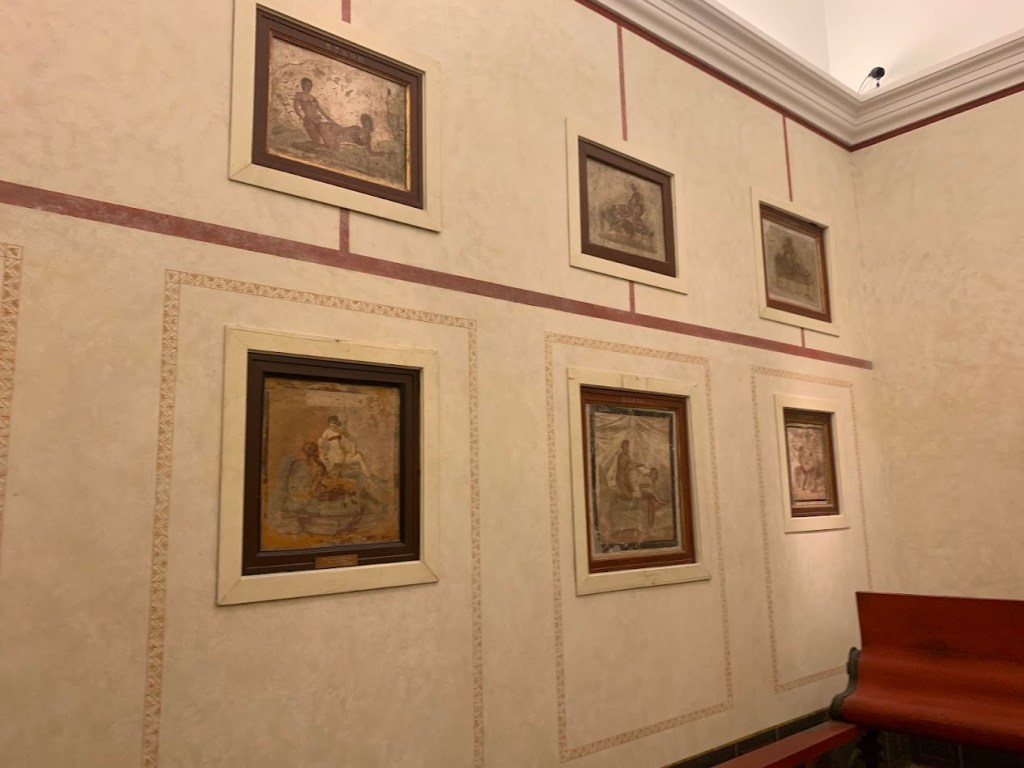
The Cabinet of Secrets is a very cool section and probably my favorite section of the museum. It is a unique collection that contains erotic themed items mostly excavated from Pompeii and Herculaneum.
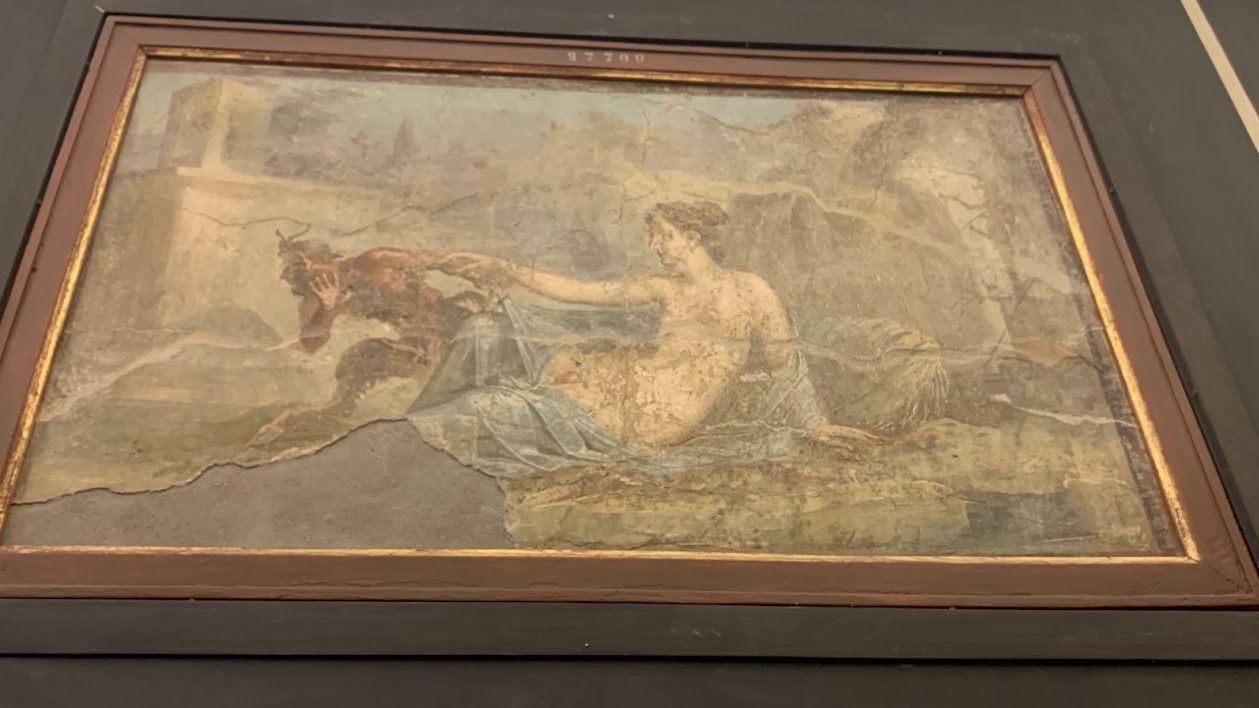
The explicit nature of these artifacts, often considered taboo, provided an honest and unfiltered look at aspects of Roman culture that are rarely discussed. It was fascinating to see how these pieces were integrated into daily life and public spaces, reflecting the Romans’ complex attitudes towards sexuality and art.
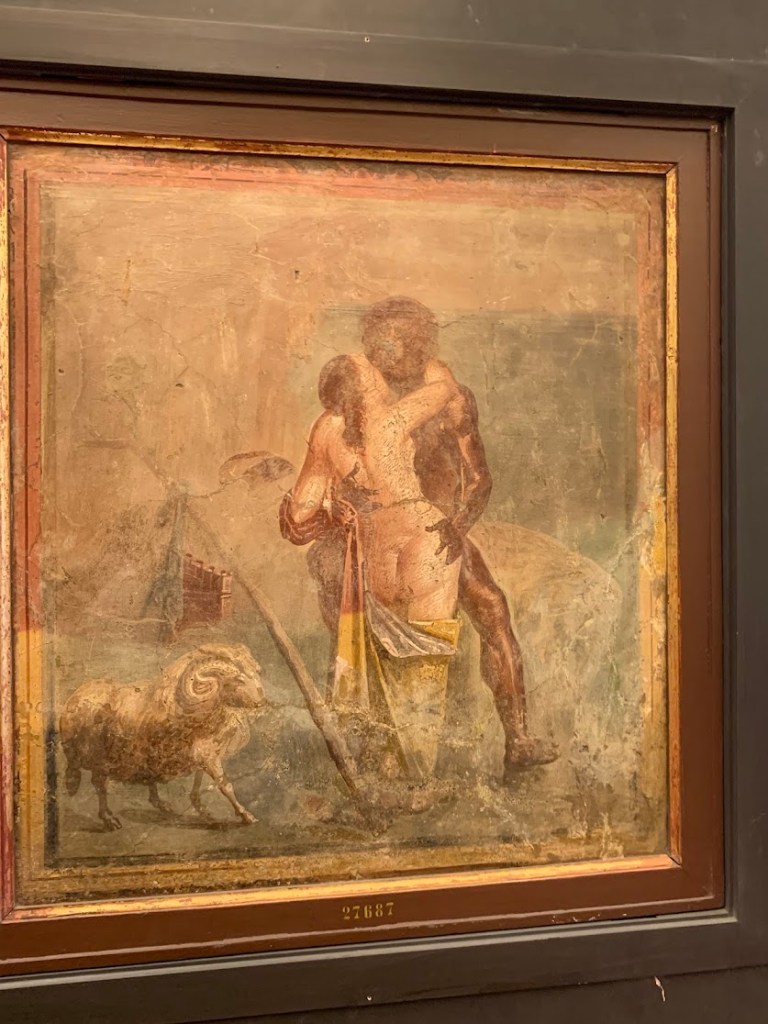
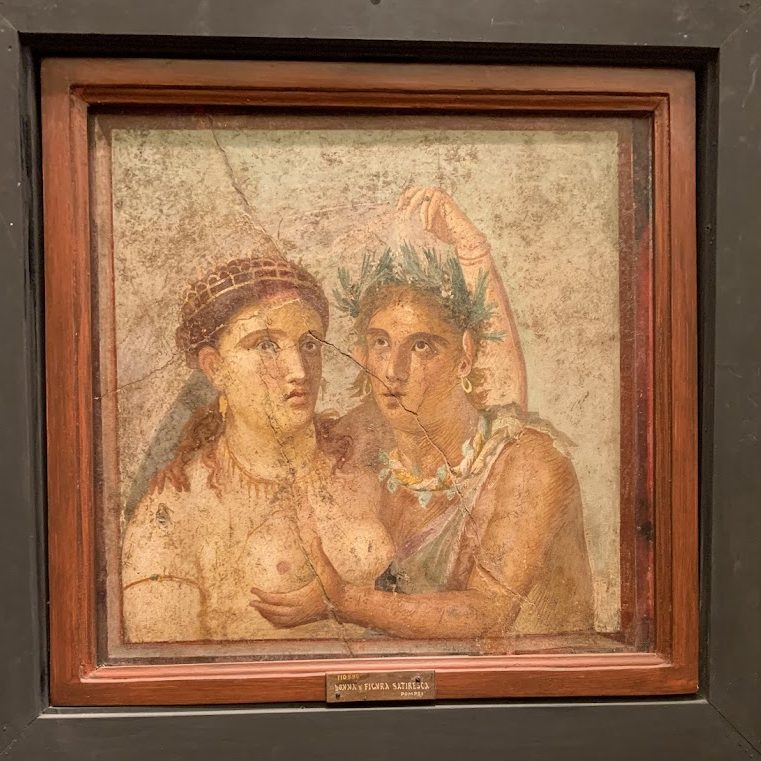
The exhibit begins by displaying erotic mythical frescos from the private house of Pompeii.
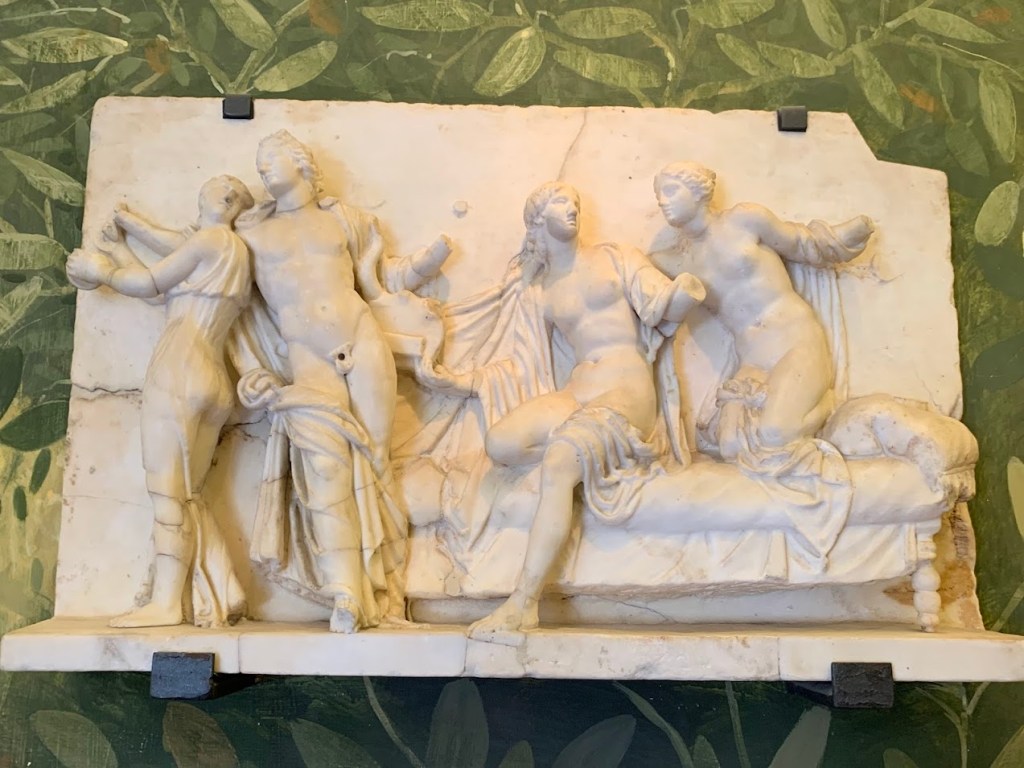
There is a fake garden that reflects a Pompeian garden containing erotic statues and paintings found in the actual garden.
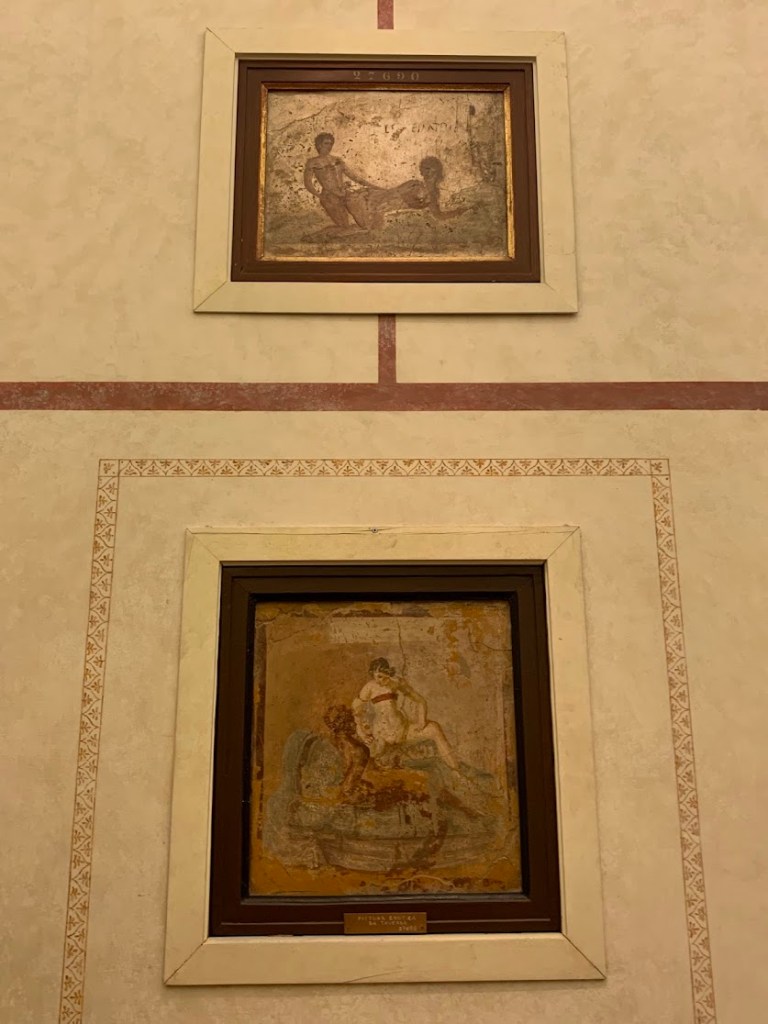
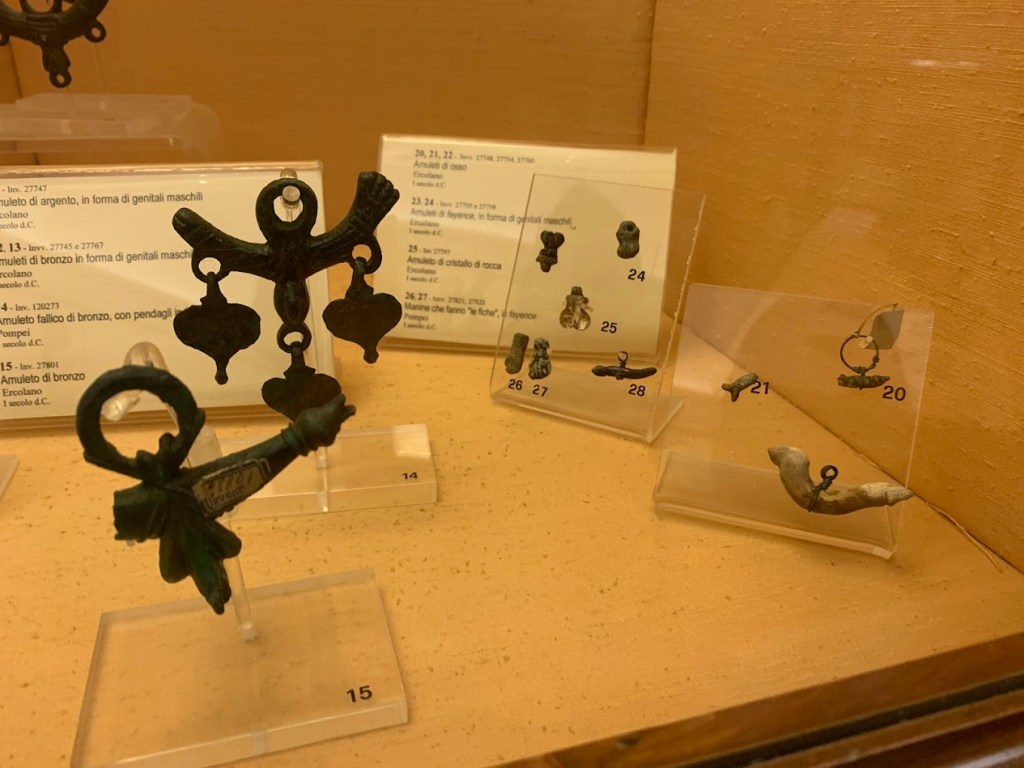
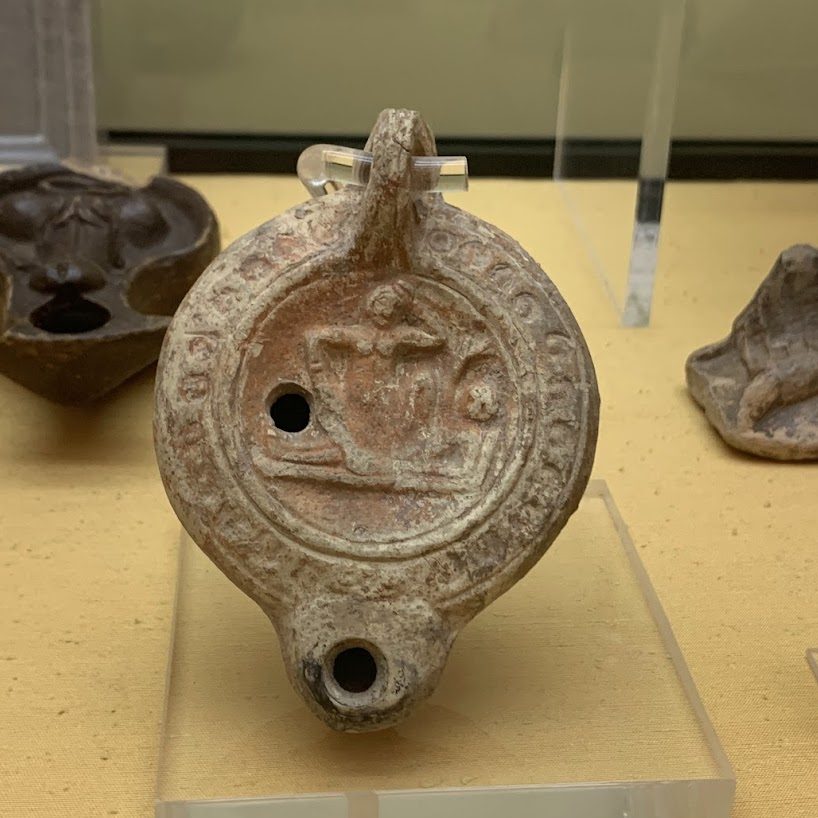
Entering another room with less refined but more realistic frescoes and erotic furnishing from baths and brothels. The room concludes with phallus-shaped objects, some which have served as symbols of protection.
The Second Floor
Daily Life Objects from the Vesuvian Area
The Second Floor delves into the daily life of the Vesuvian area, showcasing objects that were part of everyday activities. Seeing these artifacts up close, from kitchen utensils to personal items, brought a tangible connection to the people who once used them. The detailed craftsmanship and practical design of these items highlighted the ingenuity and resourcefulness of the ancient Romans in their daily lives.
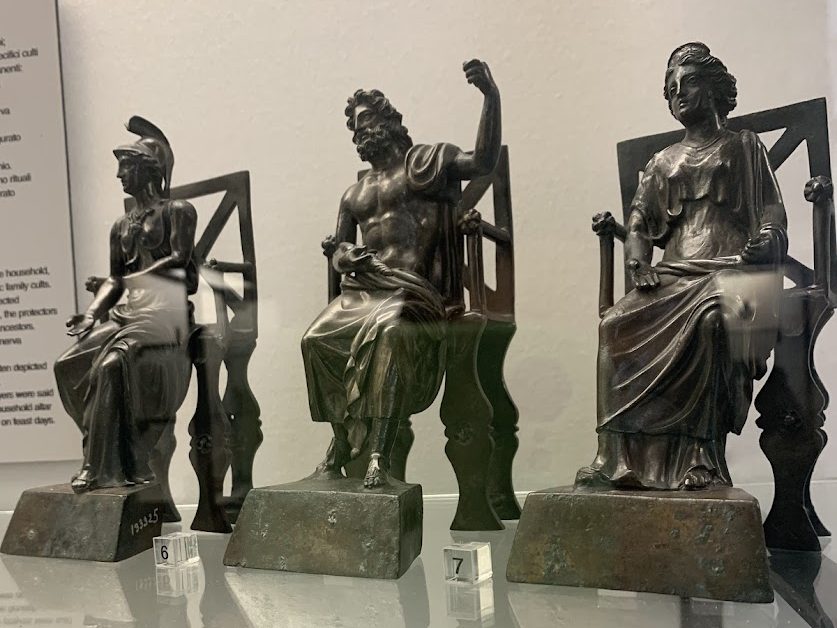
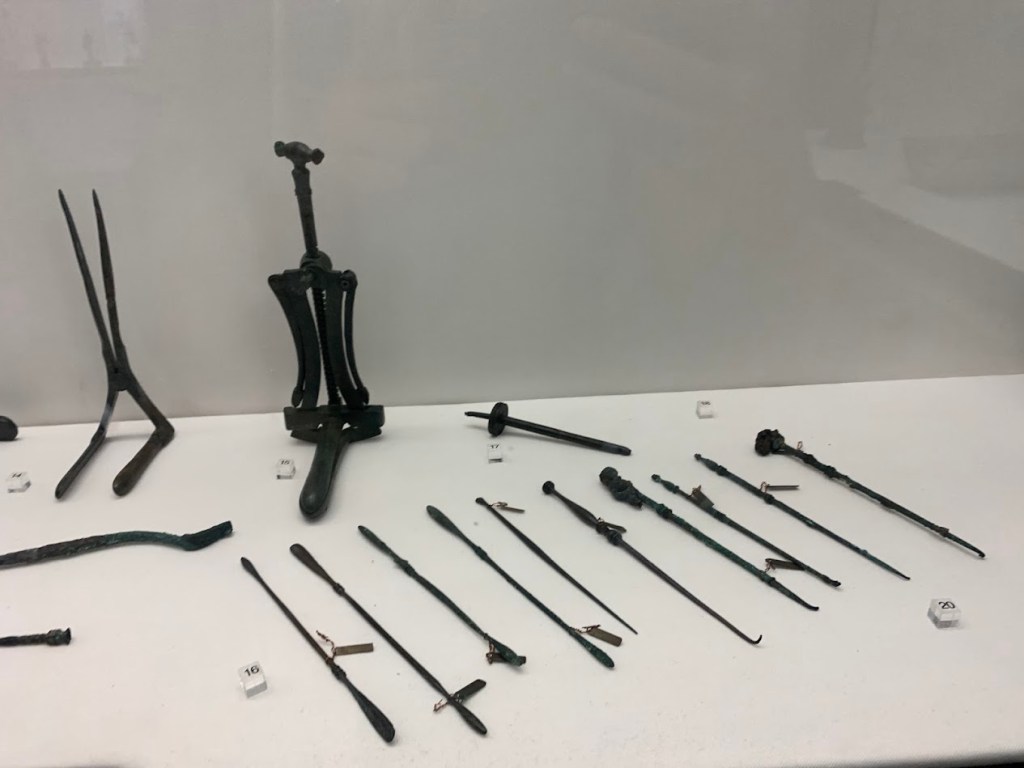
The exhibit is made up of 5 rooms each devoted to specific aspects of daily life in the Roman world separated by the material. Bronze objects that represent household religion, pieces of furnishings, lighting, music and medicine.
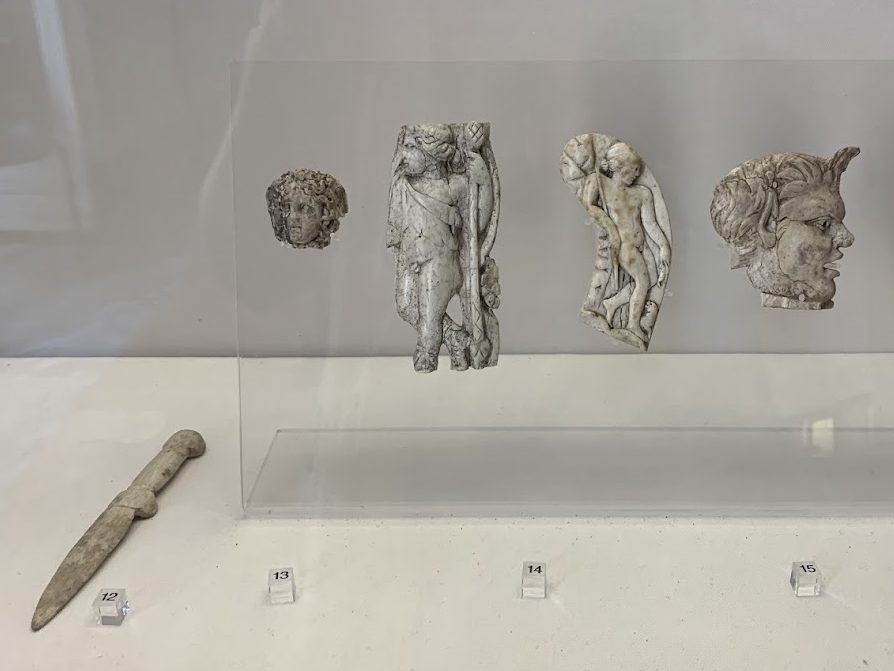
Household decoration made of ivory and bones.
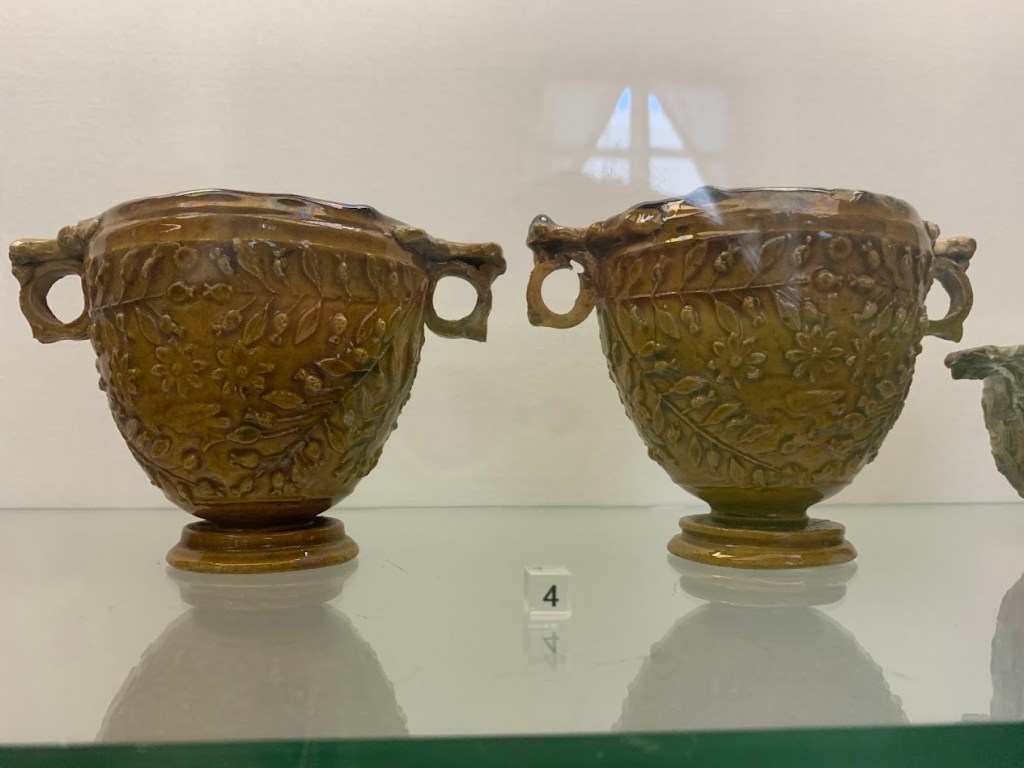
Lead glazed pottery, rare vessels due to the difficult technique.
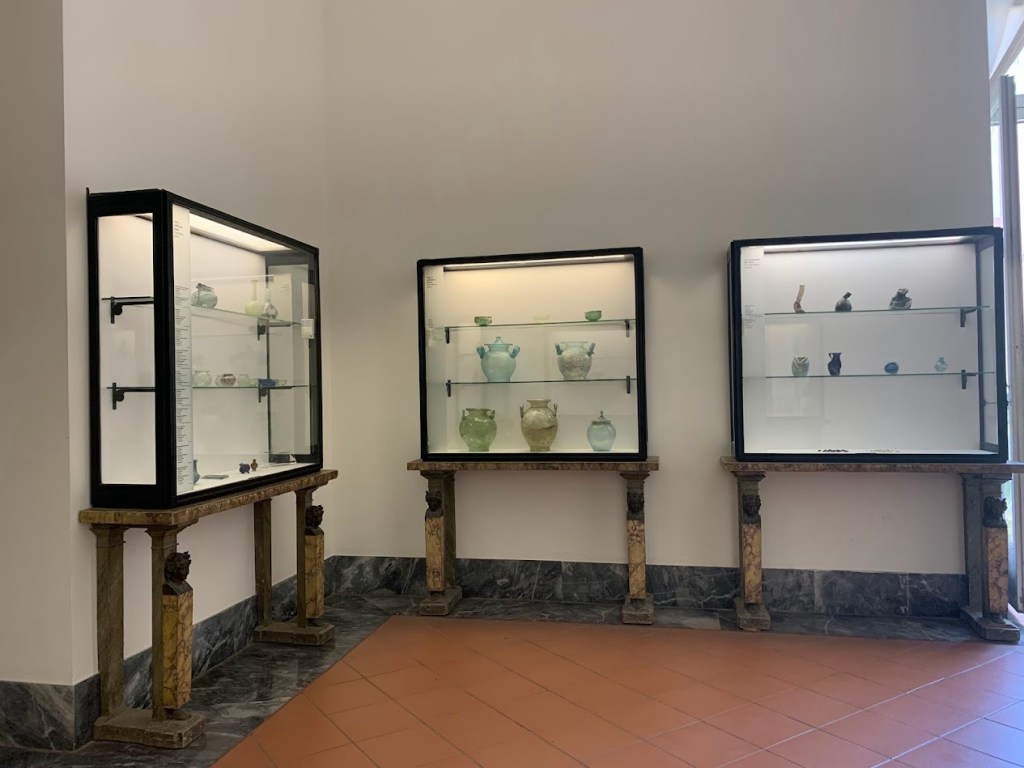
The last two rooms were focused on glass-ware in the Roman world, the different production techniques and the various functions of use.
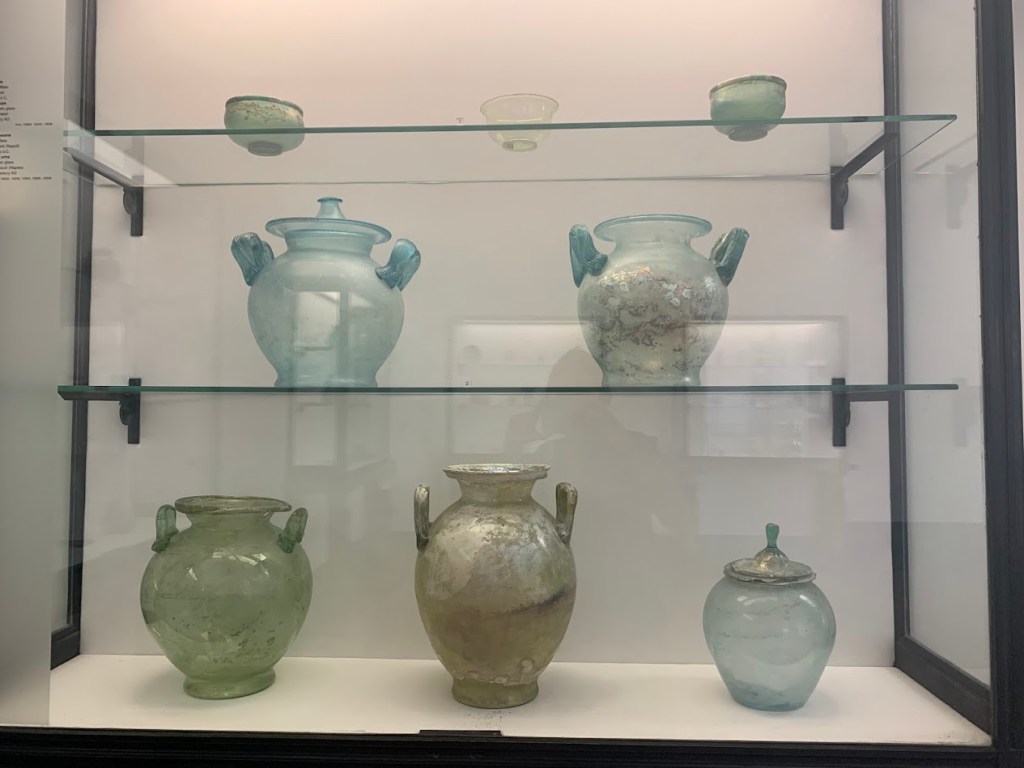
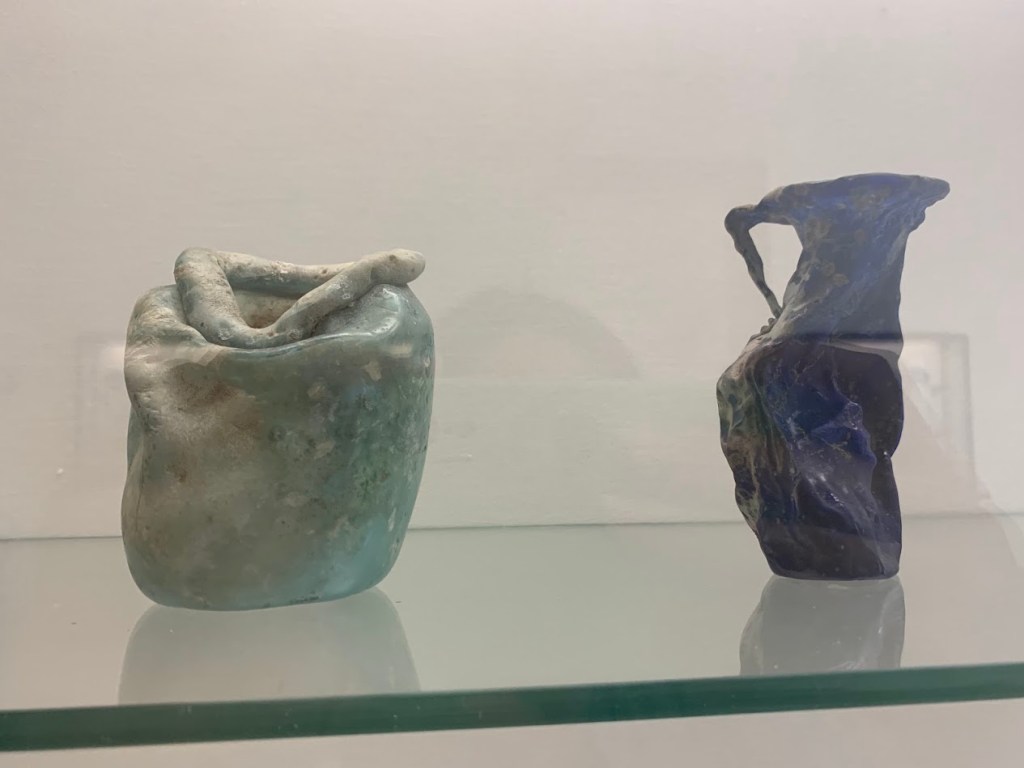
My favorite section was the misshapen glass vessels.
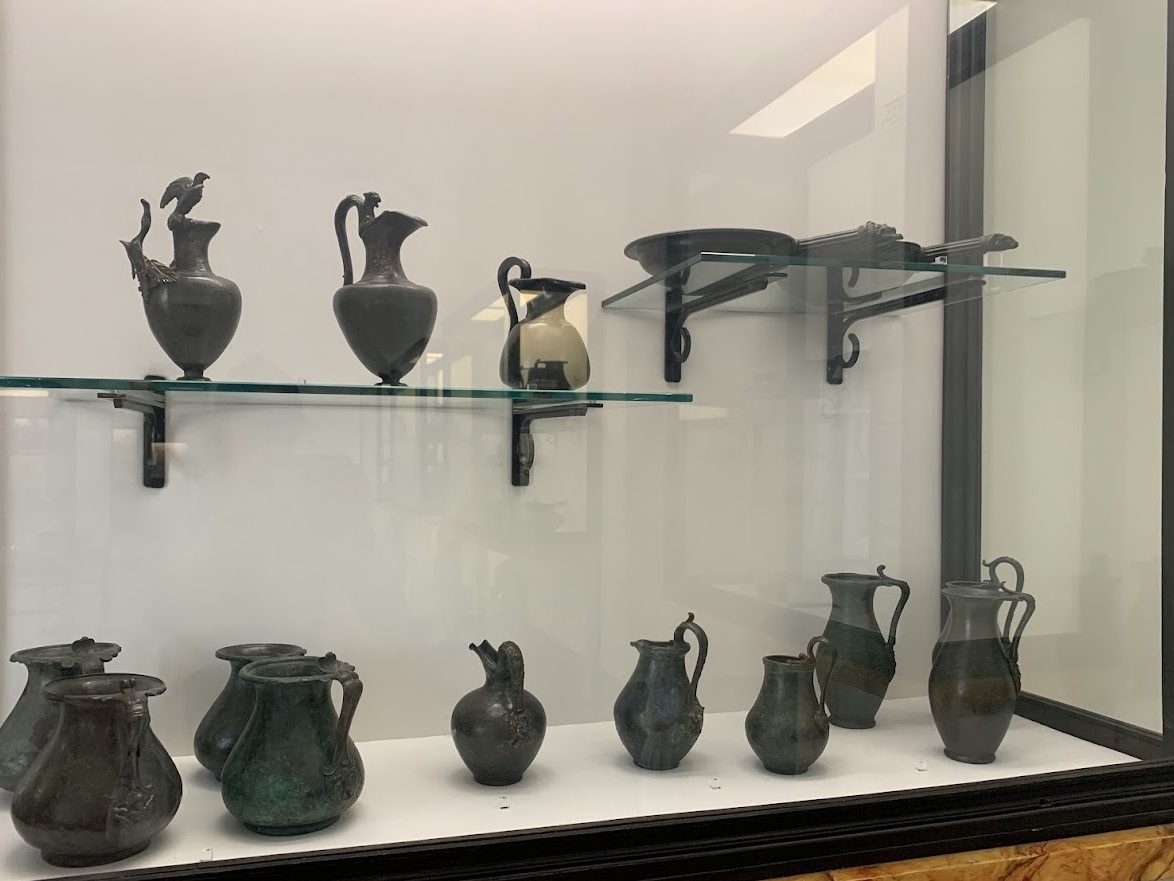
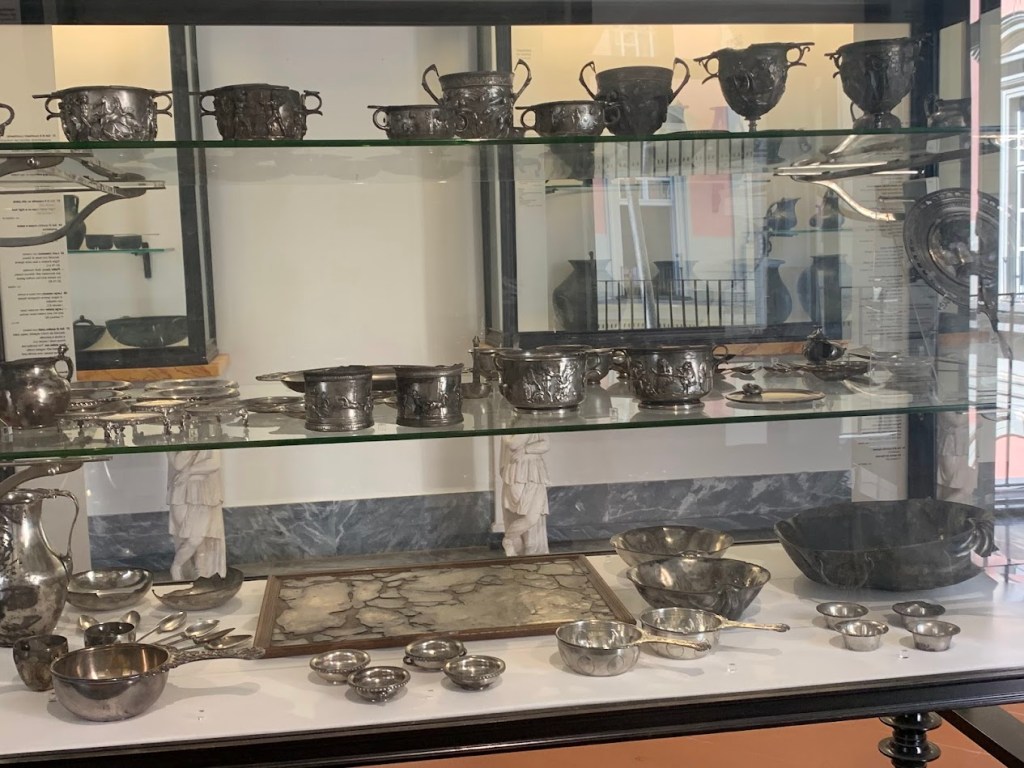
A room dedicated to the Roman kitchen that displays bronze artifacts and also splendid silverware from the House of Menander.
Frescoes
The frescoes collection, with its diverse styles and themes, highlighted the artistry and creativity of Pompeian painters. The detail and color in these works were stunning.
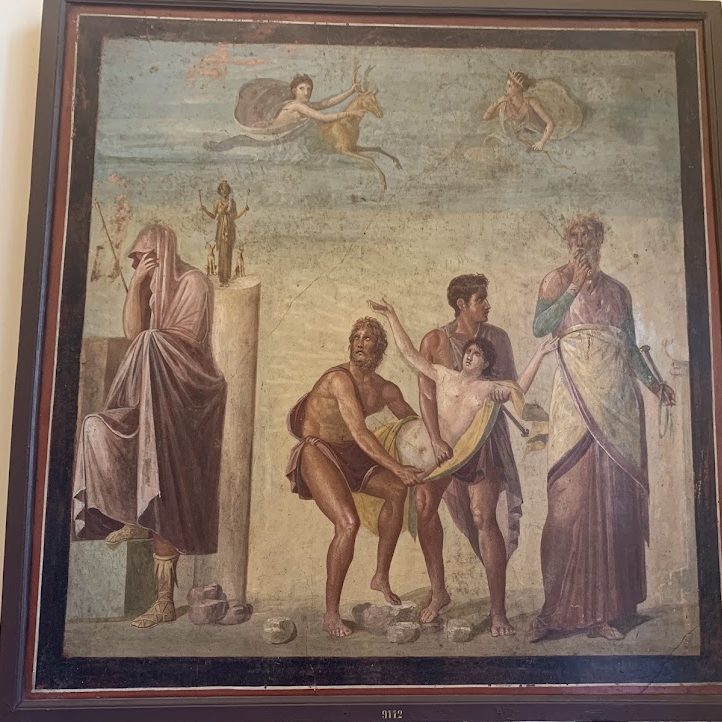
The exhibition opens with the discovery of the first paintings during the Bourbon age, highlighting the influence they had on the taste and the fashion of the period. The exhibit features paintings from the age of Augustus and his successors, including those from the villa of Agrippa Postumus at Boscotrecase, the House of Meleager, and the House of Dioscuri at Pompeii, concluding with the villa of Ariadne at Stabiae. A special attention is paid to frescoes, mythological scenes, some from Homer’s epics and Greek tragedy.
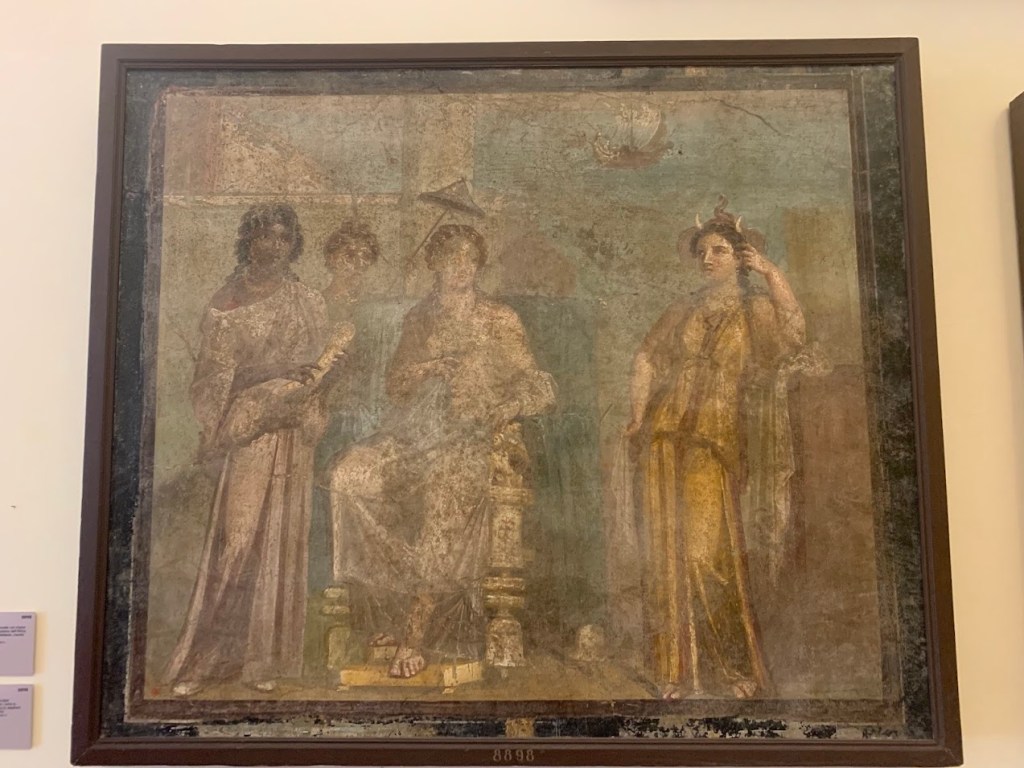
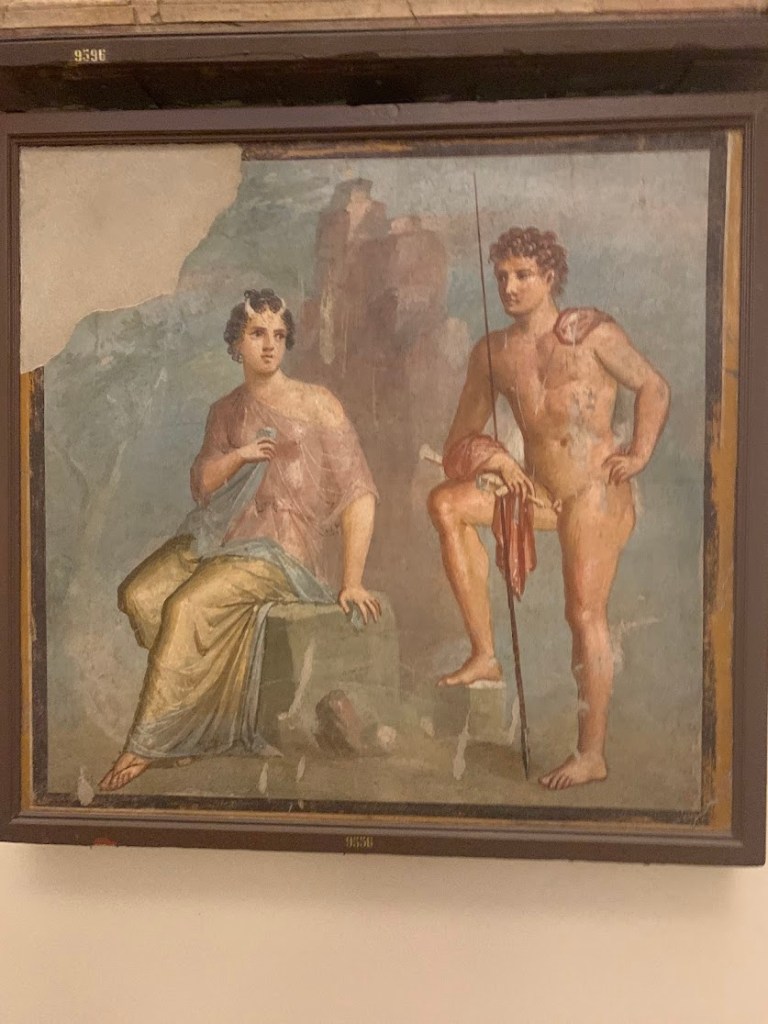
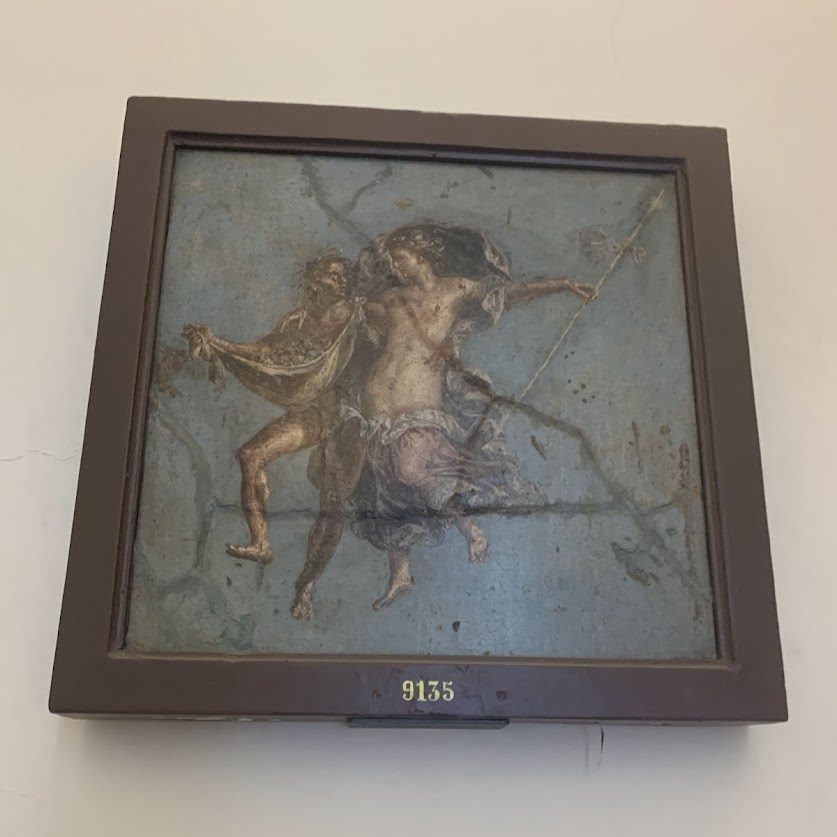
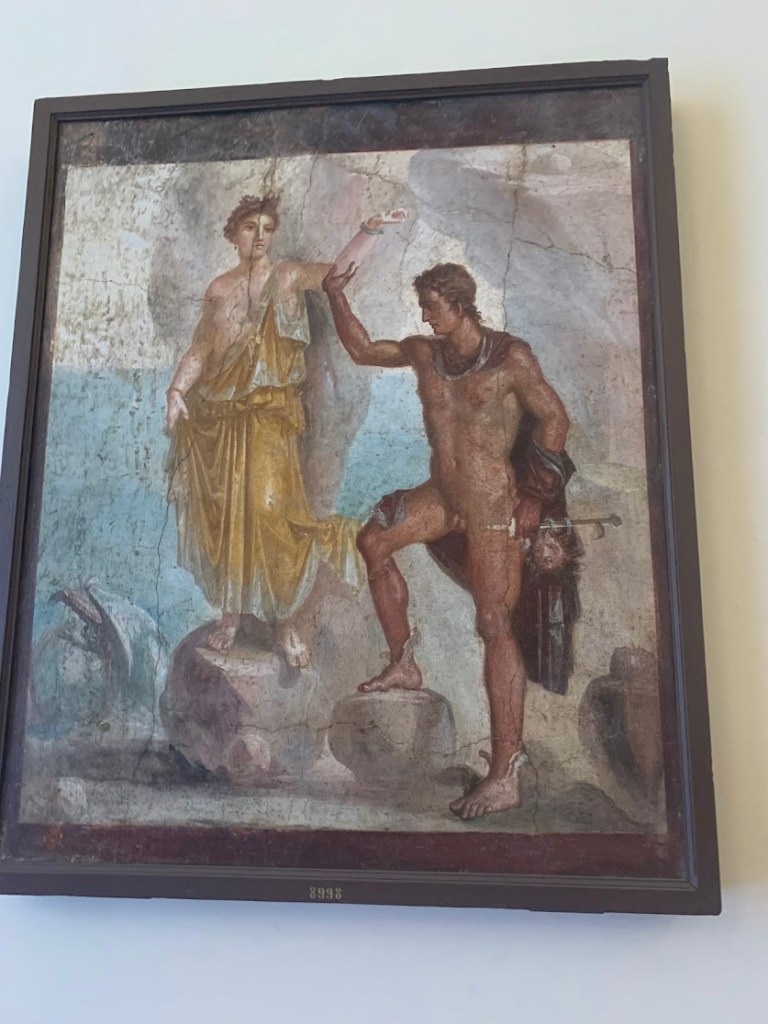
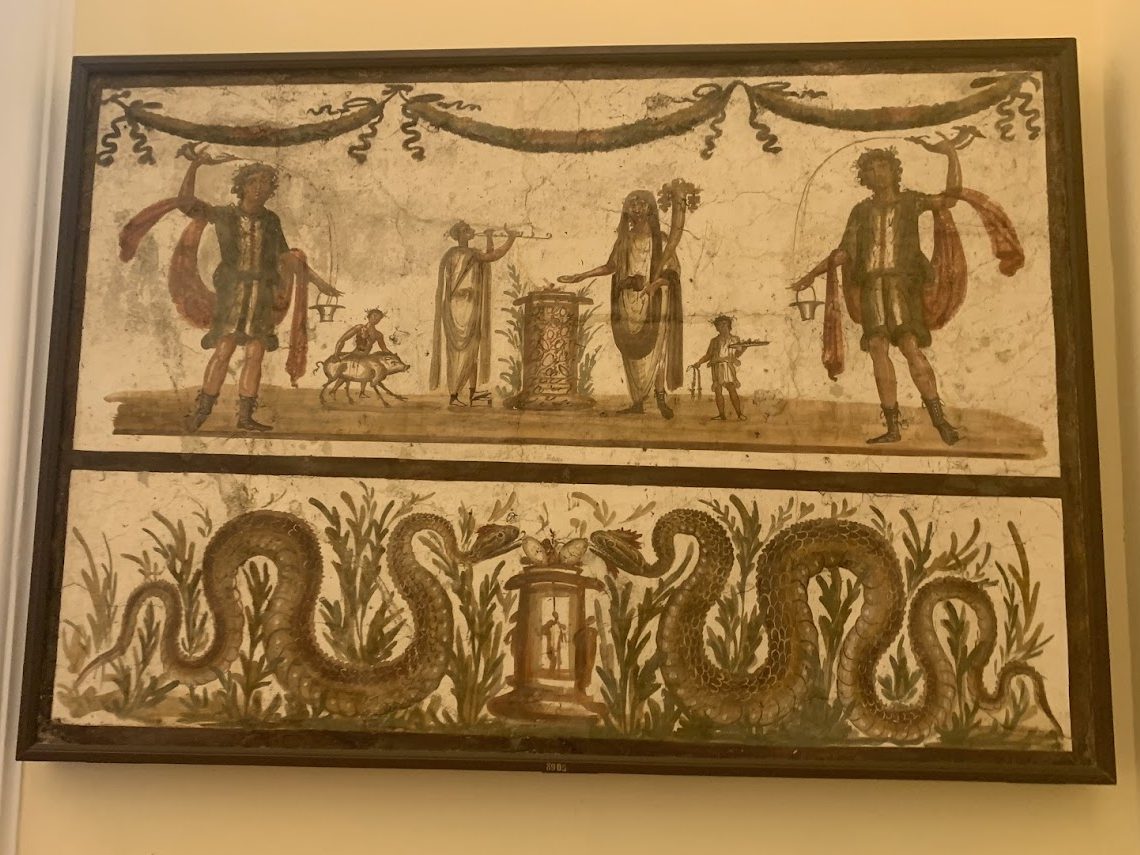
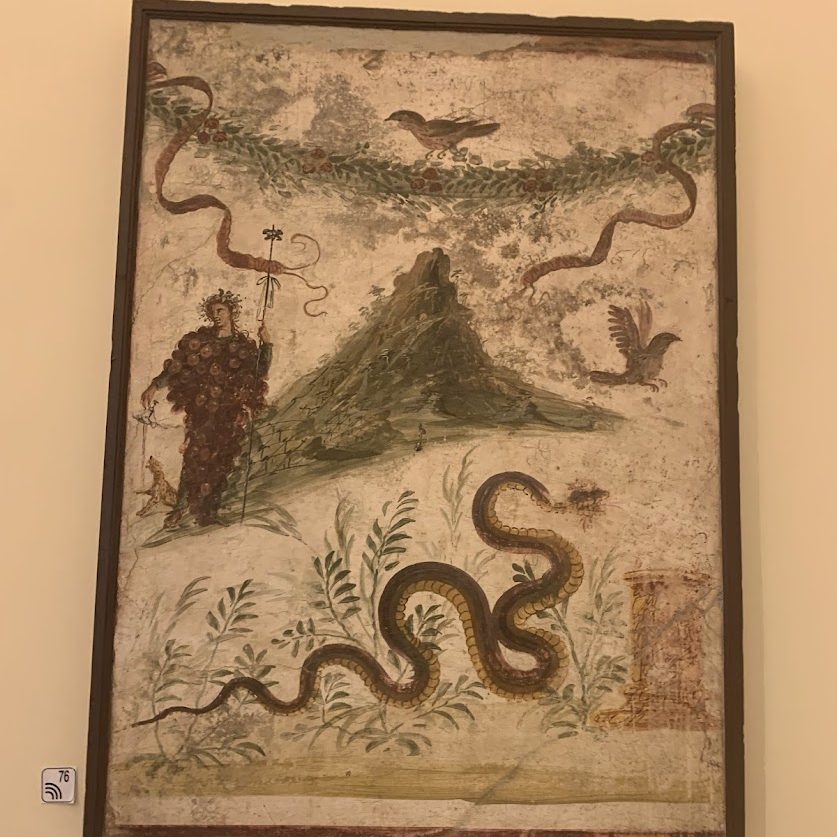
Frescoes depicting the Lares, household gods, were fascinating. Especially as one fresco contains an early depiction of Mount Vesuvius.
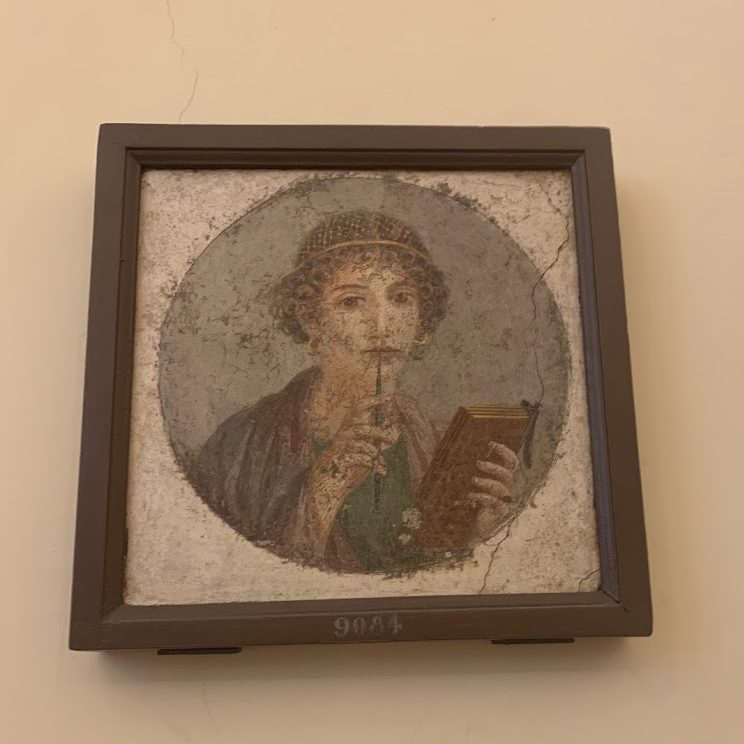
The lifelike portraits of private citizens offered a glimpse into the personal lives of the Pompeians and have one wondering about the individuals that once posed for their portraits.
Scale model of Pompeii
The scale model of Pompeii is a 1:100 model of Pompeii with all its buildings, each reconstructed in detail with its decoration and furnishings, using mainly cork, wood and paper. The scale model of Pompeii allowed me to view Pompeii through a bird’s eye view. It was fascinating to understand how large Pompeii actually is.
Personal Reflections
My visit to the National Archaeological Museum of Naples was an enriching and unforgettable experience. The most memorable aspects of the visit were the intricate mosaics, the powerful sculptures, and the everyday objects that provided a window into the lives of ancient Romans. Each artifact told a story, connecting me to the past in a way that books and lectures could never fully achieve.
I really enjoyed the everyday objects on display, as they provided more information about the empty houses in Pompeii. These artifacts, from kitchen utensils to personal items, offered a tangible connection to the people who once used them. It was amazing to see such detailed craftsmanship in these everyday items. They reflected some of the things I could have found in the field and brought the ancient city to life in a very personal way.
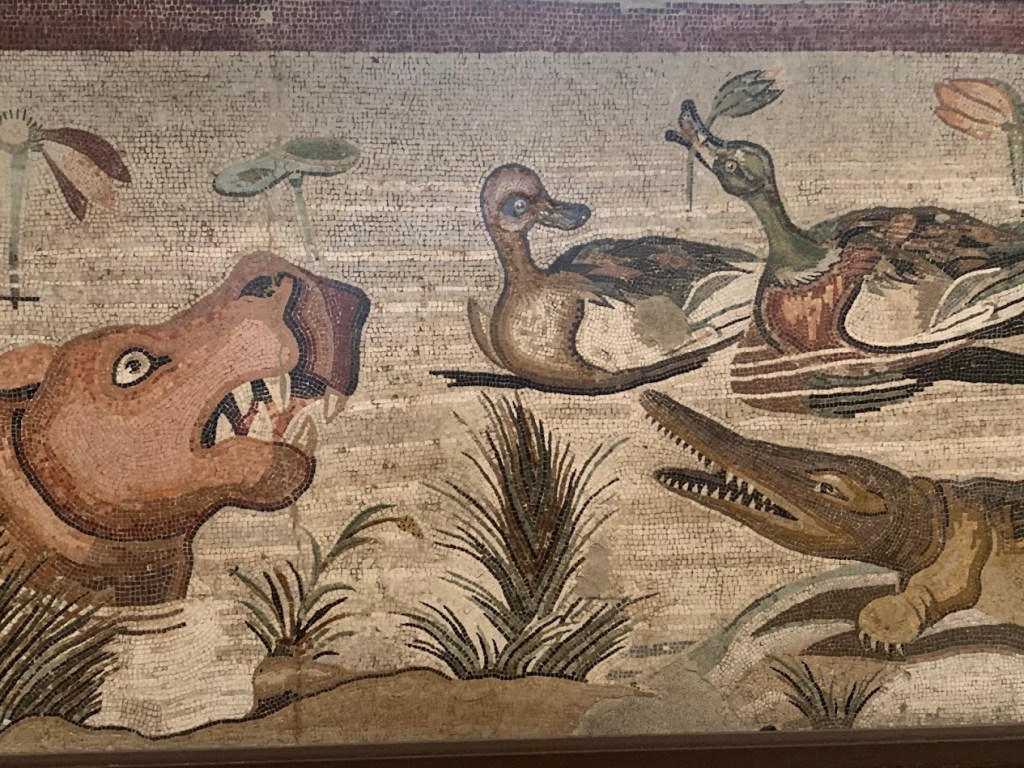
Seeing the frescoes in person was a profound moment for me, especially after visiting Pompeii. While the ruins of Pompeii provided a context and setting for these artworks, the museum allowed for a closer and more detailed examination. I had fun looking at the mosaics, which ranged from intricate designs to comical animals.
Comparing the museum visit to my time in Pompeii, I realized how they complement each other perfectly. Pompeii offered the broader landscape and atmosphere of ancient life, while the museum provided an intimate view of the artistic achievements and daily activities of its inhabitants. Together, they painted a complete picture of Roman civilization, making the past feel incredibly tangible and real.
The Museum of Naples is a must-visit for anyone interested in history and archaeology. Its extensive collections offer a comprehensive view of ancient life, art, and culture. For history enthusiasts and archaeology students, it’s an invaluable resource that brings textbook knowledge to life. I highly recommend planning a visit to this remarkable museum.
 Digging Through the Ages
Leave a comment