
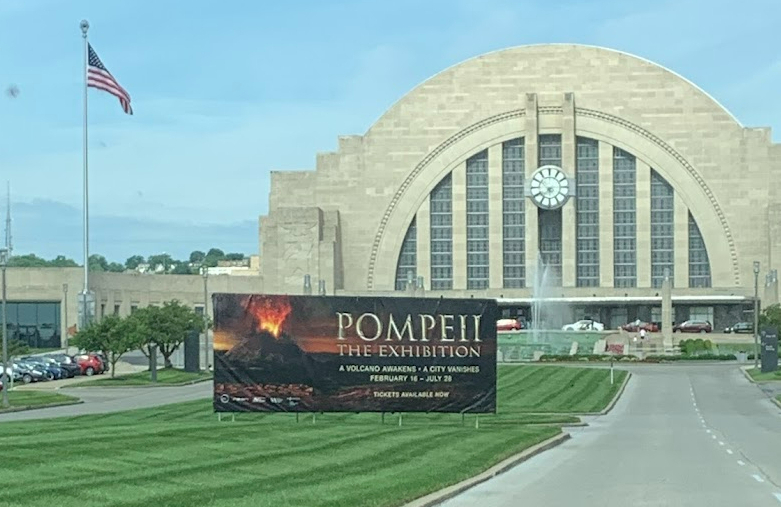
A volcano awakens. A city vanishes. Yet, through the power of preservation, the ancient city of Pompeii comes to life once more at the Cincinnati Museum Center. POMPEII: The Exhibition offers visitors a unique opportunity to step back in time and witness the daily life, culture, and tragic end of a city frozen in time by the catastrophic eruption of Mount Vesuvius in 79 CE. Through 150 artifacts and a series of immersive experiences, this exhibit tells the tale of Pompeii, a city hidden from view and forgotten for centuries, now brought back to light.
As I entered the exhibition, I was immediately invited to explore Pompeii through a captivating introduction video set over a gate of wooden doors and columns meant to imitate a Roman city gate. Dramatic reconstructions of Pompeii and Mount Vesuvius set the scene, painting a vivid picture of an idyllic Roman city on the brink of disaster. The video’s immersive visuals and compelling narrative provide a comprehensive overview of Pompeii’s significance at the height of the Roman Empire. As the video finishes the doors leading to the rest of the exhibition open, inviting all to enter Pompeii.
Entering the Ancient City
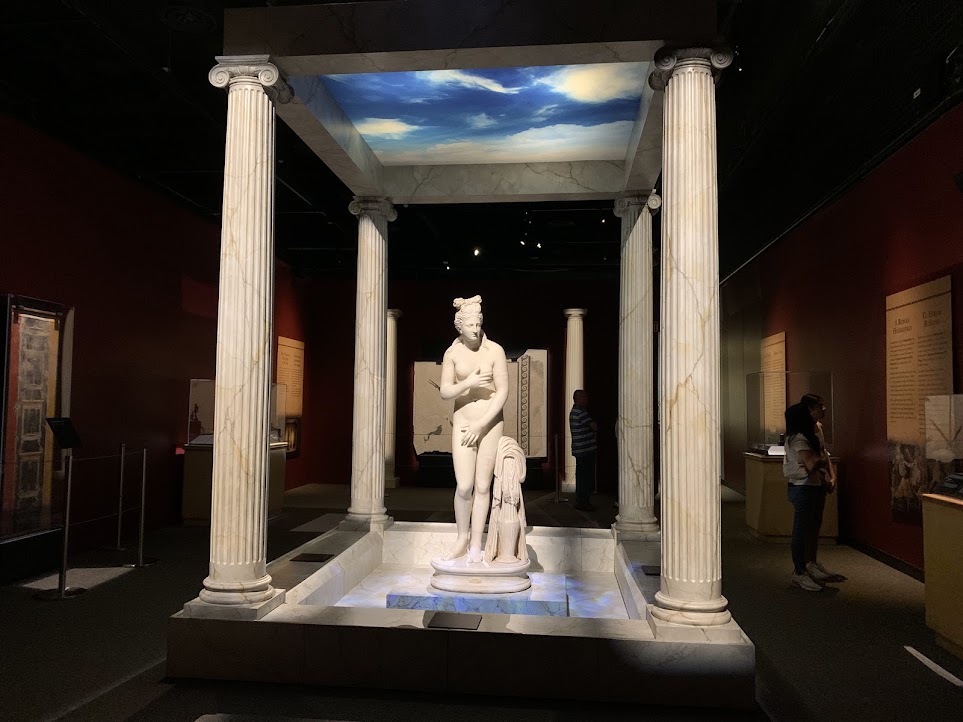
The journey began as I stepped into a meticulously reproduced atrium from a Roman villa in 79 CE. This entry point into Pompeii was not just a visual spectacle but a recreation that allowed me to feel the grandeur and elegance of Roman architecture. The atrium, with its intricate mosaics and frescoes, serves as a gateway to the world of Pompeii, giving visitors a tangible sense of how its people lived, loved, and worked. The frescos, mosaics, and statues serve to impress the visitors with the wealth and status of the homeowner. Designed to impress visitors, the atrium often featured a shallow pool in the middle of the room called an impluvium, which collected rainwater from the opening in the roof.
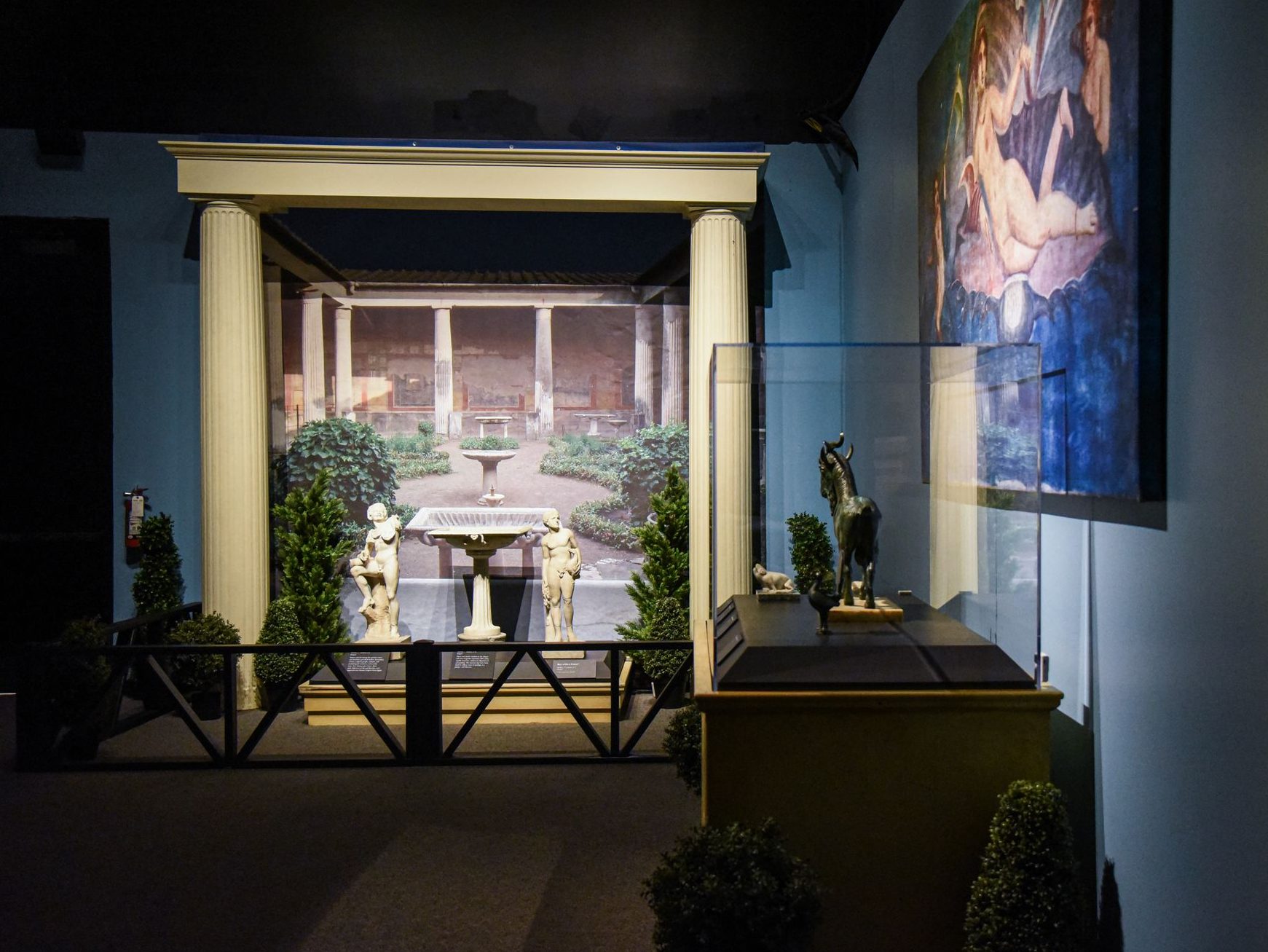
The next room brings you further into the home, imitating the gardens of Pompeii with fake shrubs and plants surrounding statues and fountains. Reflecting the peristylium that would have served as an oasis from public life.
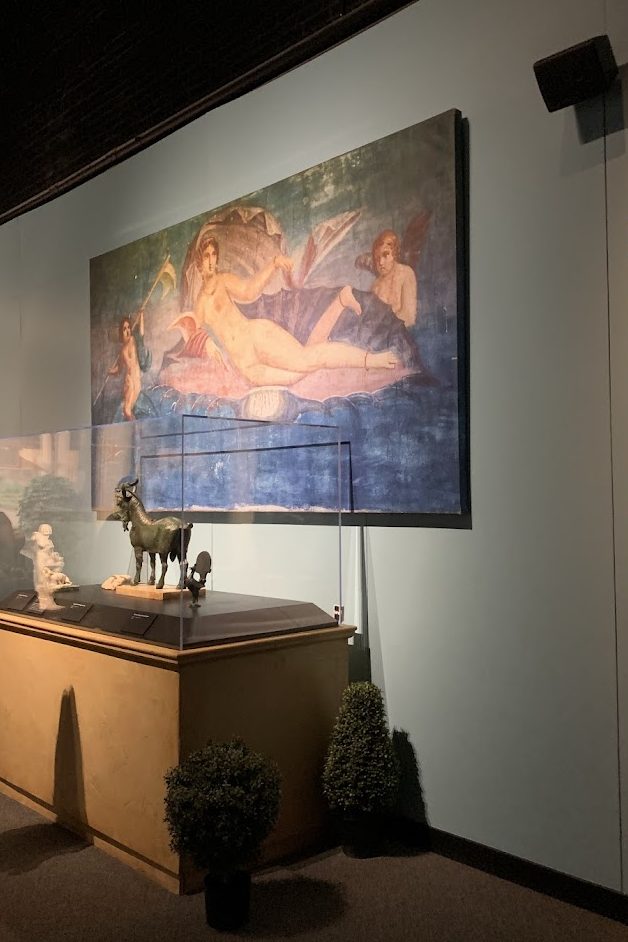
Following the garden, one walks into the Triclinium, dining room, was designed with three couches arranged around a central table, where guests would recline and enjoy elaborate meals, reflecting the social and cultural importance of dining in ancient Roman society.
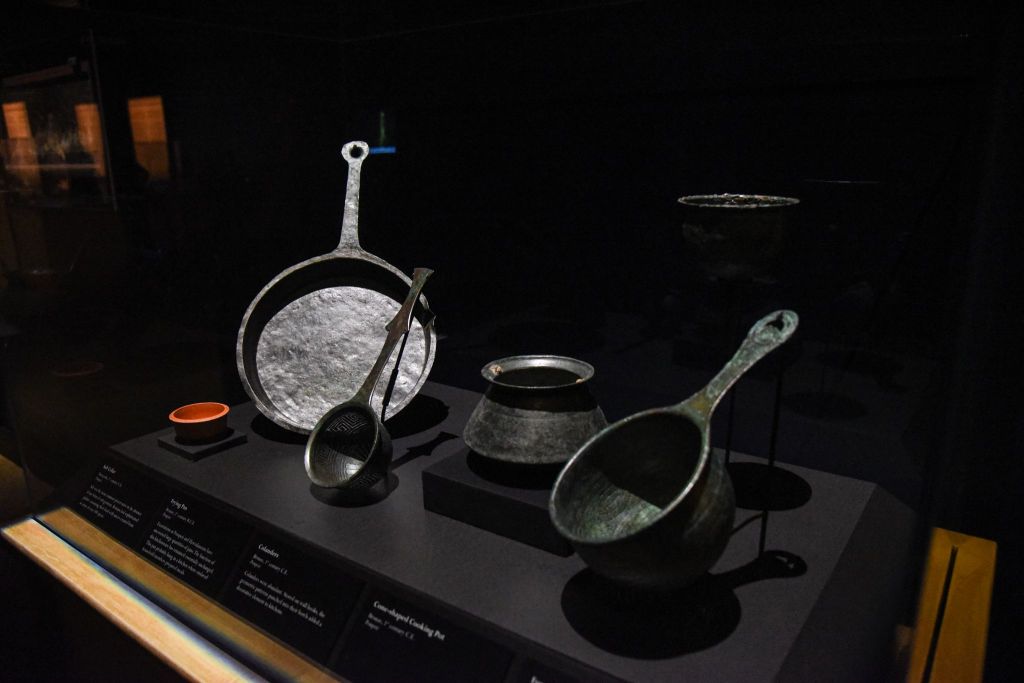
As you walk by, you encounter frescos from a triclinium and cookware that the household slaves would have used to prepared meals, such as pans, funnels, and colanders.
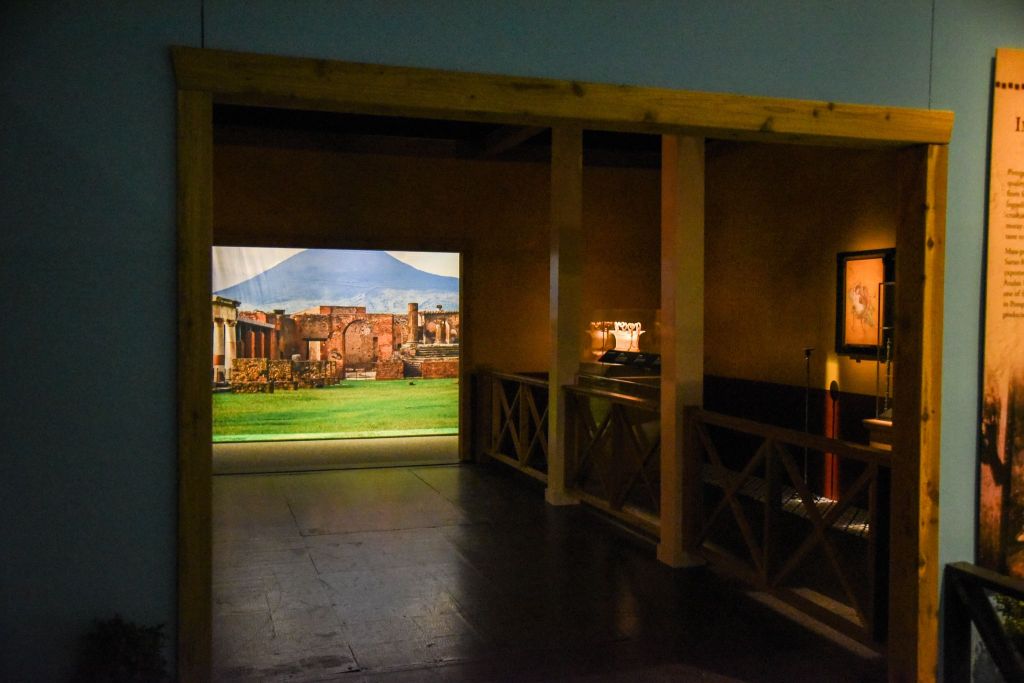
The following sections of the exhibition evoke other spaces in the city. Artifacts are placed roughly within these contexts. Artifacts are displayed within their original contexts, which I really appreciate. It helps you connect with the artifacts more deeply, letting you picture their real-life applications instead of just skimming over them.
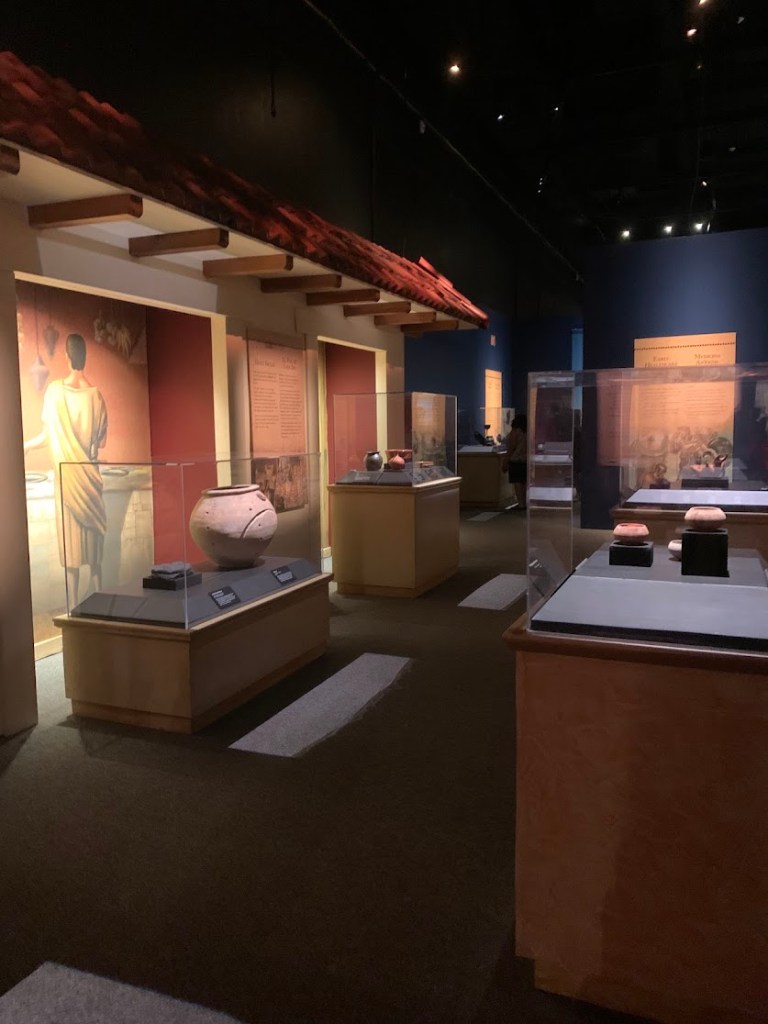
After exploring the private lives of citizen you are brought into the public sector: the marketplace. A recreated marketplace with different stores that represent different markets that would have been in Pompeii. Each stall had a realistic painted panel illustrating the inside of the shop with tools, products and the activities of workers. In front of each stall would be a glass case with artifacts associated with that industry.
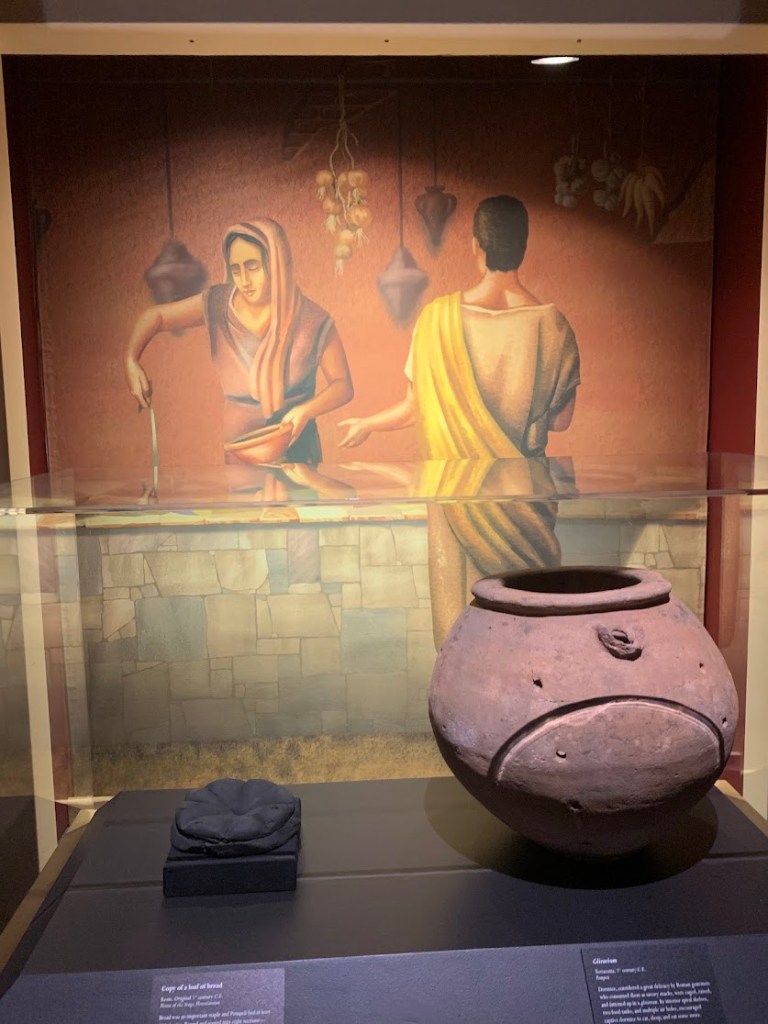
A bakery with a replica of a carbonized loaf of bread.
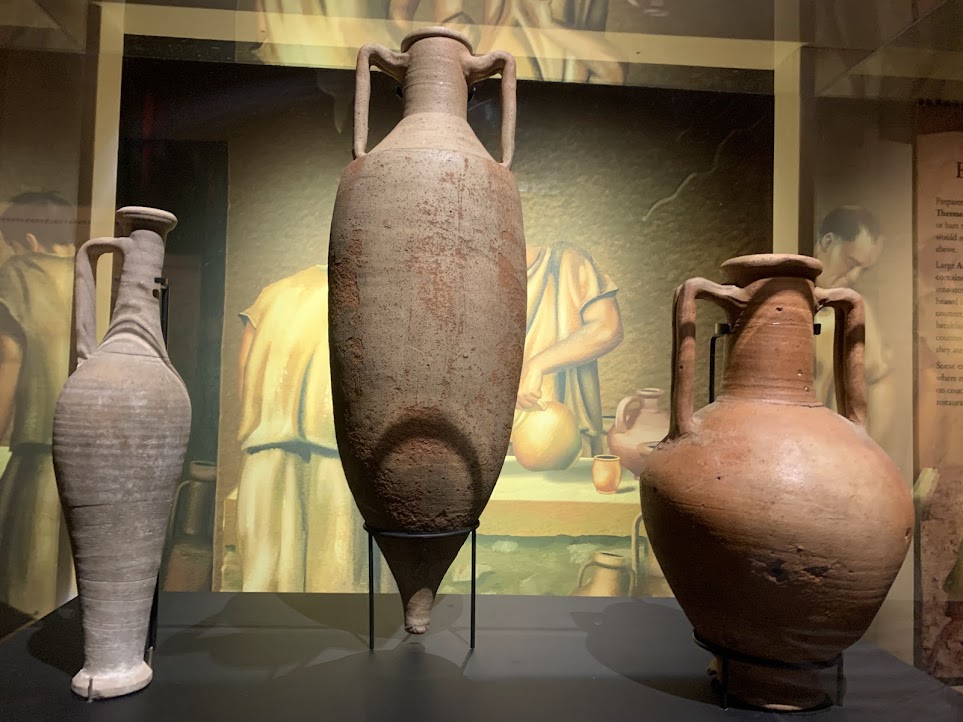
Amphorae being made for wine transportation.
There was also a small room off to the side that displayed erotic images and graffiti. It was small and dark, and reminded me of the small rooms from the brothel in Pompeii.
Holographic Gladiatorial Combat
One of the exhibit’s standout features is the holographic gladiatorial combat, a brand-new 3D experience that takes guests through the different stages of gladiator battles. A video with two side panels that show gladiators as if they are video game fighters. This interactive display not only showcases the excitement and brutality of these ancient spectacles but also provides context about their significance in Roman culture.
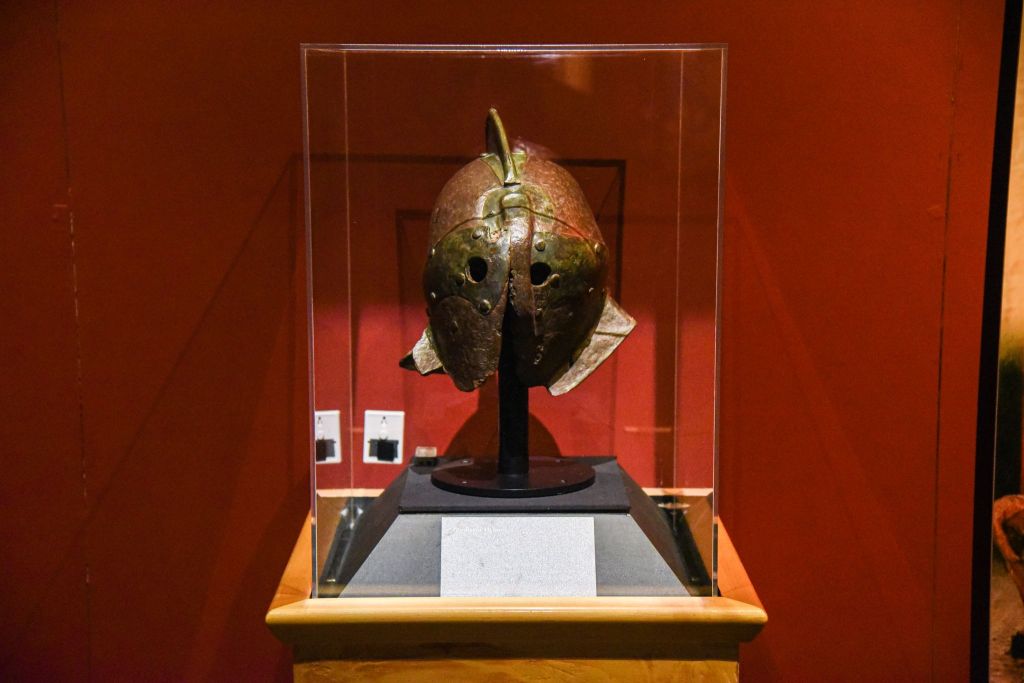
The room with the gladiatorial video includes not only gladiatorial arms and armor, which I found quite remarkable due to their size, weight, and battered nature.
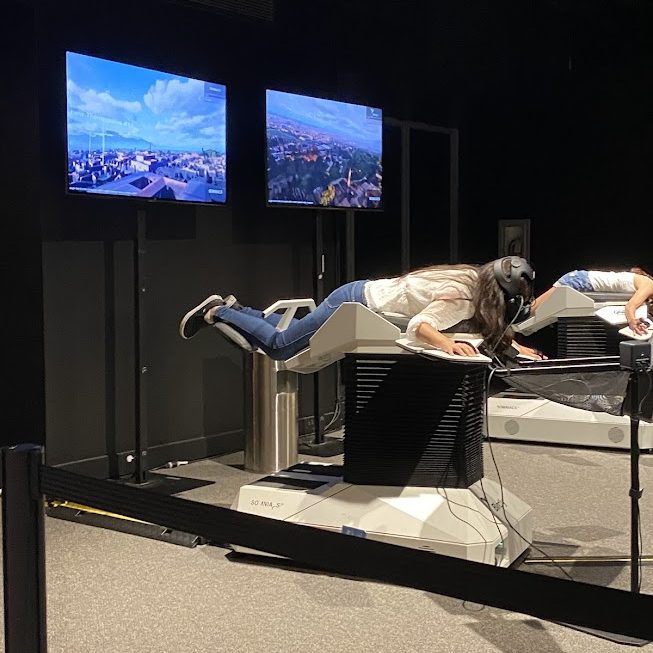
There’s a VR experience that lets you “fly” above the skies of Pompeii! My sister and I really enjoyed this section of the exhibition that allowed us to view Pompeii from above.
The Eruption: A Simulated 4D Theater Experience
One of the highlights of this exhibition is undoubtedly the simulated 4D eruption theater. This immersive experience allows guests to feel the deadly impact of Mount Vesuvius as it erupts, sending pyroclastic flows and ash clouds over Pompeii. The stages of the eruption and what it may have been like to be in the city as the disaster progressed over 24 hours.
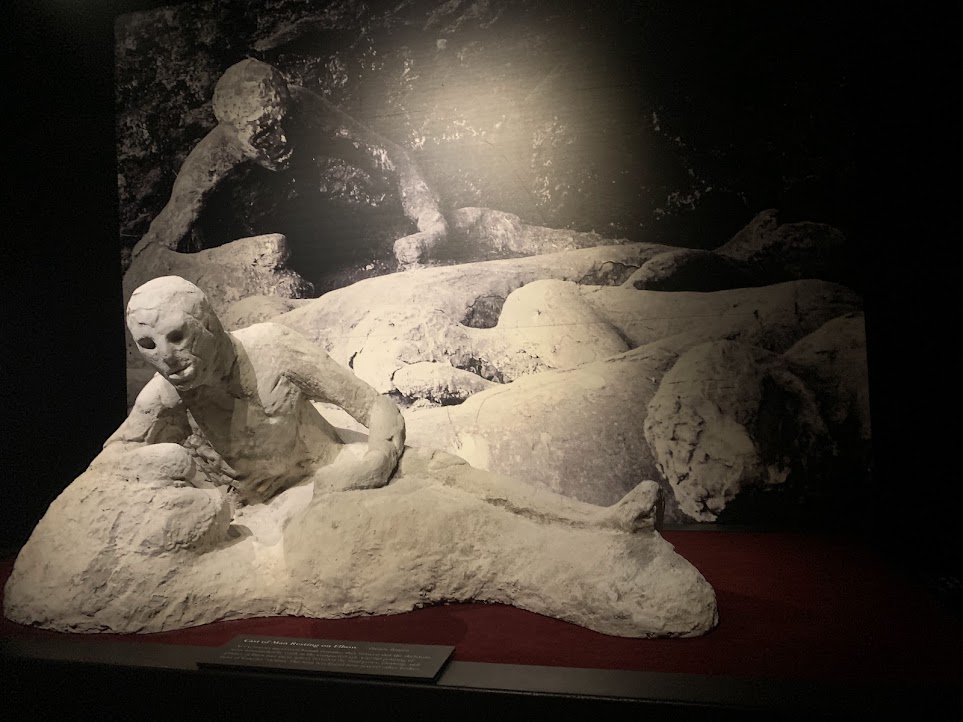
The simulation culminates in the reveal of full body casts of humans and animals, asphyxiated by extreme heat and noxious gasses, forever frozen in time. This poignant display is a powerful reminder of the human tragedy that unfolded on that fateful day, offering a sobering and emotional conclusion to the exhibit. Quotations from the eyewitness account of the eruption are all along the walls as well, adding to the tenor of the space, such as from Pliny the Younger.
The exhibition ends by displaying scientific information about excavations, current and recent research, and about the volcanology of the eruption.
My thoughts on the Exhibition
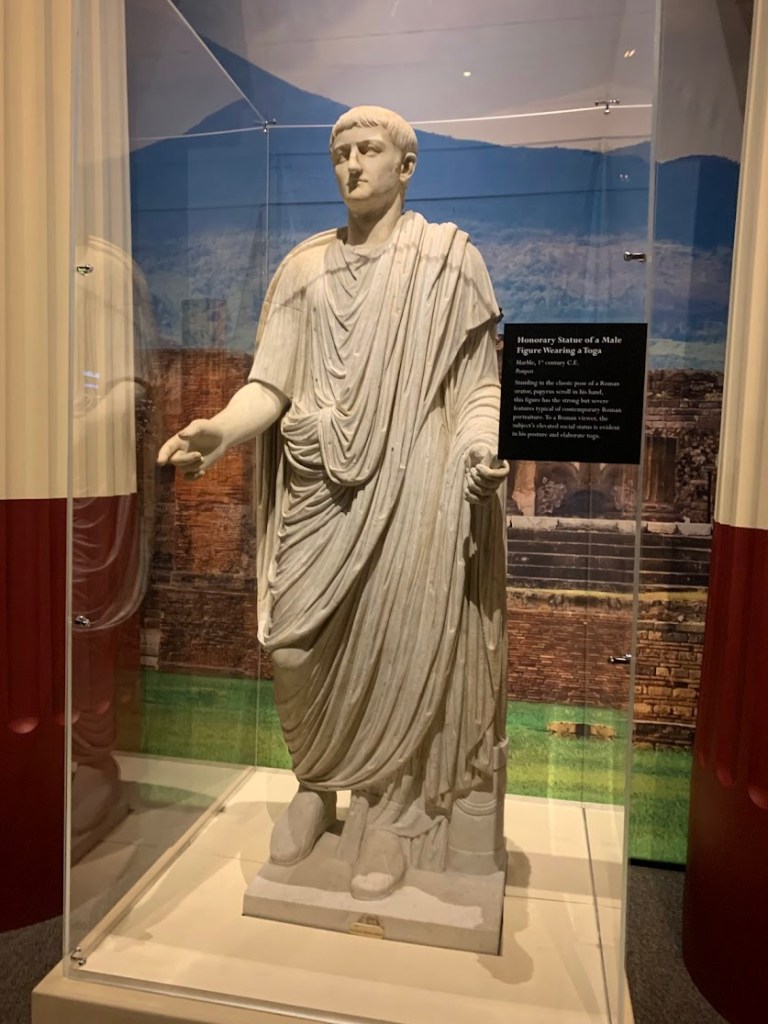
As you explore the exhibit, you are greeted by over 150 authentic artifacts that breathe life into the story of Pompeii. From gladiator helmets, armor, and weapons to household objects like lamps, jugs, cups, plates, pots, and pans, these items offer a glimpse into the daily lives of Pompeii’s residents. The collection also includes a ship’s anchor, medical instruments, tools, and exquisite pieces of jewelry, each object telling its own unique story. The mosaics and frescoes, with their vibrant colors and intricate designs, highlight the artistic achievements of the time and reflect the cultural richness of Pompeian society.
POMPEII: The Exhibition at the Cincinnati Museum Center is more than just a display of artifacts; it is a journey through time that offers a profound connection to the past. Through its media-rich, object-based immersive experiences, the exhibit brings the ancient city of Pompeii to life, allowing visitors to explore its history, culture, and tragic end in a deeply engaging way. One of the things that I enjoyed was that the panels were written in both English and Spanish. I was very happy to be able to share my interests and this exhibition with my family. Whether you are a history enthusiast, an archaeology student, or simply curious about the past, this exhibit provides an unforgettable experience that illuminates the enduring legacy of Pompeii.
 Digging Through the Ages
Leave a comment